Japan's domestic (JDM) custom scene has a name for nearly every look, from gang-style coupes and slammed luxury sedans to chrome-covered trucks and anime-wrapped hatchbacks. Several of those styles share a family tree that runs through 1970s race tracks and Japan's bosozoku gangs. Others came from fish truckers, anime fans, and a brand in San Francisco. Outsiders tend to blur them together. Hagerty calls "bosozoku" a foreigner's catch-all for wildly styled Japanese cars, and warns readers not to use it around kaido racer owners. Ricer is a separate American insult with its own history.
Bosozoku, shakotan, and kaido racers
In Japan, bosozoku means the gangs first. Kuruma News traces them to the kaminari-zoku, or "thunder tribes," of the 1960s, which rode mostly motorcycles until more and more of the gangs took to cars and began changing their exhausts and bodywork. Membership peaked at 40,629 in 1981, Kuruma News reports, drawing on police white papers. A 1978 change to the Road Traffic Act banned dangerous group driving, and penalties rose in 1981. At the end of 2024, the National Police Agency counted 5,880 bosozoku in 144 groups, about one-seventh of the peak. The cars are called zokusha, or "tribe cars," and the magazine Best Car defines two of their signature parts. Takeyari ("bamboo spear") pipes are exhausts that rise long and high, with the tip cut at an angle. Deppa ("buck teeth") are chin spoilers that jut far forward from under the front bumper.
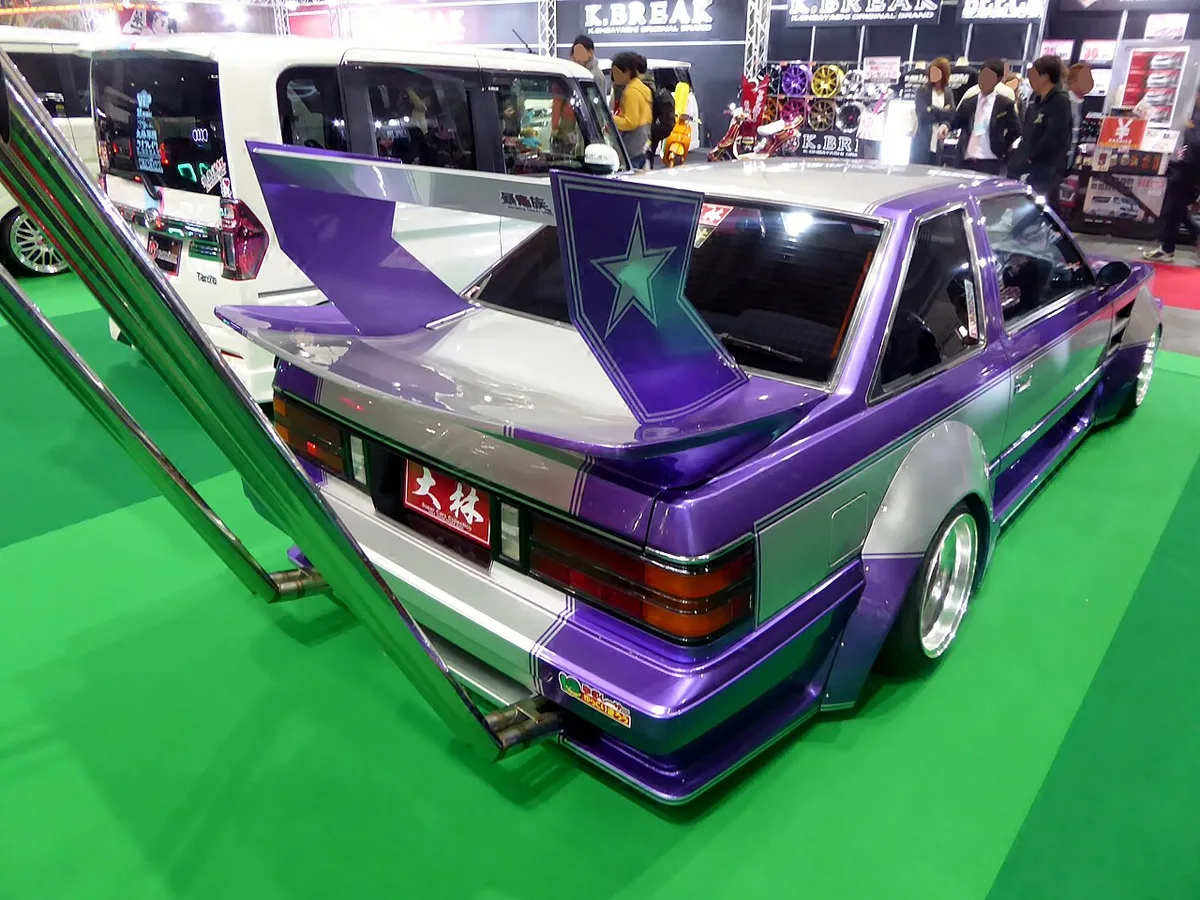
Shakotan comes from shako-tan (車高短), "short ride height." Best Car lists it among Showa-era car slang for dropping a car hard through its springs and dampers. Japanese Nostalgic Car calls it a catch-all for an aggressive stance, a vague racing look, and a disregard for social norms, with bosozoku at its extreme end. The look was already nostalgic by 1986, when Michiharu Kusunoki's manga Shakotan Boogie began. Kuruma News says the series featured mods that were out of date even then, such as shakotan and entotsu exhausts that stuck up higher than the car. Every car in Japan must keep at least 9 cm of ground clearance, about 3.5 inches, WEB CARTOP explains. Resin spoilers and side skirts are exempt, so a car can wear skirts that nearly touch the road and still pass inspection.
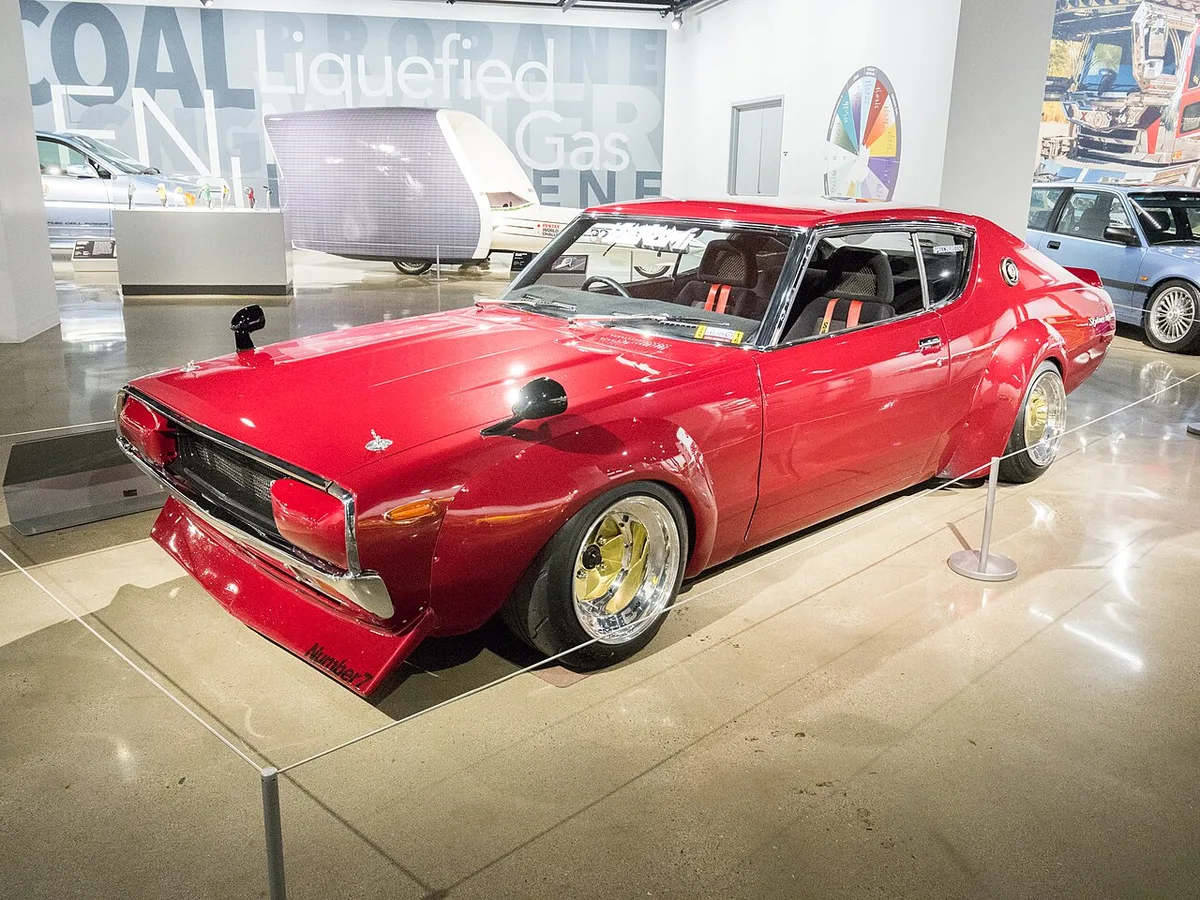
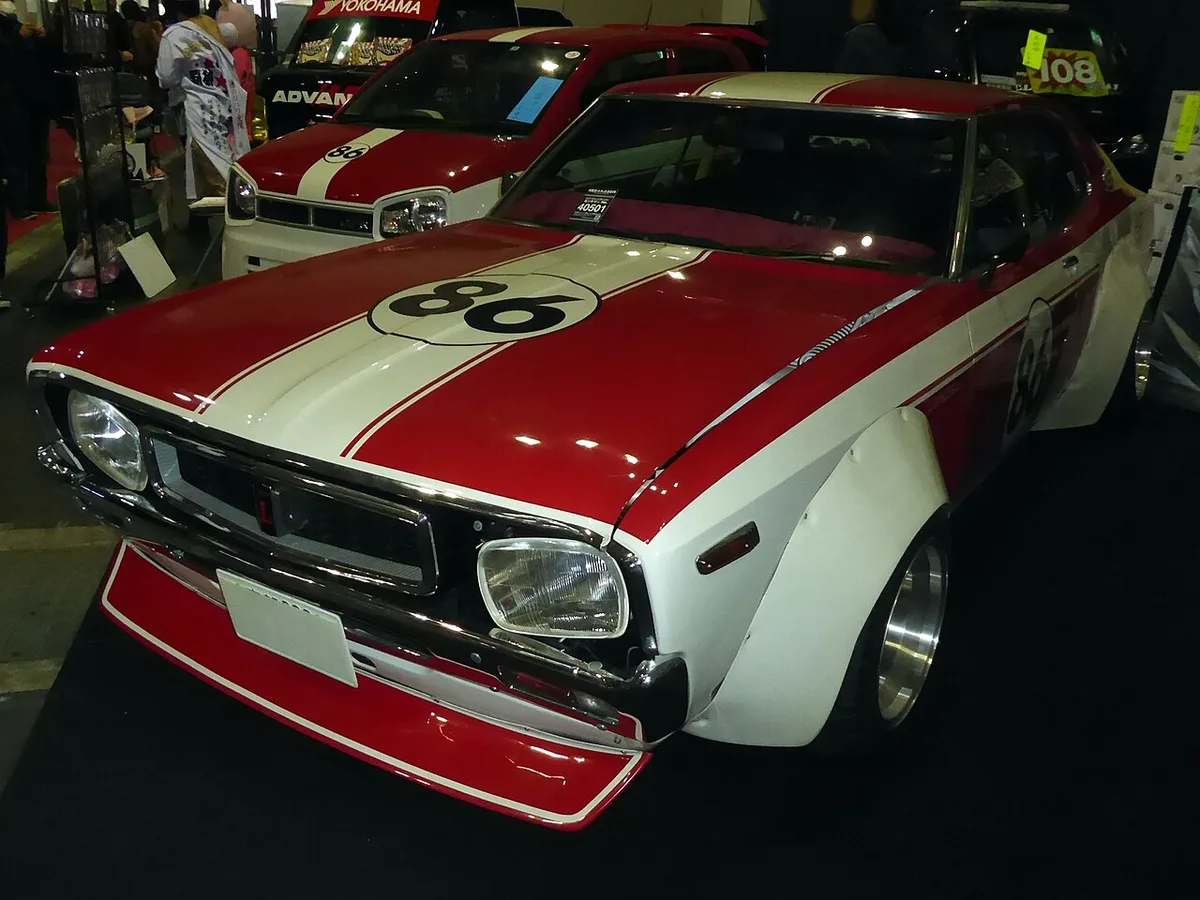
Kaido racers copy race cars. Hagerty explains that kaido is an older Japanese word for road, so the name literally means street racer, and the style imitates the Super Silhouette racers of the late 1970s and early 1980s. Hagerty describes two flavors: wide "Grachan" cars, named for the Grand Champion racing series, and narrow, brightly colored Fukuoka-style cars with hoods that jut forward. Kuruma News adds that grachan cars wore two-tone paint with race numbers on the hood and doors, and often dropped the front bumper to show an oil cooler. The C130 Nissan Laurel below wears that look.
VIP sedans, kyusha, and dekotora trucks
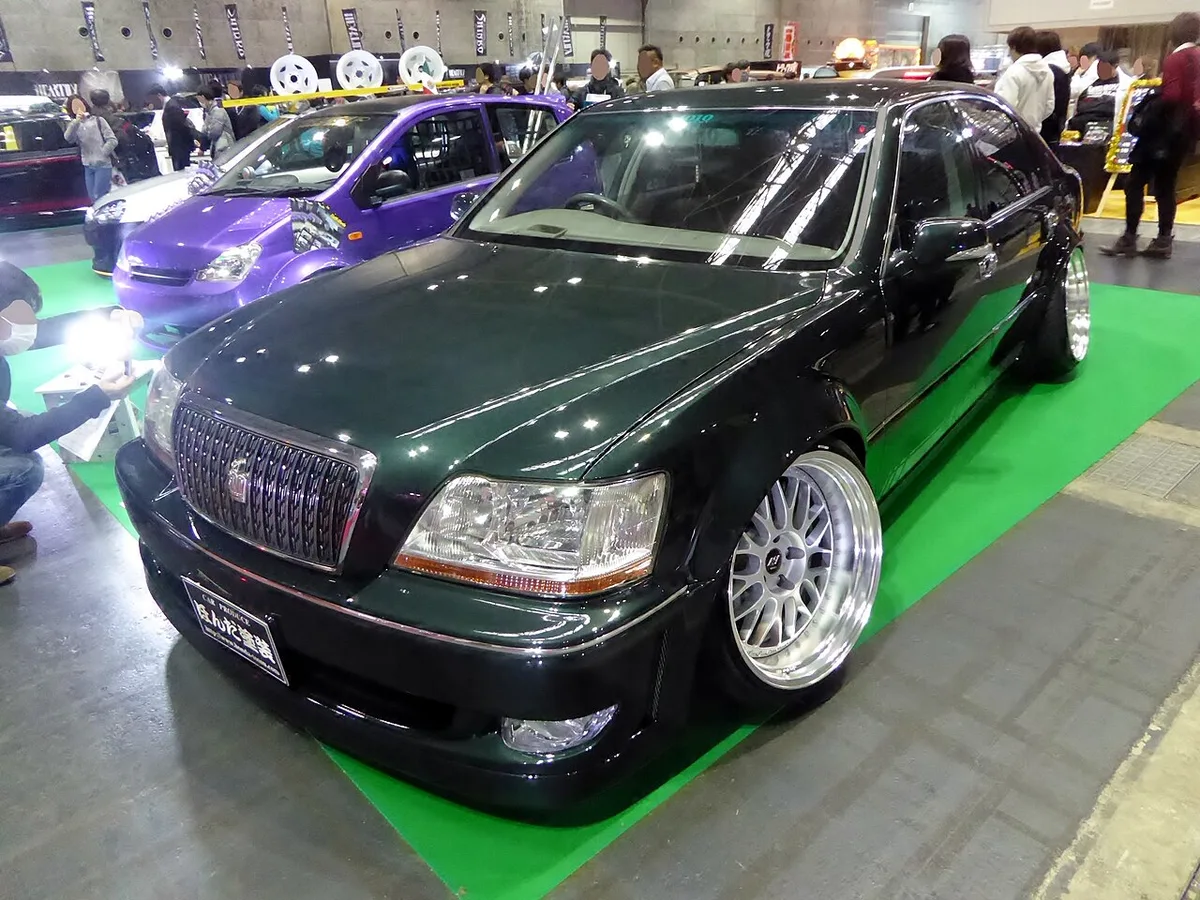
VIP style takes a big luxury sedan and drops it as low as it will go. Kuruma News lists the usual bases as the Toyota Celsior, Aristo, and Crown, the Lexus LS, and the Nissan Cedric, Gloria, Cima, and Skyline. Owners lower them on coilovers or air suspension and fit large chrome wheels that sit flush with the bodywork, a fitment Japanese tuners call tsuraichi. Kuruma News says the style's main root is bosozoku, and a shop worker told the site of VIP owners being yelled at and having their cars kicked.
WEB CARTOP says VIP cars swept the custom scene in the 1990s. Its three basics are a shakotan ride height, deep-rim large wheels, and low aero. The top compliment is chakuchi, or "landed," for a car whose side skirts almost touch the ground. The 20- and 30-series Celsior, the Crown Majesta, and the Cima that carried the style are now old enough to be treated as kyusha themselves, WEB CARTOP notes.
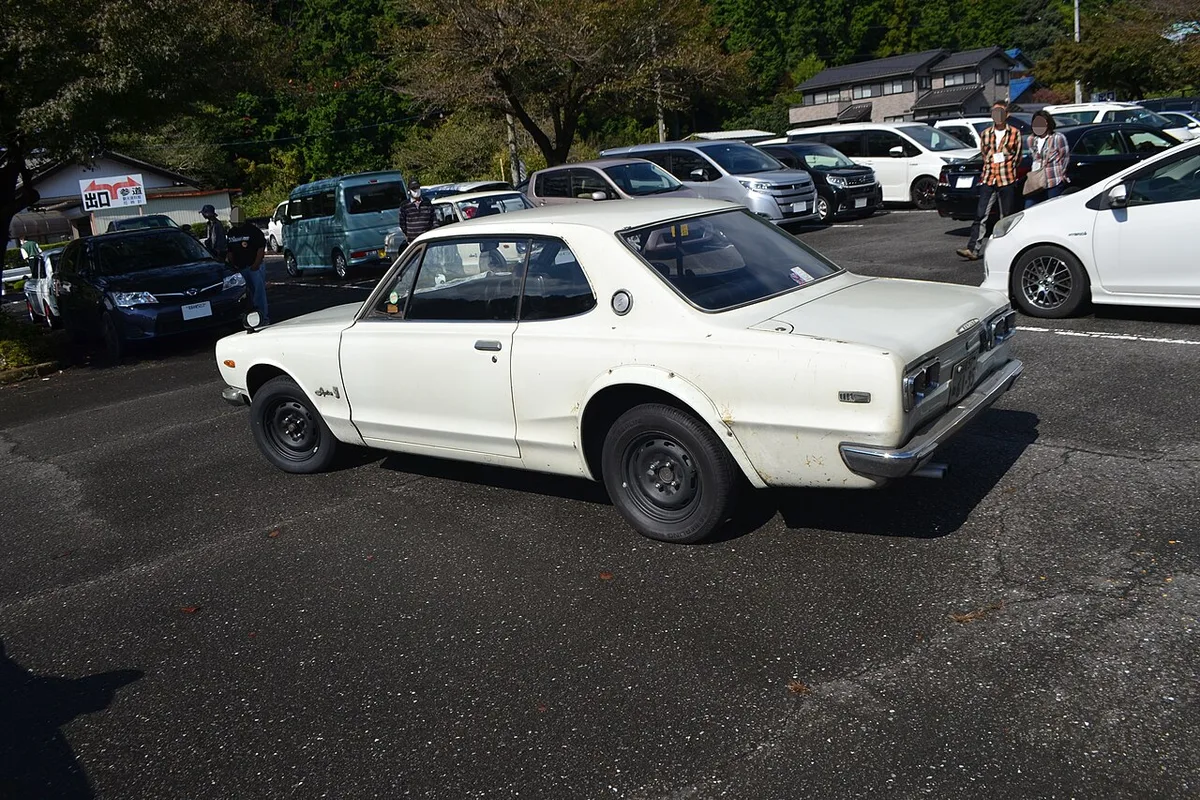
Kyusha means "old car," and nobody agrees where old begins. Motor-Fan notes that the Japan Classic Car Association draws the line at cars built in 1975 or earlier, while the Turin-based federation FIVA uses 25 years. Kuruma News says the word now leans toward 1960s and 1970s models, with 1980s to 2000s cars called neo-classics. Toyota built only 337 2000GTs from 1967 to 1970, and some now trade above 100 million yen.
Japan taxes the habit. A gasoline car more than 13 years past its first registration pays about 15% more automobile tax, Kuruma News explains. For a 2-liter car, the yearly bill goes from 39,500 yen to 45,500 yen, an extra 6,000 yen. One warning on vocabulary: in police statistics, kyusha-kai are groups formed mainly by former bosozoku. Kuruma News describes them making loud group runs on modified old motorcycles, and the National Police Agency counted 391 law-breaking kyusha-kai groups in 2024.
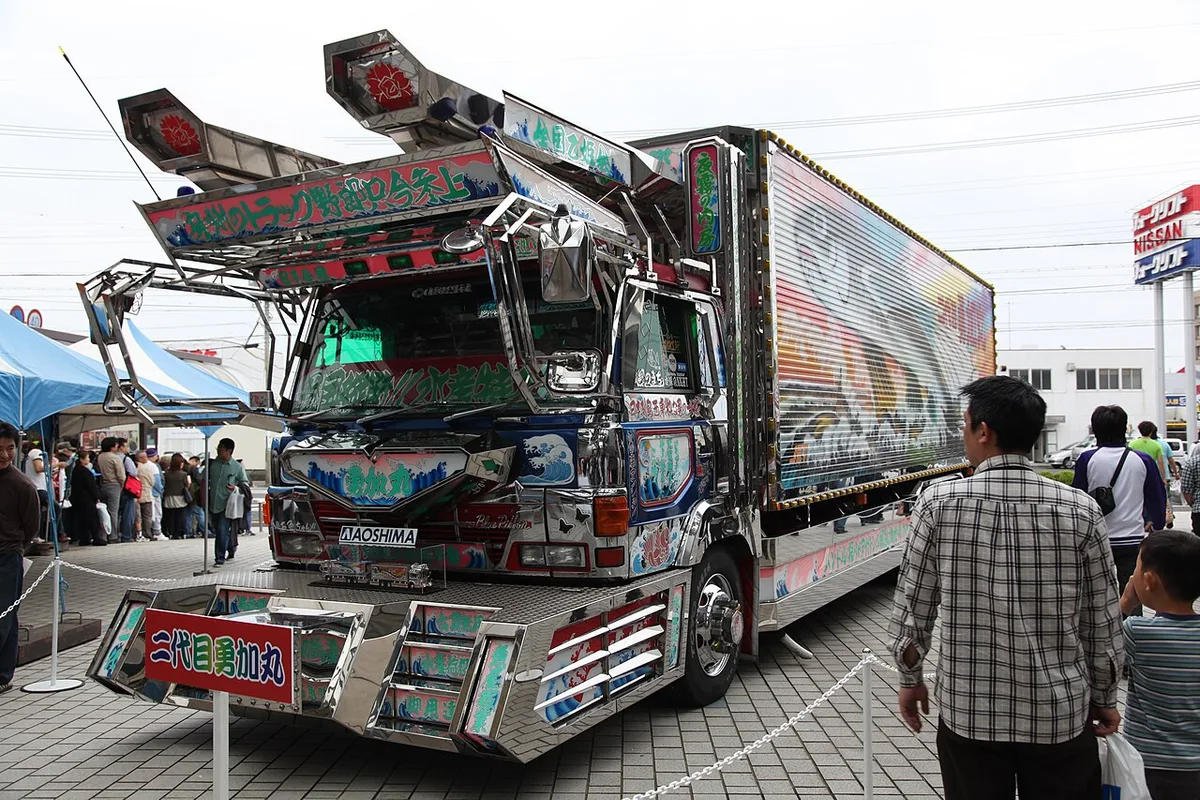
Dekotora, short for "decoration truck," dresses a working truck in stainless steel, marker lights, and painted murals. WEB CARTOP traces the look to the 1960s, when trucks took over freight from the railways. Fish haulers fixed stainless sheets to their trucks against rust, then added tour bus marker lamps, plated wheel covers, and surplus military air horns. Toei's Torakku Yaro ("Truck Guys") films made it a national craze, from the first in August 1975 to the 10th and last in December 1979. The name came from Shizuoka model maker Aoshima, which Norimono News calls the parent of the word.
Stance, kanjozoku, and itasha
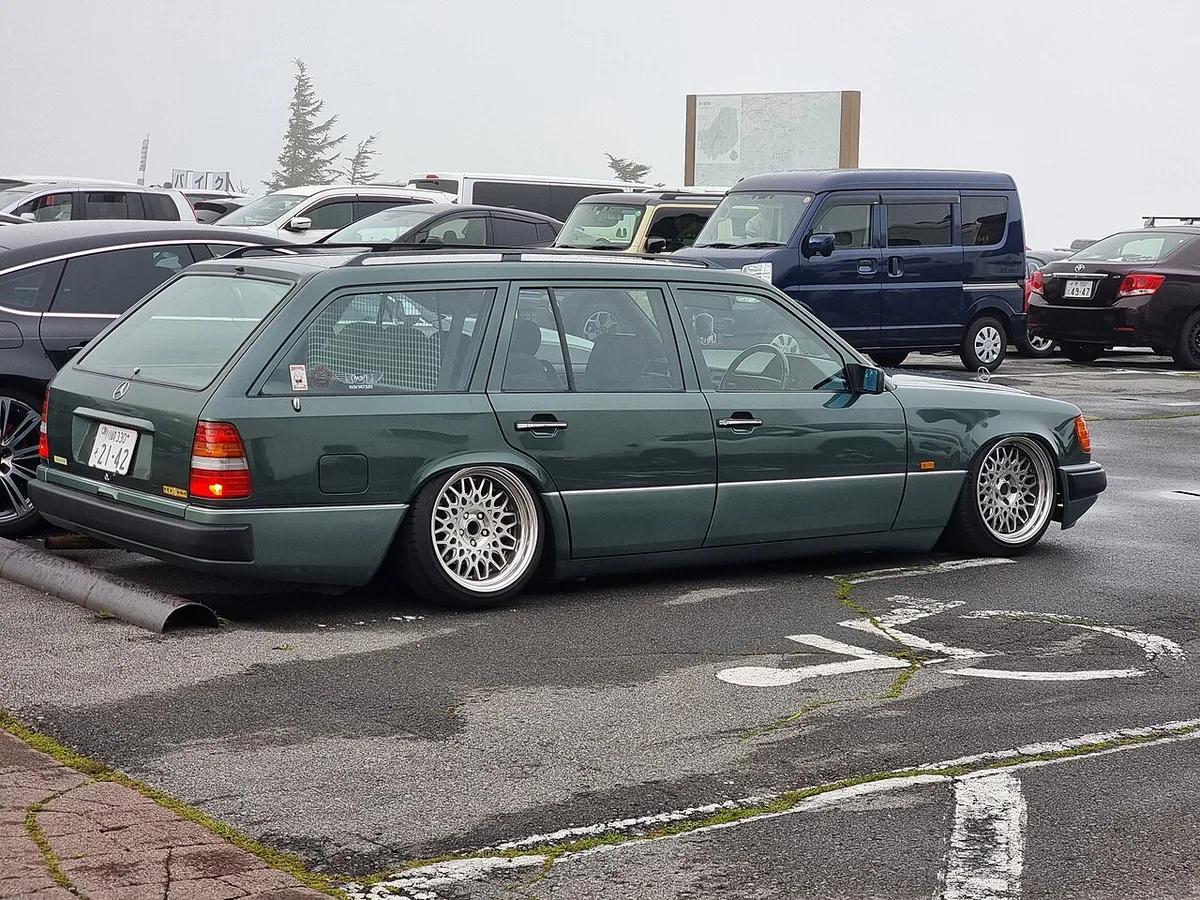
Hellaflush is the American branch of the low-and-flush idea, and the wider scene now goes by stance. Kuruma News says Americans call low cars with tsuraichi wheels "hellaflush," a word reportedly born at an American apparel shop. In 2010, Speedhunters called Mark Arcenal the father of the brand Fatlace and of Hellaflush. Fatlace opened its first store in San Francisco in 2007, Hypebeast reported. Arcenal said the Fatlace site started in 2004, years after the style itself. "My first car you can say was 'hellaflush' but the word wasn't around yet," Arcenal told Speedhunters, adding that heavy camber was never a personal taste.
Fatlace took the name to Japan. Speedhunters reported that the crew held Hellaflush Japan at Fuji Speedway in 2011, then Hellaflush Kansai at Central Circuit in Hyogo Prefecture in 2012, where some cars ran onikyan, or "devil camber."
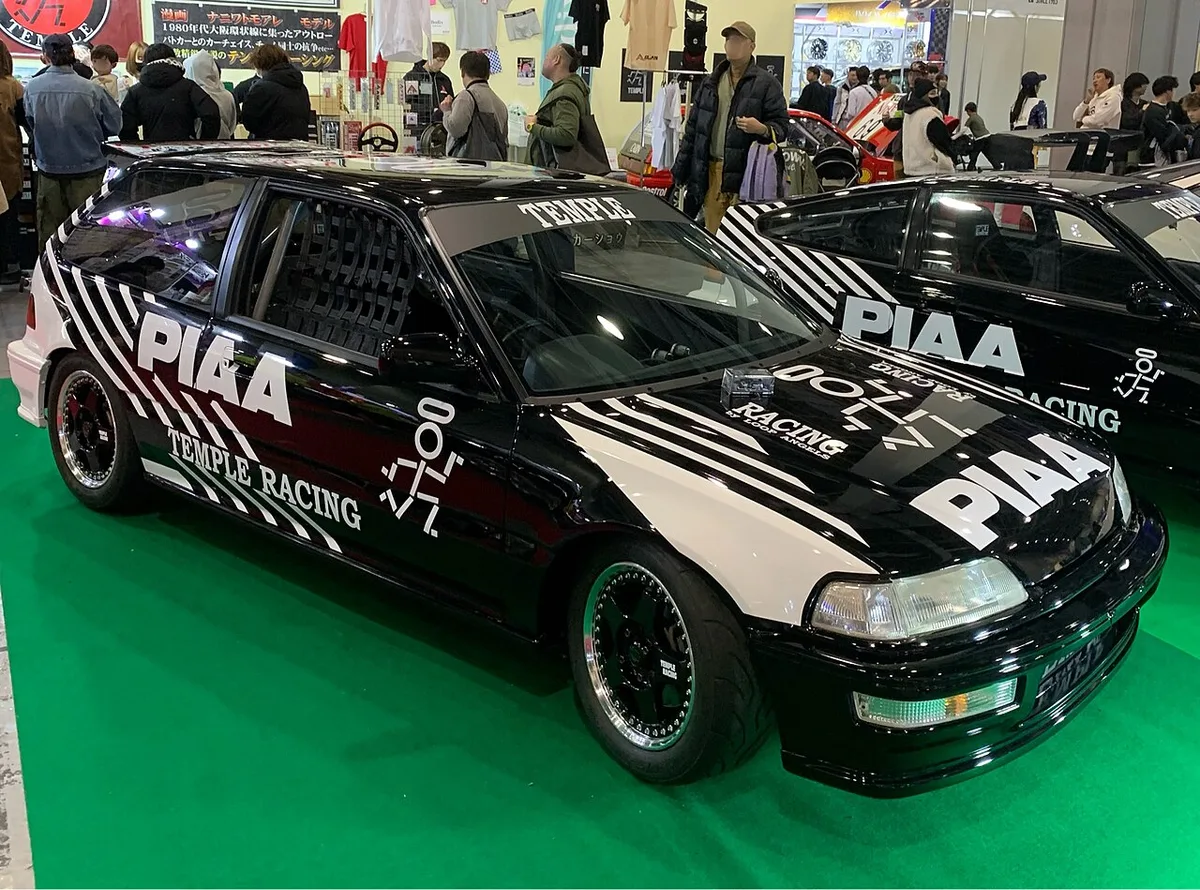
Kanjozoku are Osaka's loop racers. WEB CARTOP describes drivers who ran the Hanshin Expressway's Route 1 Loop around central Osaka flat out, like a circuit, weaving through traffic in a style called amida. That rewarded light cars over powerful ones, and with touring car racing popular at the time, the Honda Civic became the usual pick. Teams also fought off the road, WEB CARTOP says, and Temple Racing was respected for both speed and toughness.
The scene was big early. Motor-Fan reprinted an October 1982 report from OPTION magazine in which the Osaka Prefectural Police estimated about 1,500 kanjozoku cars. "Kanjozoku and bosozoku are different, but the enforcement standard is the same," an officer said. Police still file them under bosozoku. Kuruma News says the illegal racing type, which covers drifters, Tokyo's Shuto Expressway "roulette" racers, and Osaka's kanjozoku, counted 1,397 people in 2024, up from 1,209 in 2020. Our hashiriya and Mid Night Club explainers cover the Tokyo side.
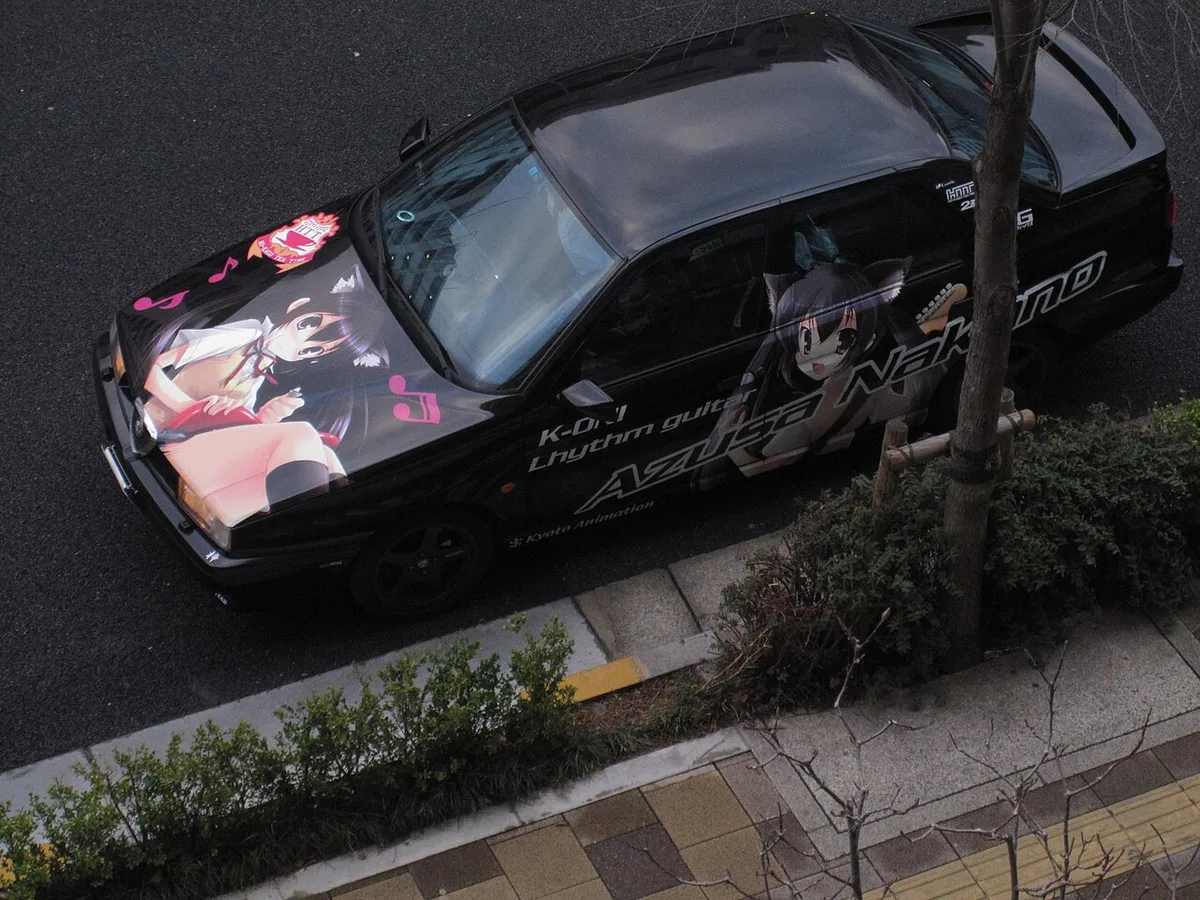
Itasha are cars wrapped in anime, game, or idol characters. The "ita" comes from itai, "painful," in the sense of cringeworthy, Kuruma News explains. Owners named the trend in self-mockery for covering an expensive car in anime girls. It is written with the kanji 痛 because the katakana form, イタ車, would read as "Italian car." The Akihabara UDX building's parking lot has become the scene's pilgrimage site, and replica builds count too, such as Initial D's Fujiwara Tofu Shop AE86.
Towns noticed. Washimiya in Saitama, the setting of the anime Lucky Star, held an "Itasha of the Year 2009" contest that July, with 63 entries in the preliminary round, Car Watch reported. Every entry had to be road legal, including the 9 cm ground clearance rule. The Alfa Romeo 155 below fits both readings of the word.
Got a favorite, from a grachan Laurel to a landed Majesta? Put it up against the rest on WhipJury.
Sources:
Bosozoku as a catch-all label, kaido racer meaning, Super Silhouette inspiration, and Grachan and Fukuoka styles: Hagerty
The 1981 peak, the 1978 law change, and the 1981 penalty change: Kuruma News
Bosozoku and kyusha-kai counts for 2024: National Police Agency, 2025 white paper
Kyusha-kai motorcycle runs and the illegal racing type counts, including Osaka's kanjozoku: Kuruma News
Takeyari, deppa, and shakotan as Showa-era slang: Best Car
Shakotan as a catch-all: Japanese Nostalgic Car
Shakotan Boogie and grachan styling: Kuruma News
The 9 cm ground clearance rule and resin aero parts: WEB CARTOP
VIP base cars, tsuraichi, kaminari-zoku, and bosozoku roots: Kuruma News
The 1990s VIP boom, its three basics, chakuchi, and VIP cars as kyusha: WEB CARTOP
Kyusha definitions from JCCA and FIVA: Motor-Fan
Kyusha and neo-classic eras and the 2000GT: Kuruma News
The 13-year tax surcharge: Kuruma News
Dekotora origins, the meaning of the name, and the Torakku Yaro films: WEB CARTOP
Aoshima as the source of the dekotora name: Norimono News
Arcenal, Fatlace, and the Hellaflush name: Speedhunters (archived)
Hellaflush Japan, Hellaflush Kansai, and onikyan: Speedhunters (archived)
Fatlace's first store: Hypebeast
The Route 1 Loop, amida driving, Civics, and Temple Racing: WEB CARTOP
The 1982 OPTION report on kanjozoku and Osaka police: Motor-Fan
What itasha means, the kanji, Akihabara UDX, and replica builds: Kuruma News
Itasha of the Year 2009 in Washimiya: Car Watch
Photos via Wikimedia Commons: Shelby Asistio (CC BY-SA 2.0), Tokumeigakarinoaoshima and Benlisquare (CC BY-SA 4.0), Masaru Kamikura and Ryo FUKAsawa (CC BY 2.0), 先従隗始 and 765よっちゃん765 (CC0)
Frequently Asked Questions

Jeffrey Wiley has spent more time than he'd like to admit thinking about what makes a car look right. He writes about automotive design, car culture, and the opinions people have strong feelings about. He lives in north Georgia.