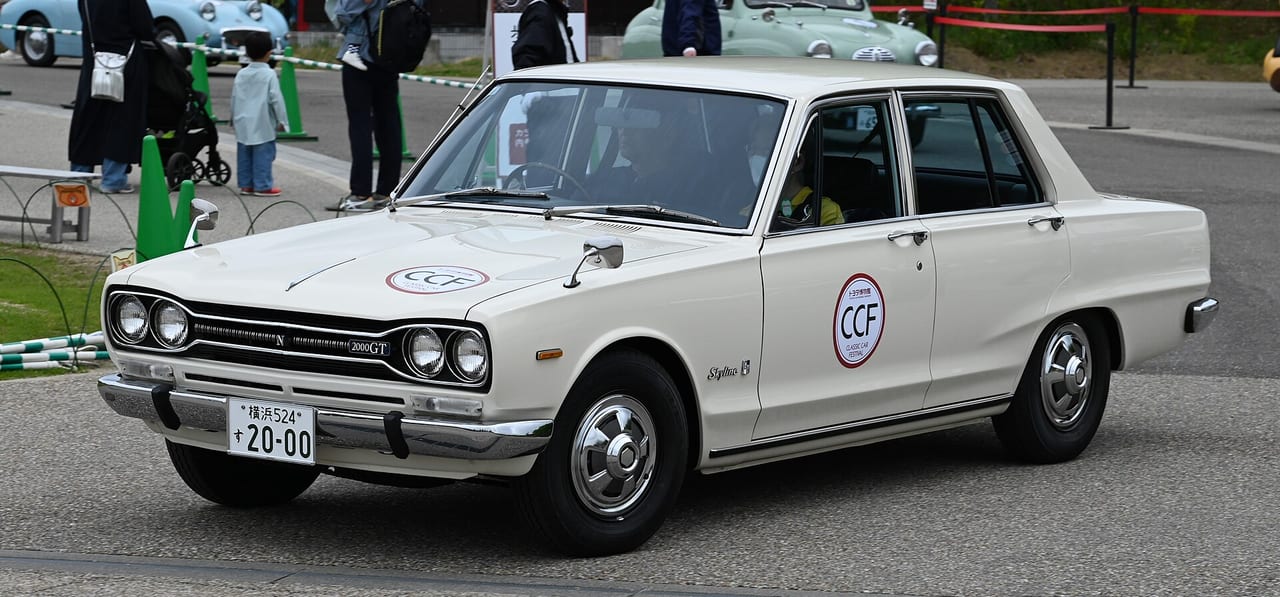
What is Kyusha?
Japanese for "old car," used by enthusiasts for classic Japanese cars and the scene around them.
Kyusha (旧車, pronounced kyuu-sha) is the Japanese word for an old or classic car, and it covers old and classic motorcycles too. As the Japanese culture site Sabukaru put it, "Kyusha as a broad term means vintage or old car." Enthusiasts use it for classic Japanese cars, especially those from the late Showa era, which ended in 1989.
The scene has its own tastes. Writing for The Drive in April 2026, Caleb Jacobs noted that some Japanese enthusiasts prefer kyusha on 13-inch wheels. Sabukaru's 2021 piece on Showa-era car culture puts kyusha bikes, rockabilly music, and Showa and Yankii fashion in the same world as kaido racer styling. Fans also talk in chassis codes. One enthusiast in that piece named the GX51 Cresta and the GX61 Cresta, Mark II, and Chaser as favorites, from the years 1980 to 1984.
Outside Japan, owners of Japanese classics have borrowed a Japanese symbol. The Koreisha mark, the badge Japan uses for elderly drivers, now shows up on classic Japanese cars abroad as a sign of love for older cars.