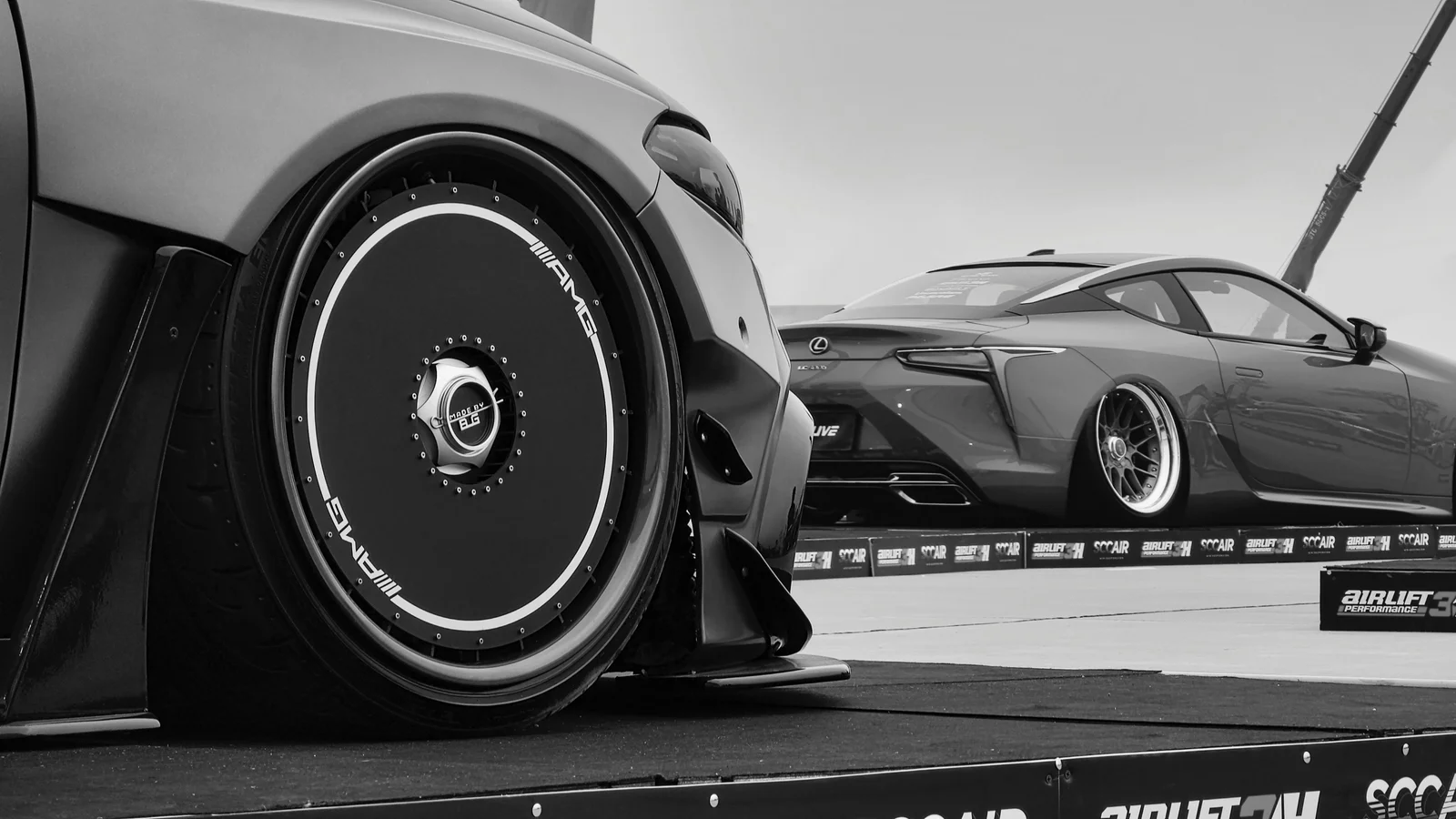
Hellaflush is a car modification style where the wheels sit as flush as possible with the outer edge of the fenders, achieved through a combination of lowered suspension, aggressive wheel offset, stretched tires, and significant negative camber. The result is a car that sits extremely low with wheels tucked tightly against the bodywork, creating a seamless, aggressive look that the people who love it consider the peak of stance culture and the people who hate it consider an assault on the basic function of a car.
It's one of the most polarizing styles in all of car culture. Here's where it came from, how it's done, and why people commit to it despite the obvious downsides.
What Hellaflush Actually Means
The term breaks into two parts. "Hella" is Northern California slang meaning "very" or "a lot of," originating from "hell of." "Flush" refers to the relationship between the wheel face and the fender edge. When a wheel is perfectly flush, its outer edge sits exactly even with the fender, neither tucked inside nor poking outside. Hellaflush, then, means aggressively, extremely flush. The wheels and the body form a single continuous surface with no gap and no protrusion.
Achieving this look requires several modifications working together. The suspension is lowered dramatically, often with coilovers or air suspension, to drop the body over the wheels. The wheels are sized and offset specifically to push them out toward the fender edge. The tires are often stretched, meaning a narrower tire is mounted on a wider wheel so the sidewall pulls inward at an angle. And negative camber is dialed in, tilting the top of the wheel inward so the whole assembly tucks under the fender lip even at the extreme low ride height.
Where It Came From
The origins of hellaflush trace to the intersection of two cultures around 1999 to 2004. Fashion-forward enthusiasts in Northern California were captivated by Japanese drifting culture and were attending drift events in both the US and Japan. By 2004, Japan had developed a distinctive drift car aesthetic characterized by wide wheels, small offset, and substantial tire stretching, which produced an aggressive low-and-wide appearance.
The look also drew heavily from Japanese VIP style, the modification culture built around large Japanese luxury sedans being slammed low with aggressive wheel fitment. The combination of drift car fitment and VIP stance philosophy produced the specific aesthetic that would become hellaflush.
The term itself was coined and popularized by Fatlace, a San Francisco-based brand that grew out of the local sneaker and streetwear scene. Fatlace turned Hellaflush into a brand and a series of car shows that spread the aesthetic globally. The connection to streetwear culture matters because hellaflush was always as much about self-expression and scene identity as it was about cars. It came from a culture that understood style as a statement, applied to cars rather than clothes.
Why People Do It
The honest answer is that it looks good when done well, and the people who do it prioritize how the car looks parked over how the car drives. A properly executed hellaflush build has a visual presence that almost nothing else achieves. The car looks planted, intentional, and aggressive in a way that a stock car never will. The flush wheel fitment creates a clean, continuous surface from fender to wheel that the eye reads as deliberate and finished. Stance, when it's right, makes a car look like a complete design statement rather than a vehicle wearing aftermarket parts.
There's also a craft element that outsiders miss. Getting wheel fitment exactly right requires real knowledge of offset, width, camber, and how they interact with a specific car's fender geometry. A perfectly fitted hellaflush build represents genuine expertise even when the result looks impractical. Within the community, the precision of the fitment is the achievement, and the people who can dial it in correctly are respected for the skill it takes.
The community aspect is the third driver. Hellaflush emerged from a scene, spread through shows, and remains a culture as much as a modification style. People do it partly because it connects them to that community, the shows, the meets, the shared aesthetic vocabulary. It's a form of belonging expressed through cars.
Why People Hate It
The criticism of hellaflush is substantial and not unreasonable. The modifications that achieve the look actively damage the car and compromise its function. Extreme negative camber causes uneven tire wear that destroys tires rapidly and unevenly. The aggressive low ride height means the car scrapes on driveways, speed bumps, and ordinary road imperfections. The stress on suspension, chassis, and drivetrain components from running the car this low and this cambered causes long-term damage that a stock setup never experiences.
There are genuine safety arguments too. A car slammed low enough can have fuel lines and other vulnerable components closer to road hazards than the manufacturer intended. The handling compromises from extreme camber and stretched tires reduce the actual grip and stability of the car, which is ironic given the aesthetic borrows from drift and performance culture. The form actively works against the function it visually references.
The purist objection is philosophical. Many car enthusiasts believe function should drive form, and hellaflush is the clearest example of form completely overriding function. A stanced car that can't clear a speed bump, wears through tires in a few thousand miles, and handles worse than stock is, by this view, a car that has been ruined to look a specific way. Whether that's a worthwhile trade is exactly the debate that makes hellaflush so polarizing.
The Faceoff Reality
Hellaflush builds produce some of the most divided results in WhipJury faceoffs, which is exactly what you'd expect from the most polarizing style in car culture. A clean, well-executed hellaflush build on the right car, a classic BMW E30, a Nissan 240SX, a Mazda RX-7, generates strong votes from people who understand and appreciate the aesthetic. The same build generates equally strong votes against from people who see compromised function and visual excess.
The faceoff format is uniquely suited to capturing this divide because it forces a binary choice. There's no middle ground in a head-to-head. You either think the stanced car looks better than its opponent or you don't, and hellaflush splits that decision almost exactly down the philosophical lines that have always divided the style's fans from its critics.
Put a stanced build in a faceoff on WhipJury and watch the votes split. The hellaflush debate has been running for twenty years and it's not getting resolved. But the faceoff at least gives both sides a clean way to make their case.
Sources:
Origin and history of the term: StanceWorks
Definition and technique: Advance Auto Parts
Stance style guide and Fatlace history: Rhonium
Criticism and safety concerns: The Express
Frequently Asked Questions

Cam Walsh has been obsessing over cars since before he could drive one. Based out of Atlanta, Cam covers automotive design, car culture, and the eternal debate over which whips actually look the part.