Koenigsegg's road cars run from the CC8S of 2002 to the CCGT1, revealed in Monterey, California, on August 13, 2026. In between came the CCR, the CCX family, the Agera family, the One:1, the Agera RS, the Regera, the Jesko, the four-seat Gemera, the CC850, and Sadair's Spear. Only two of those, the Jesko and the Gemera, were planned at more than 100 cars. Christian von Koenigsegg founded the company on August 12, 1994, at age 22.
The CC cars and the Agera family
A CC8S production prototype made its debut at the Paris Motor Show in September 2000, and the first customer car was delivered at Geneva in March 2003. The name stands for Competition Coupe V8 Supercharged. Koenigsegg built just six, two of them right-hand drive. The engine started life as a Ford modular V8, which Koenigsegg rebuilt in-house with a centrifugal supercharger to make 655 hp. The CC8S also introduced the removable carbon roof and the dihedral doors that swing out and up at the same time, two things Koenigsegg is still known for.
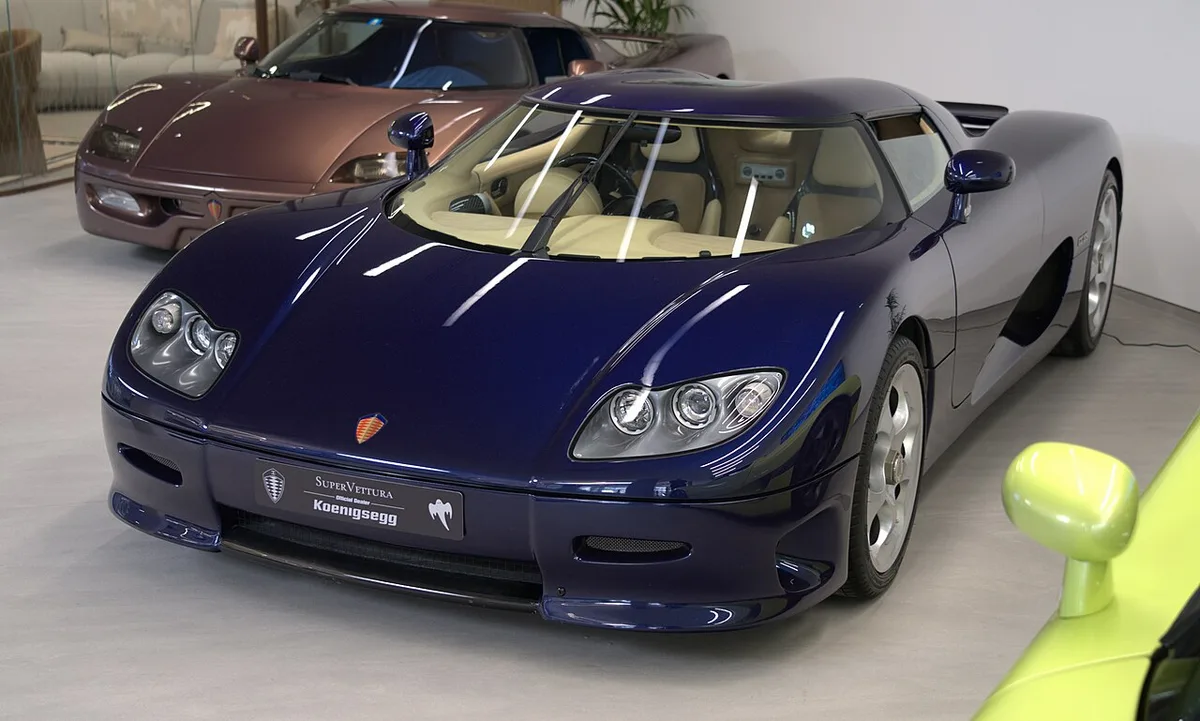
The CCR followed in 2004 with two superchargers and 806 hp. Koenigsegg built 14 between 2004 and 2006. In February 2005, a CCR reached 387.86 km/h (about 241 mph) at Nardò in Italy, taking the top speed record from the McLaren F1.
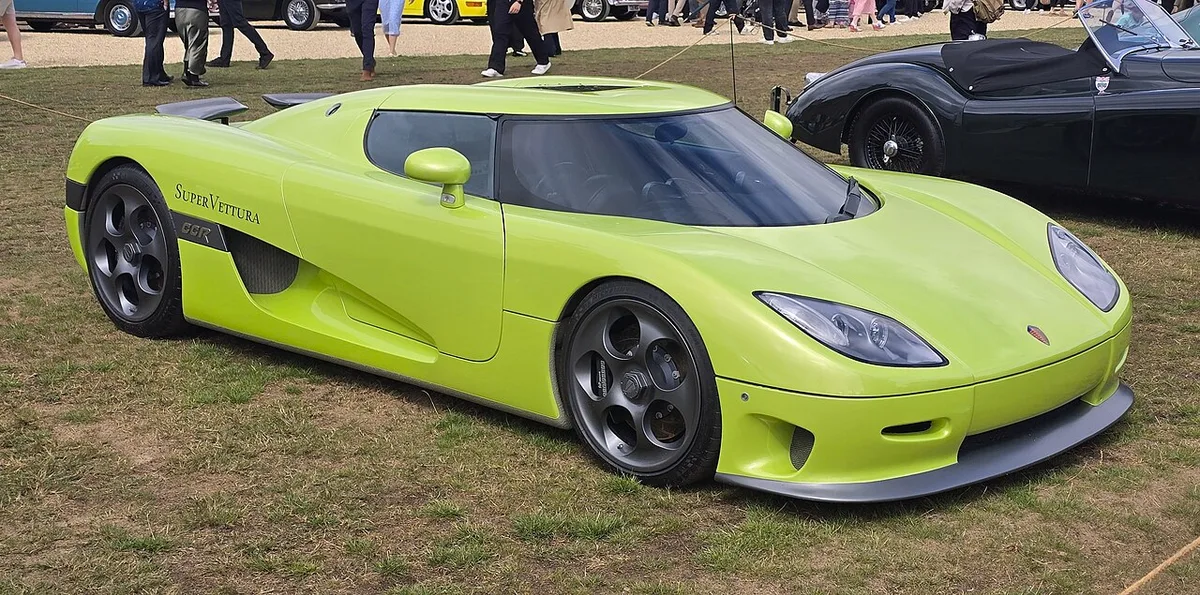
The CCX looked like the CCR, but almost nothing carried over. It was built to meet world safety and emissions rules, and it was the first Koenigsegg sold in the US. The CCXR could run on E85 ethanol and made 1,018 hp. Auction house RM Sotheby's, citing Koenigsegg, counts 49 cars in the whole family: 30 CCX, nine CCXR, six Edition cars, two CCXR Special Editions, and two CCXR Trevitas. Trevita means "three whites" in Swedish. Koenigsegg planned three of the white carbon cars but built only two.
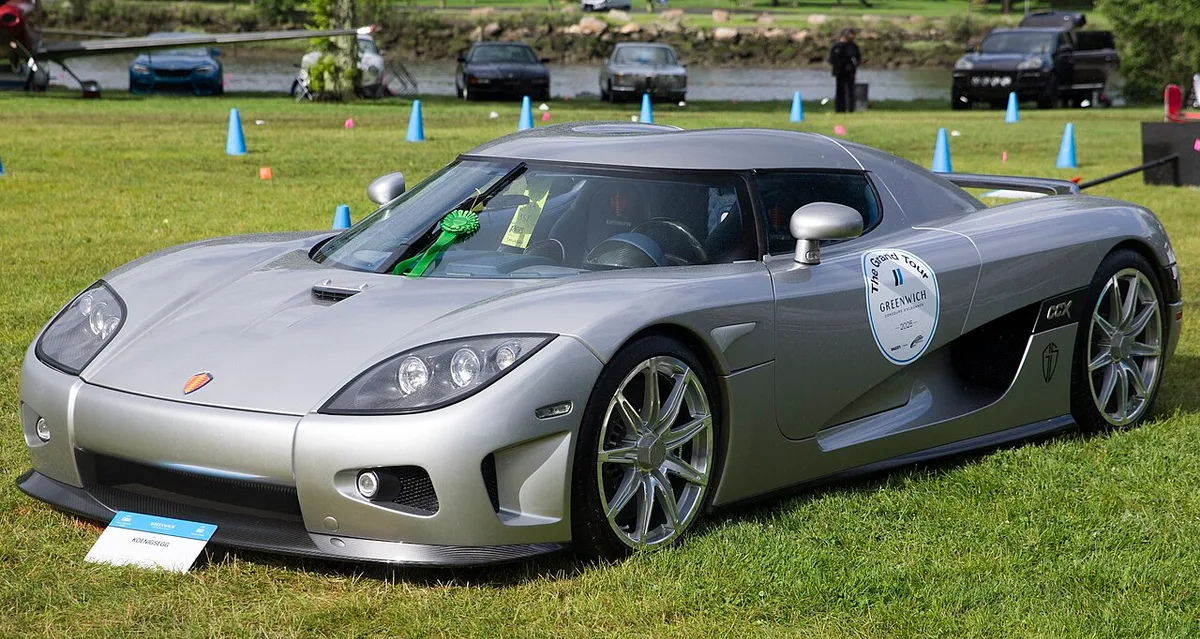
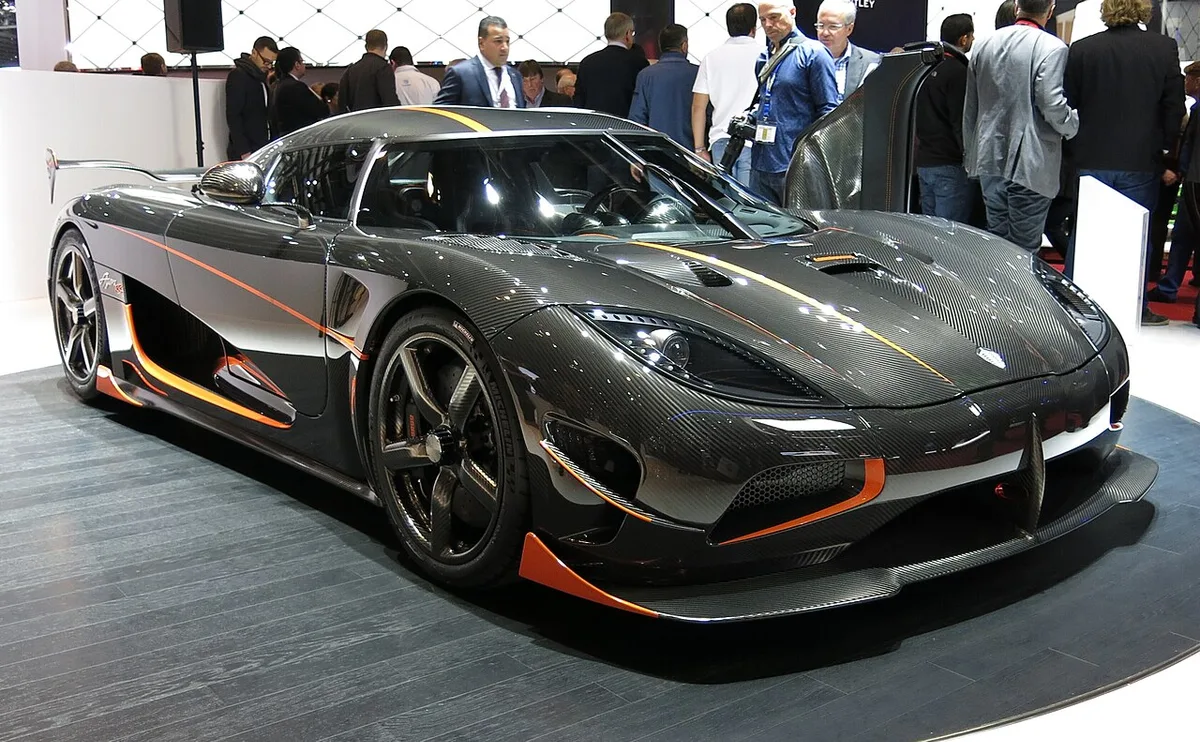
The Agera arrived at Geneva in March 2010 and swapped superchargers for twin turbos, starting at 960 hp. The 2011 Agera R made 1,140 hp on E85. The 2012 Agera S was the first Koenigsegg to top 1,000 hp on regular pump gas, though Koenigsegg's own pages list it at both 1,030 and 1,040 hp. Koenigsegg says 30 cars were built across the Agera, Agera R, and Agera S.
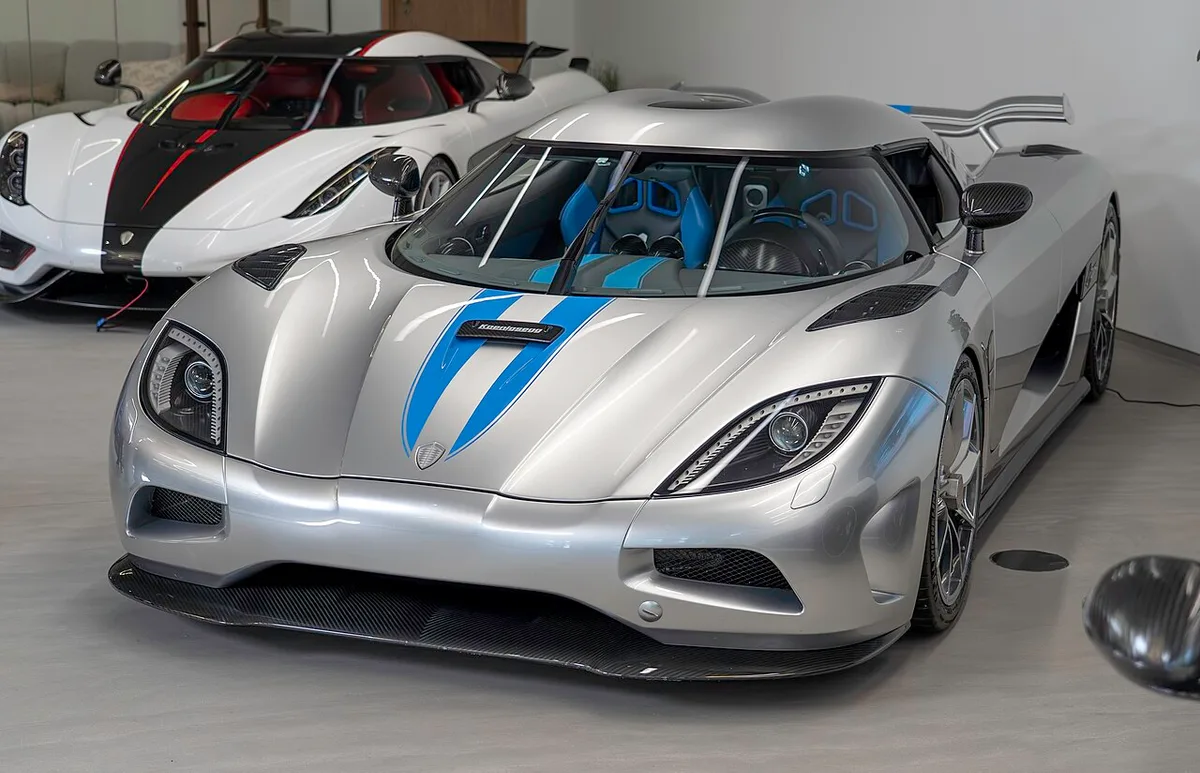
The One:1 of 2014 paired 1,360 hp on E85 with a 1,360 kg curb weight, the one-to-one power-to-weight ratio in its name. Koenigsegg built seven: six for customers and one development car.
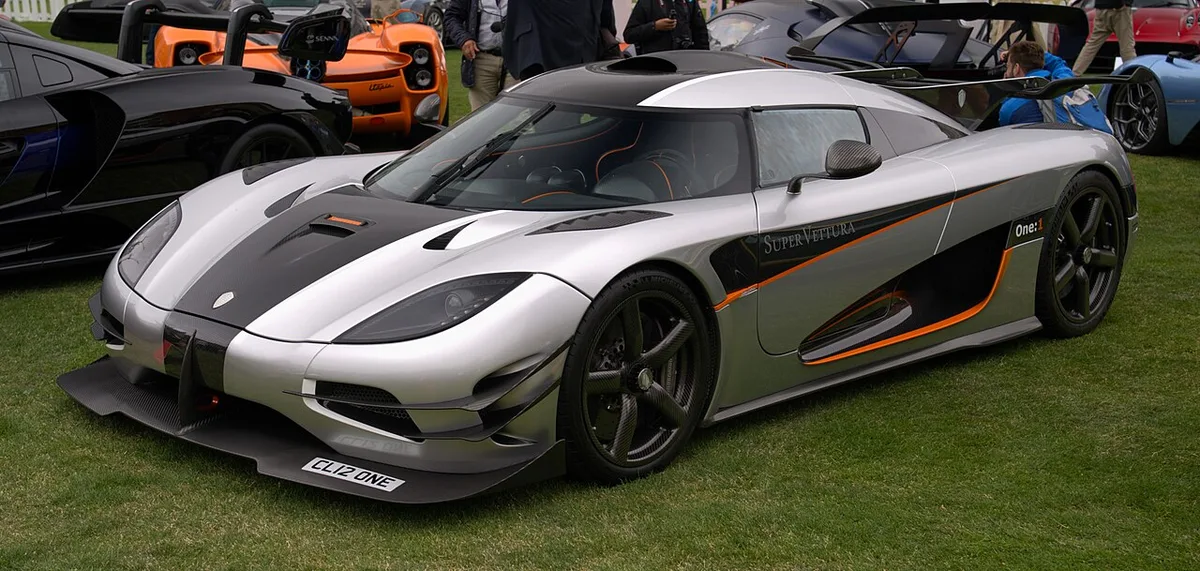
The Agera RS appeared at Geneva in March 2015 with 1,160 hp on 95-octane gas, and 25 were made. On November 4, 2017, factory driver Niklas Lilja averaged 277.87 mph over two runs in an Agera RS in Pahrump, Nevada. Three Agera Final cars, built on the RS, closed out the line.
Regera, Jesko, Gemera, and the tribute cars
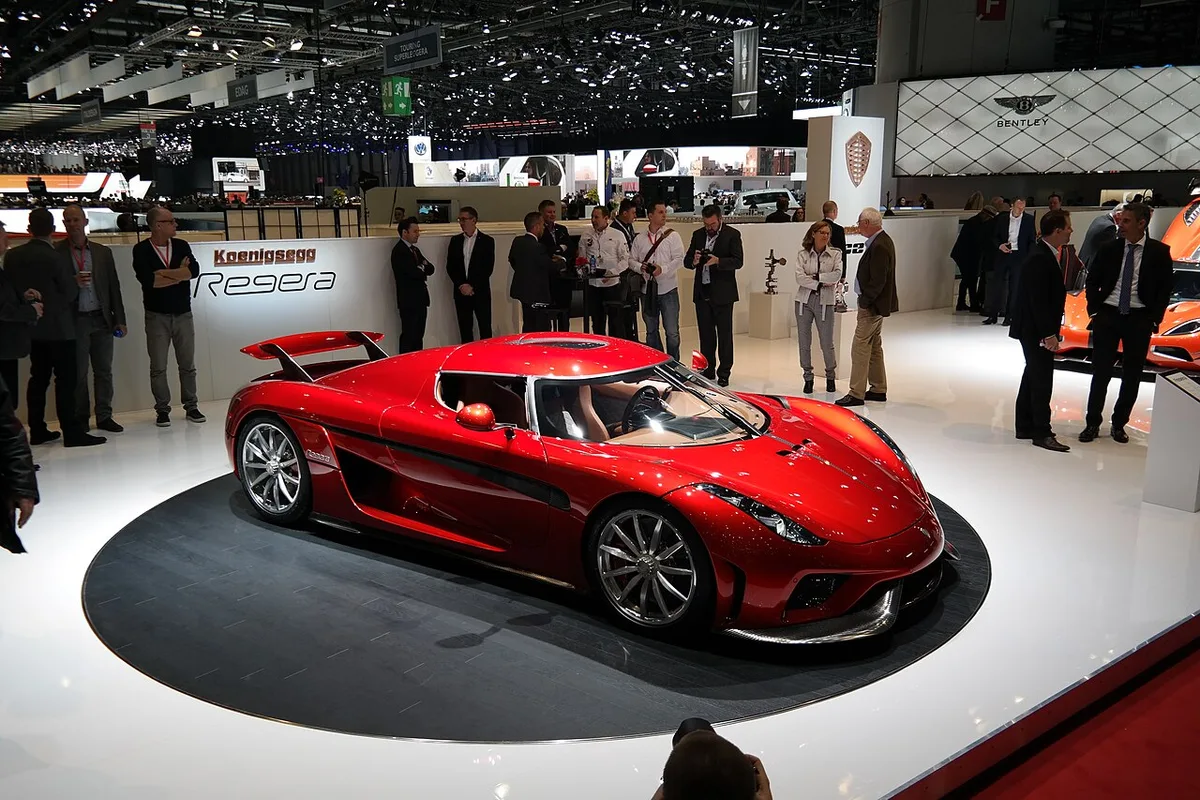
The Regera, also shown at Geneva in 2015, pairs a twin-turbo 5.0-liter V8 with three electric motors for over 1,500 hp. It has no gearbox. The electric motors move the car from a stop, and the V8 starts adding drive at around 30 km/h. Koenigsegg built 80, and one sold at RM Sotheby's Monterey auction in 2026 for $3,250,000.
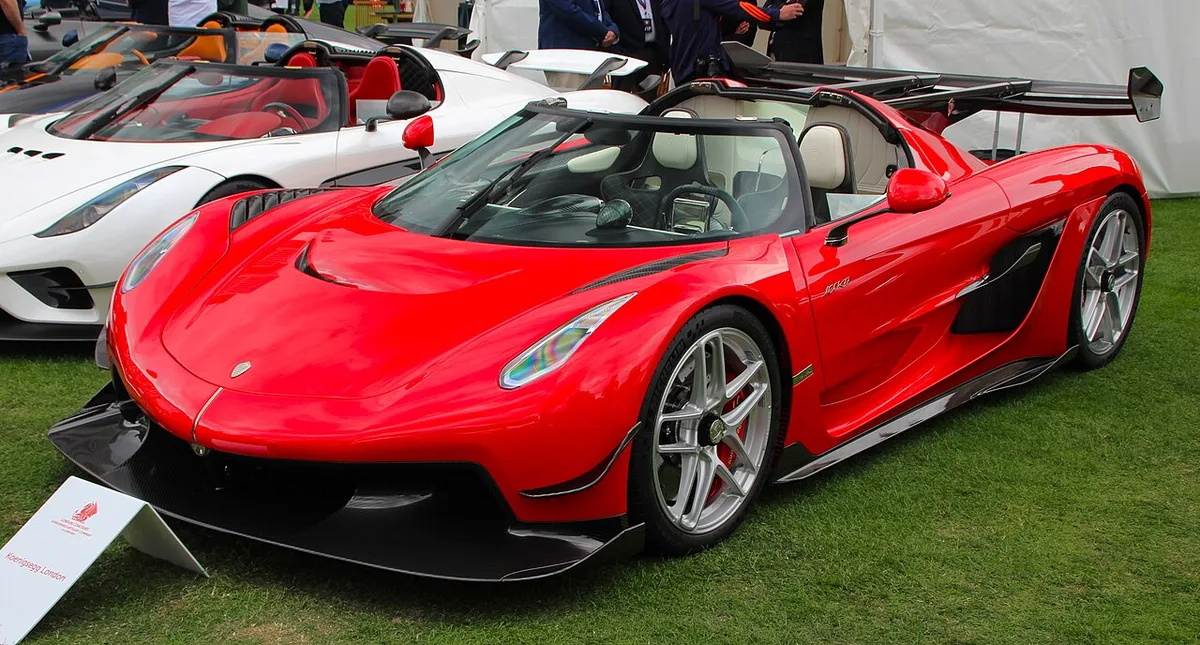
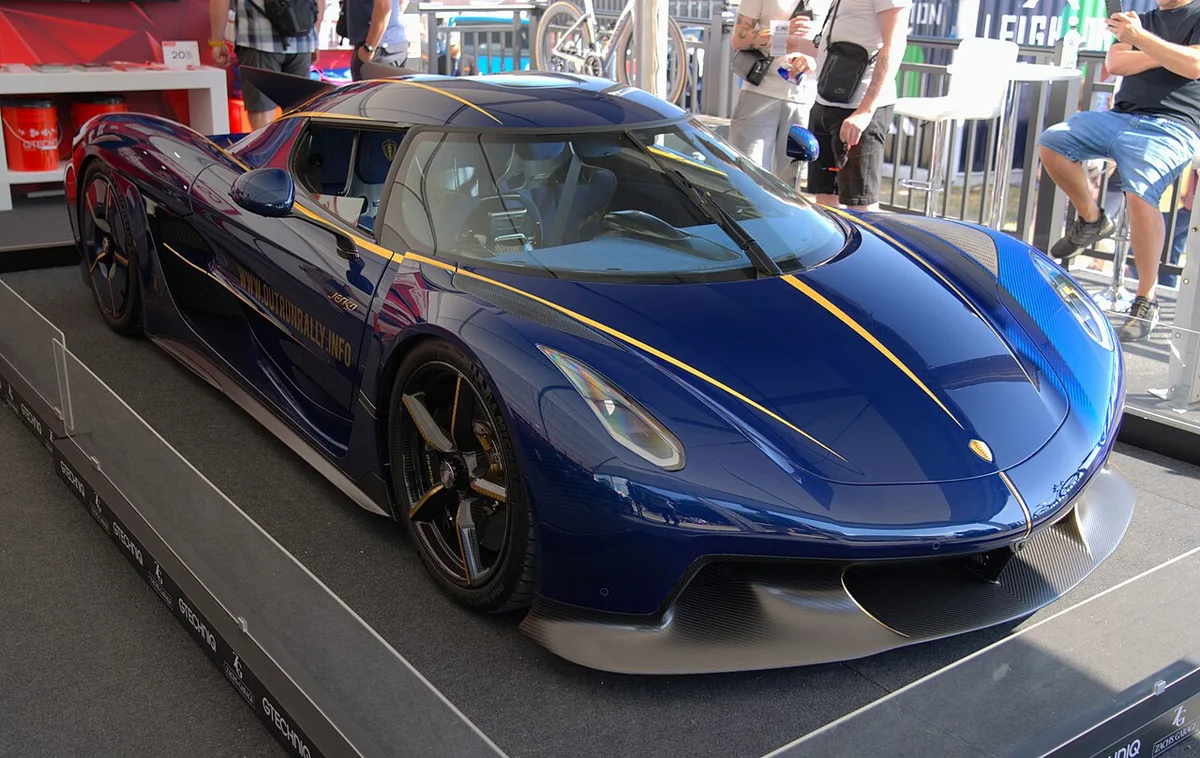
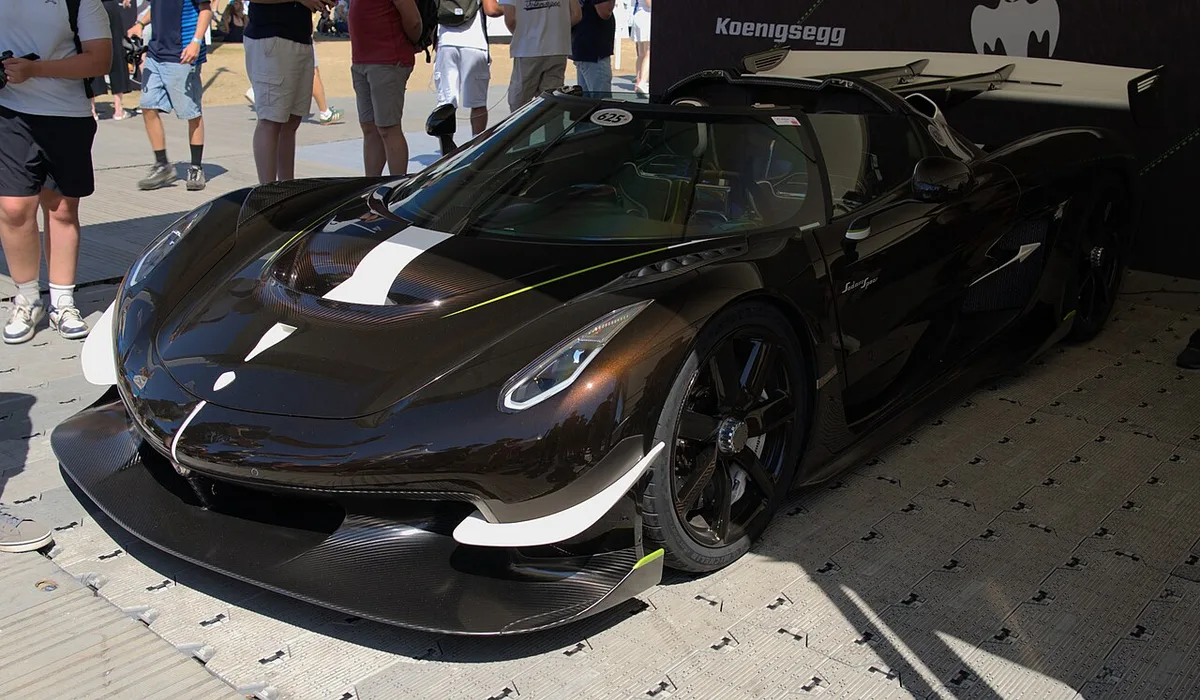
The Jesko replaced the Agera RS at Geneva in 2019. It is named for Jesko von Koenigsegg, the founder's father. Its 5.0-liter twin-turbo V8 makes 1,280 hp on gasoline and 1,600 hp on E85 through a nine-speed Light Speed Transmission. Two versions share one run of 125 cars. The Jesko Attack makes up to 1,400 kg of downforce, while the Jesko Absolut drops the big wing for a drag coefficient of 0.278. On August 7, 2025, an Absolut ran 0 to 400 to 0 km/h in 25.21 seconds.
Sadair's Spear, shown on June 25, 2025, is named for the horse Jesko von Koenigsegg, a gentleman jockey, rode in a final race in 1976. It makes 1,300 hp on regular fuel and 1,625 hp on E85, and all 30 sold at its private unveiling.
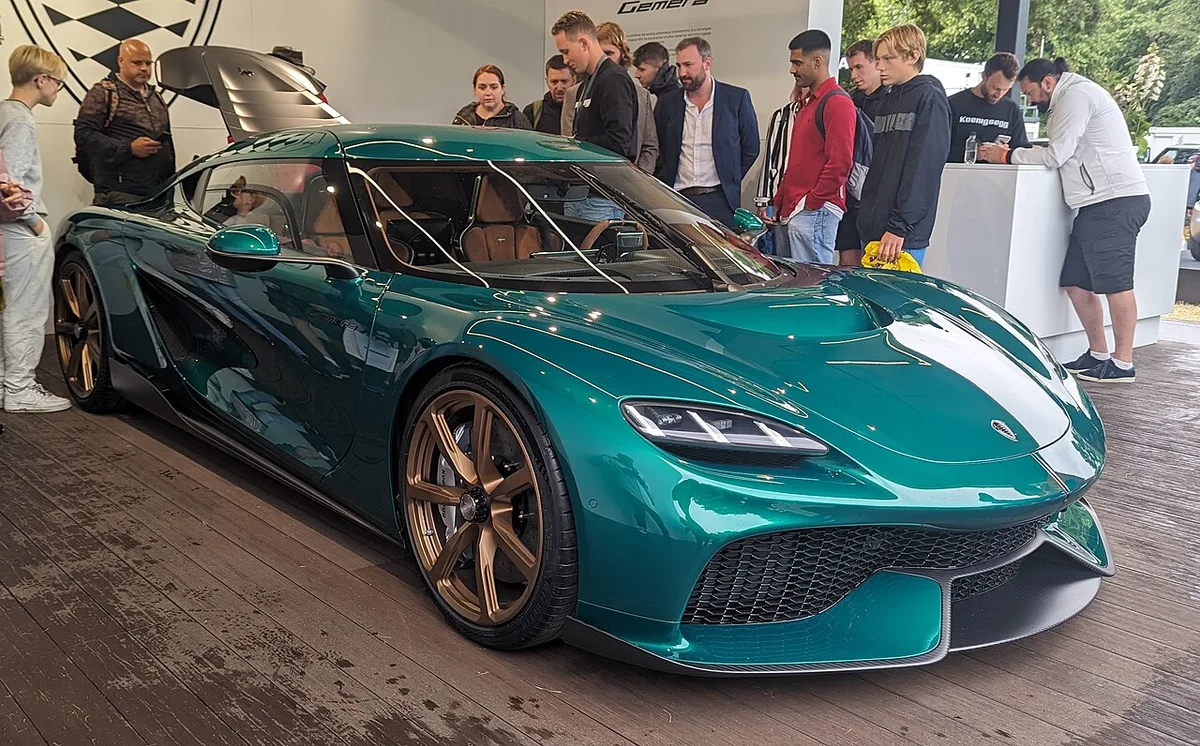
The Gemera is Koenigsegg's first four-seater, shown as a concept in 2020 and limited to 300 cars. The concept used a twin-turbo three-cylinder engine Koenigsegg calls the Tiny Friendly Giant, plus three electric motors. Koenigsegg's spec sheet for that version lists 1,700 hp. The production car, revealed in July 2023, adds a Hot-Vee V8 and a Dark Matter electric motor for 2,300 hp. It is also the first Koenigsegg with four-wheel drive.
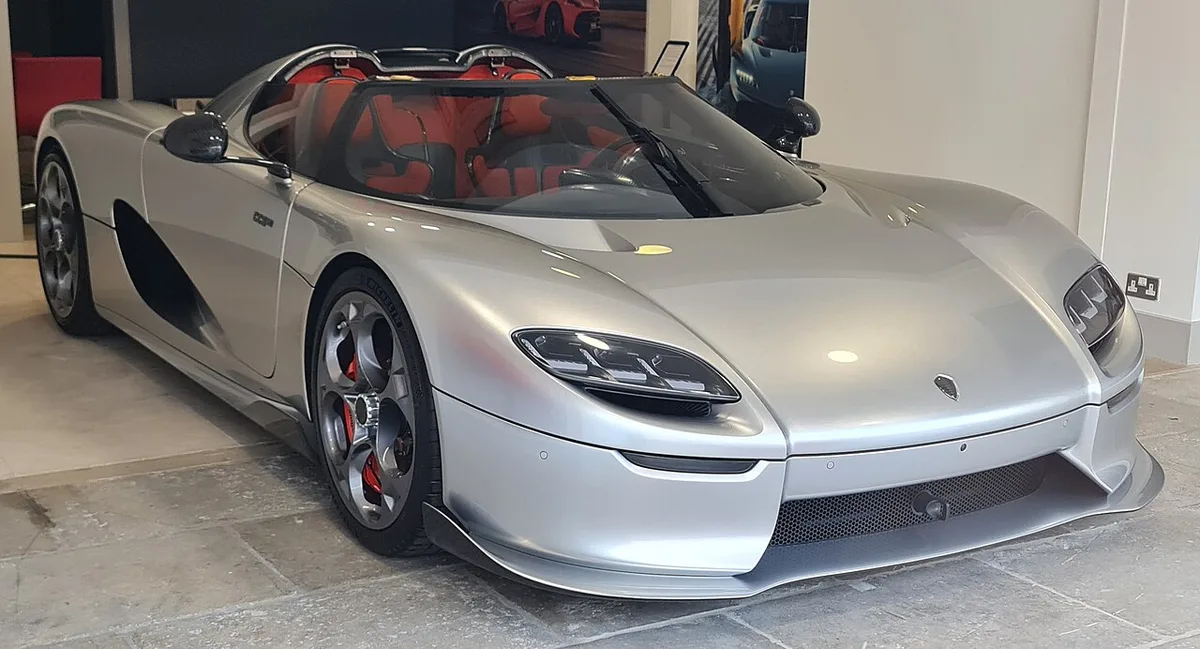
The CC850, revealed during Monterey Car Week in August 2022, is a modern take on the CC8S. Its twin-turbo 5.0-liter V8 makes 1,385 hp (1,185 hp on regular gasoline) in a car that weighs 1,385 kg. Its Engage Shift System pairs a gated six-speed manual with a nine-speed automatic. Koenigsegg planned 50 cars, then raised the run to 70 after it sold out.
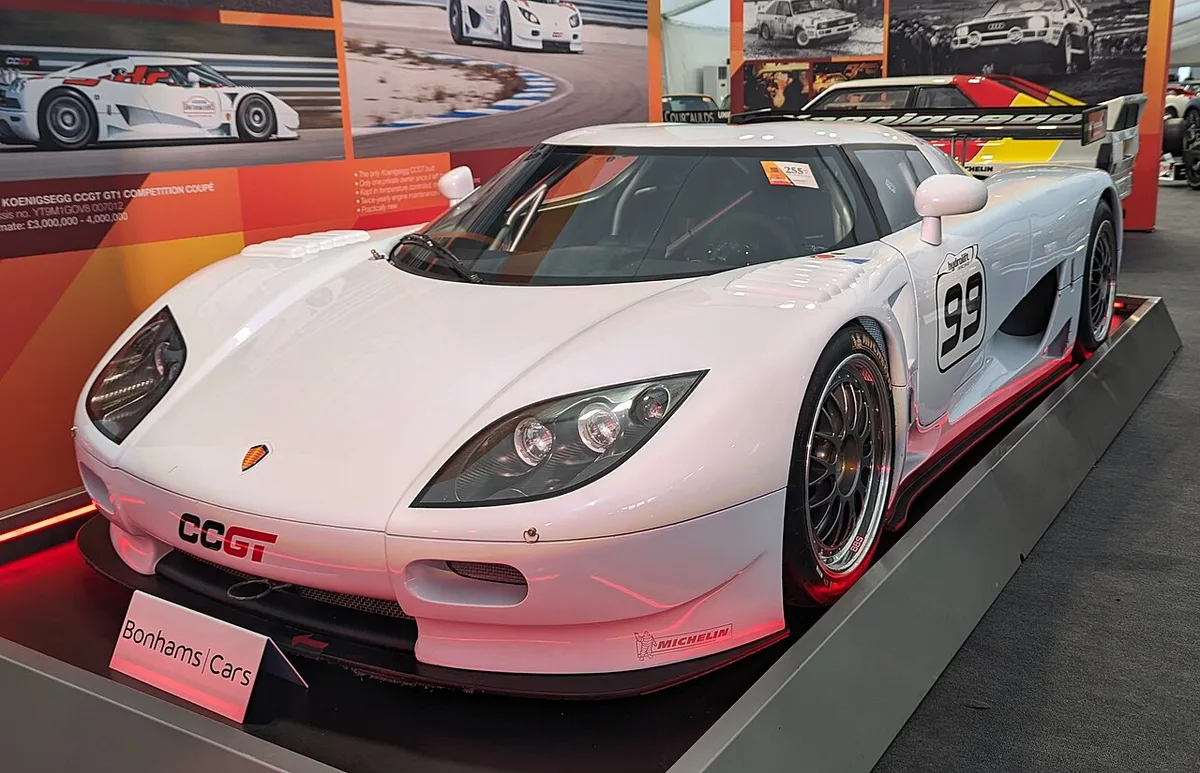
The CCGT1 is the newest. It honors the CCGT, a GT1 race car shown in 2007 with a naturally aspirated 600 hp V8. It never turned a competitive lap, because the FIA rewrote the GT1 rules two months into testing. The CCGT1 is built on the CC850 but keeps only its doors and removable roof. Nearly every other body panel was redesigned for more downforce and cooling. It makes 1,280 hp, or 1,600 hp on E85, and Motor1 reports all 70 were spoken for within hours of its debut.
Which era of Koenigsegg hypercar looks best to you? Rate them on WhipJury, or compare them with every Pagani model.
Sources:
The founding date, CC8S, CCR record, CCX, CCXR, Trevita, Agera, Agera R, Agera S, One:1, Agera RS, Agera Final, Regera drive system, Jesko, Jesko Absolut, Gemera, CC850, CCGT, and the August 2025 record: Koenigsegg history
The CC8S engine, roof, and doors: Koenigsegg CC8S
CCR production and years: Koenigsegg CCR
The CCX redesign: Koenigsegg CCX
The 49-car CCX family breakdown and the 2026 Regera sale: RM Sotheby's (CCX) and RM Sotheby's (Regera)
Agera family production and the 1,030 hp Agera S figure: Koenigsegg Agera
One:1 production: Koenigsegg One:1
Regera engine, motors, and production: Koenigsegg Regera and Regera specifications
Jesko output, downforce, and the 125-car run: Koenigsegg Jesko Attack and Jesko Absolut
The Jesko name and Sadair's Spear: Koenigsegg
The Gemera: Koenigsegg Gemera and Gemera specifications
The CC850: Koenigsegg CC850, CC850 specifications, and Koenigsegg (production increase)
The CCGT and CCGT1: Koenigsegg
The CCGT1 production run: Motor1
Photos via Wikimedia Commons: MrWalkr and Mr.choppers (CC BY-SA 4.0), Norbert Aepli (CC BY 4.0), Calreyn88 (CC0)
Frequently Asked Questions

Cam Walsh has been obsessing over cars since before he could drive one. Based out of Atlanta, Cam covers automotive design, car culture, and the eternal debate over which whips actually look the part.