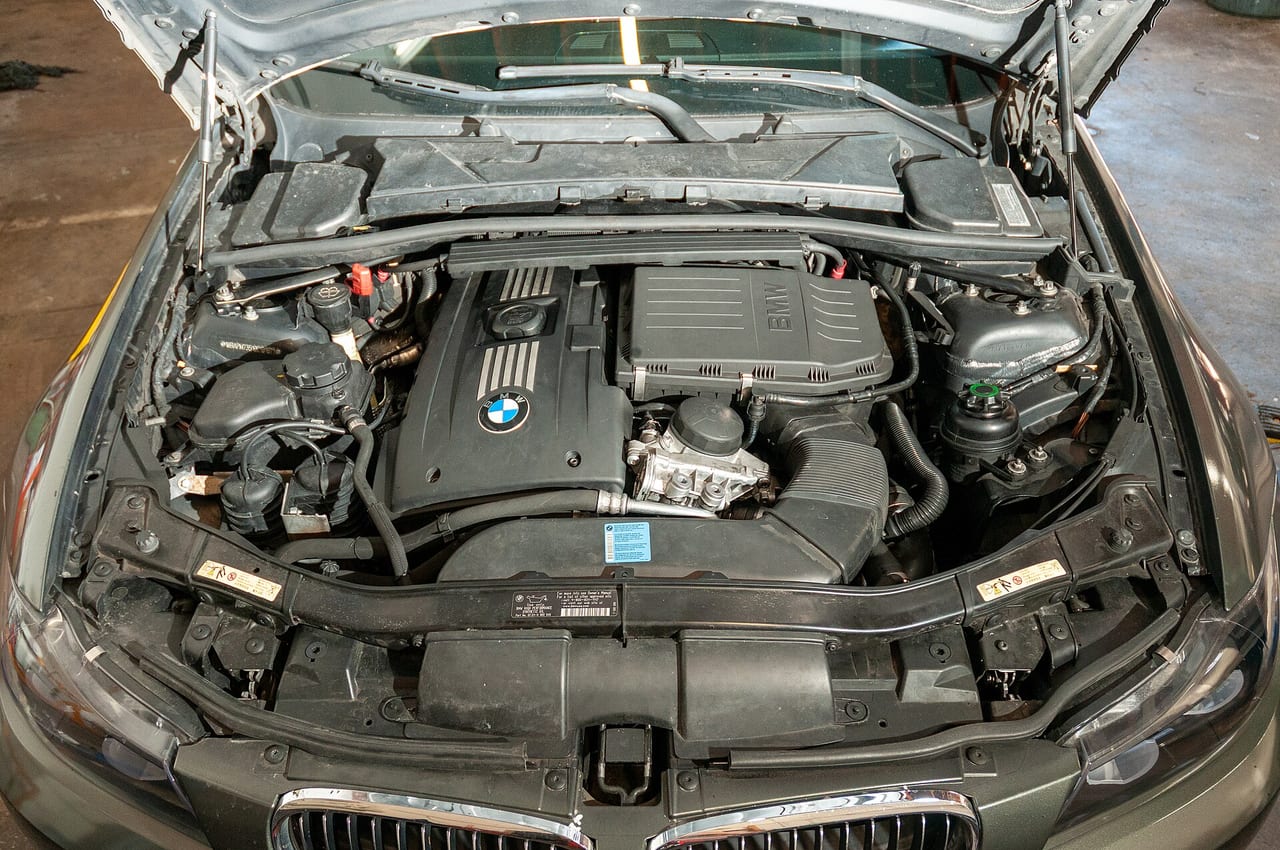
What is Twin-Turbo?
An engine with two turbochargers instead of one, arranged side by side, one after the other at different engine speeds, or in series.
A twin-turbo engine uses two turbochargers to compress its intake air. The most common layout is parallel: two identical turbos, each fed by half of the exhaust. On a V6 or V8 each turbo can serve one cylinder bank, which cuts down on exhaust plumbing, and on a four-cylinder or straight-six both can bolt to a single manifold. The main point is to reduce turbo lag, since two small turbos spool up faster than one big one. The first production car with twin turbos was the 1981 to 1994 Maserati Biturbo.
A sequential setup uses one turbo at low engine speeds and brings in the second at higher speeds. That gets around the weakness of a big turbo, which gives little boost low in the rev range, without giving up power at the top. The first production car to use it was the 1986 to 1988 Porsche 959. At low rpm, all the exhaust from both cylinder banks went to one turbo so it would build boost quickly, and valves gradually brought the second up to speed until both worked together at high rpm.
In a series, or compound, setup the first turbo's output is compressed again by the second. If each one triples the pressure, the result is nine times atmospheric pressure. It usually brings plenty of lag, so it's mostly found on piston aircraft engines and some high-performance diesels. A twin-scroll turbo is a different thing, a single turbocharger with a divided housing.
Related terms
Frequently asked questions
Twin-Turbo on the blog
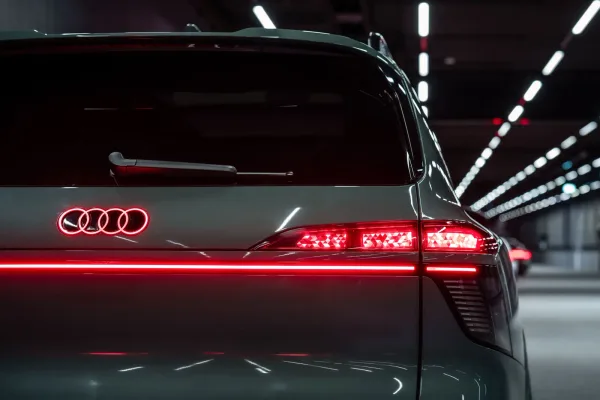
The Audi Q9, the brand's new full-size flagship SUV, is the first production car with three-dimensionally curved digital OLED taillights. Six panels hold 512 segments on glass 0.1 millimeters thick, and the rest of the design is kept quiet so the lights carry the look.
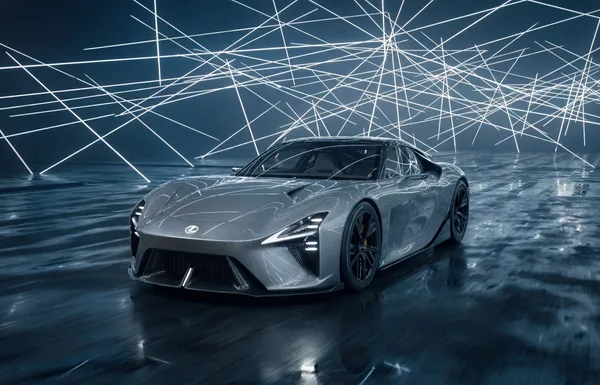
New spy photos show the production Lexus LFA testing in camouflage. The new LFA is electric, built on the Toyota GR GT's aluminum frame without the GR GT's V8. Motor1 says production is on schedule for 2027, and specs and pricing are still unannounced.
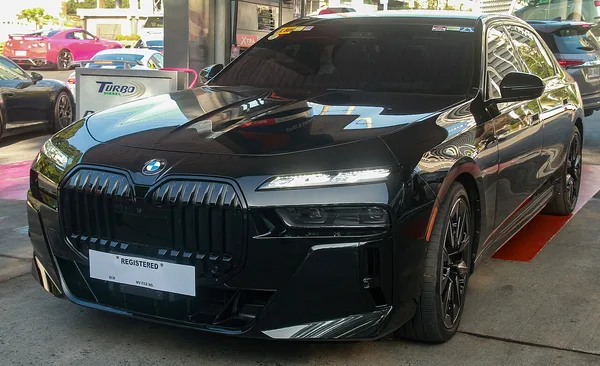
BMW has brought a V8 back to the facelifted 7 Series. The 2027 M760 xDrive uses a twin-turbo 4.4-liter V8 with about 570 hp, replacing the 536-hp 760i, and it adds visible exhaust tips, 22-inch wheels, and M mirror caps.
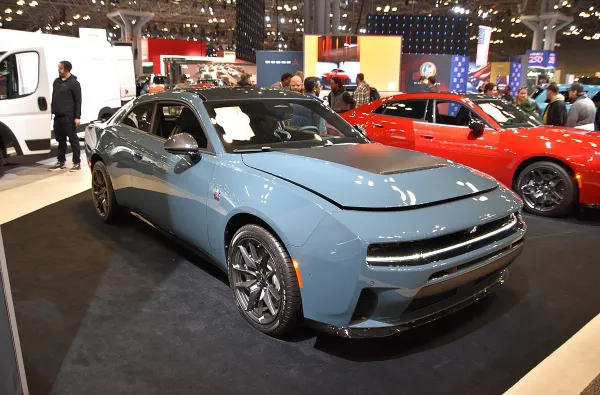
Reports from Automotive News and Mopar Insiders say Dodge plans a Charger SRT Hellcat with the supercharged 6.2-liter Hemi for the 2028 model year, built from late 2027 in two-door and four-door form. Dodge says it doesn't comment on future products.