Cupra and SEAT are separate brands made by the same company, SEAT S.A., in Martorell, Spain. Cupra started as the badge on SEAT's fastest cars and became a standalone brand on February 22, 2018. Both sit inside the Volkswagen Group, which bought 75 percent of SEAT in 1986. The younger brand is now the bigger one. Cupra delivered 328,800 cars in 2025, up 32.5 percent, while SEAT fell 17 percent to 257,400. The name causes its own confusion. It looks like it comes from cuprum, the Latin word for copper, and copper is the color Cupra puts on its logos and trim. SEAT's own glossary gives a different origin. The name stands for "Cup Racing," a link to the company's motorsport program.
How a SEAT badge became a brand
The first Cupra arrived in 1996. That year, SEAT's Ibiza Kit Car, a 250 hp rally car, won the 2-liter class of the World Rally Championship, which SEAT called the first world title for a Spanish brand. SEAT Sport built a road version alongside it, the 150 hp Ibiza 2.0, the first car to carry the Cupra badge. SEAT quoted 0 to 100 km/h in 8.3 seconds and a top speed of 216 km/h. The Ibiza went on to take the 2-liter title in 1997 and 1998, too.
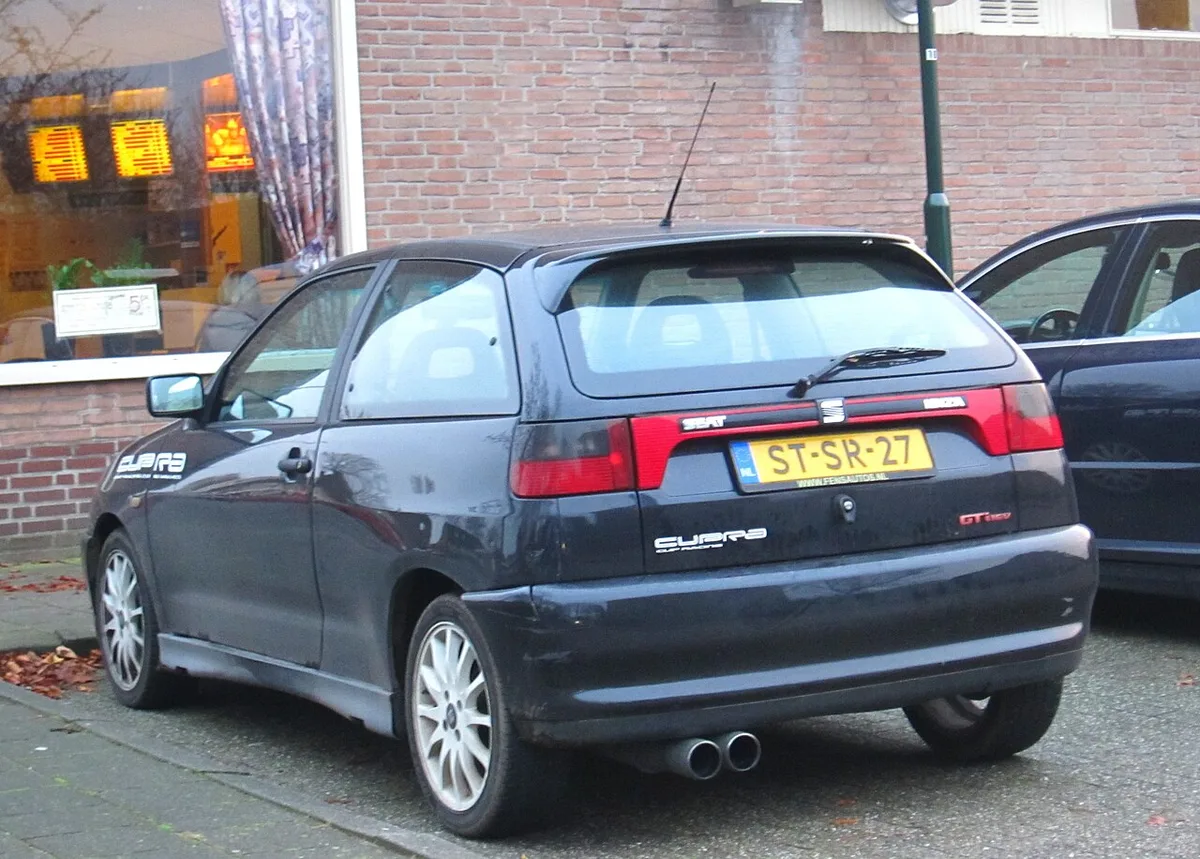
The Leon joined in 2000 with all-wheel drive and a 2.8-liter V6 that topped 200 hp. Until 2018, Cupra stayed a badge on SEAT's hottest Ibiza and Leon hot hatch models. That changed at an event in Terramar on February 22, 2018. SEAT launched Cupra as a brand and showed its first model, the Cupra Ateca SUV, with 300 hp and a 0 to 100 km/h time of 5.4 seconds. SEAT said Cupra would sit inside the company like its other wholly owned units and would take over the racing work done by SEAT Sport.
The money followed. In February 2020, SEAT's acting president, Carsten Isensee, called Cupra "our most profitable business unit." That month, Cupra opened its own headquarters, the CUPRA Garage, next door to SEAT's, as part of 5.3 million euros spent on new facilities.
The same event showed how one car can wear both badges. Cupra presented the first Cupra Leon to carry the Cupra logo, as a hatchback and a wagon, with outputs of 245, 300, and 310 hp. The previous-generation Leon Cupra had sold 44,000 units in four years. SEAT still sells its own Leon, so the same basic car is on sale under both brands. The current Cupra Leon makes up to 325 hp.
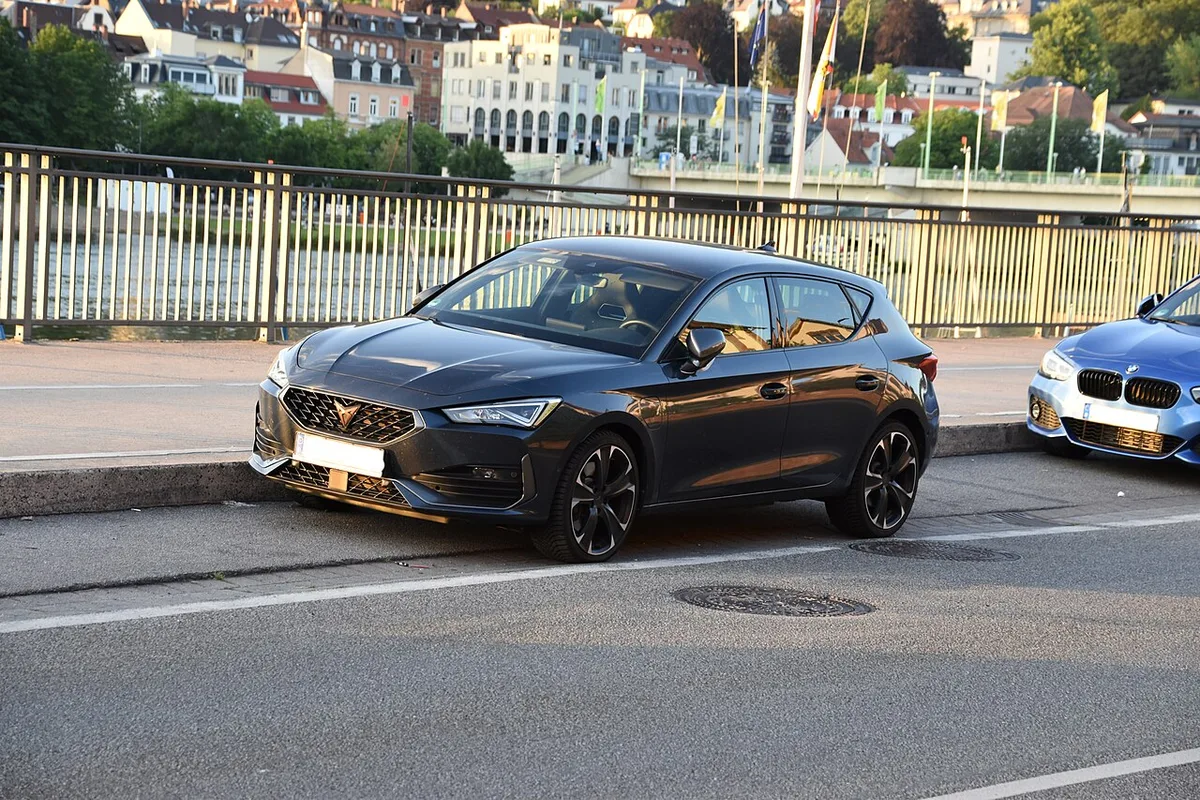
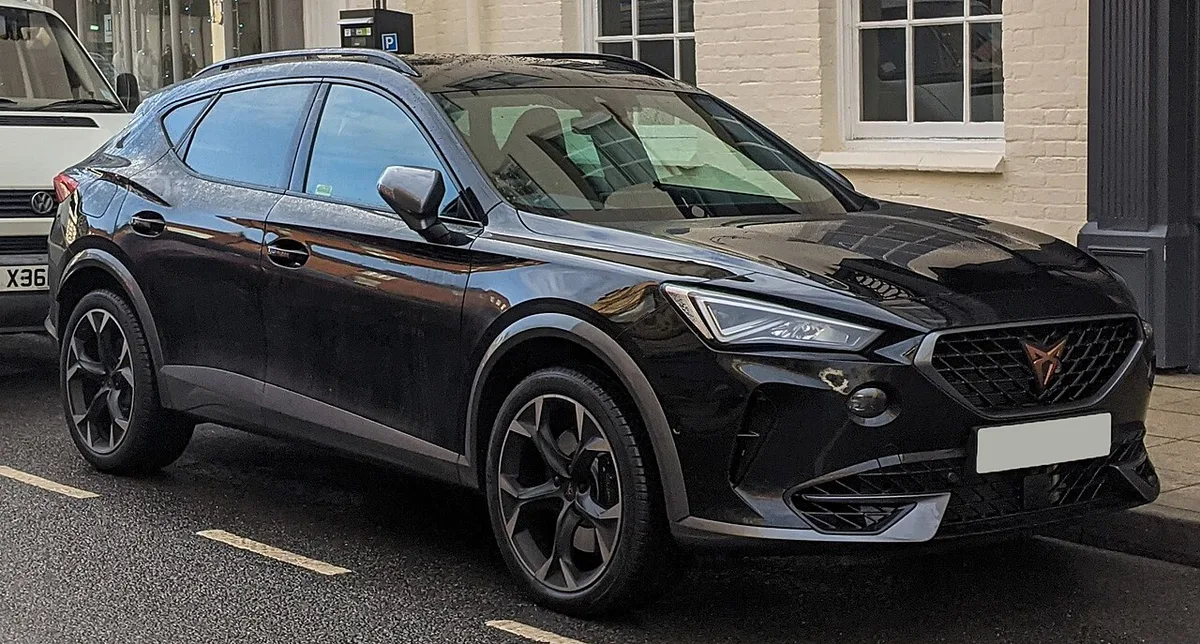
For a while, you could barely tell them apart. evo wrote that the earlier Cupra Leon was "almost completely indistinguishable" from one with a SEAT badge on the front. The car that broke the pattern was the Formentor, which Cupra called the first model developed exclusively for the brand. It premiered in March 2020, was due on sale that autumn, and was built on line 2 at Martorell, with a 310 hp gas engine and a 245 hp plug-in hybrid. It is named after a cape on Mallorca. In 2025, it was Cupra's best seller at 104,400 units.
Copper, triangles, and a shrinking SEAT
Cupra's look is built on two shapes. In an interview on Cupra's site, designer Alejandro Mesonero described the logo as two intersecting triangles, a shape with a stable base that points in a clear direction. Copper was chosen as a warm color, in contrast with cold aluminum. "We want to convey this feeling of warmth that the brand has," Mesonero said. The 2024 update of the Formentor and Leon pushed that further. Both got a shark-nosed face with triangular matrix LED headlights, and the same triangle shape frames the lit Cupra logo at the rear. evo said the new nose gives the Leon "a personality of its own." If you want to see how carmakers stretch one design across badges, our guide to badge engineering covers the idea. Cupra's range now includes the Raval, a small electric city car, plus the electric Born and Tavascan, the Leon and Leon Sportstourer, the Formentor, the Terramar, and the Ateca. The Terramar sold 66,000 units in its first full year, the Born 43,700, and the Tavascan 36,000. SEAT S.A. says Cupra has launched eight models in eight years and passed one million total sales in 2025.
SEAT's own future is less certain. On September 4, 2026, SEAT S.A. said the business case for further investment in the SEAT brand was "increasingly challenging" and that a gradual phase-out of the SEAT brand is possible after 2030. It added that no final decision has been taken, and mild-hybrid versions of the Ibiza and Arona are still planned for 2027. A day earlier, German business magazine WirtschaftsWoche had reported an internal plan to retire SEAT by the end of 2029.
Americans will have to keep waiting. Cupra had planned to enter the US in 2030, but on July 28, 2025, it postponed that launch. "We're not stopping, just postponing our U.S. launch," said Sven Schuwirth, SEAT's sales and marketing chief. In March 2026, CEO Markus Haupt told Edmunds the brand would look again once things stabilize. The September 2026 plan lists the Middle East, in the third quarter of 2027, as the next market and the US as a longer-term ambition.
Copper-trimmed Formentor or plain SEAT Leon? Cast your vote on WhipJury.
Sources:
The 2018 brand launch, the Cupra Ateca, and Cupra's place inside SEAT: SEAT
The "Cup Racing" name and the 1996, 1997, and 1998 titles: SEAT
The 1996 Ibiza Kit Car, the first Cupra road car, and the 2000 Leon: SEAT press release, via SEATCUPRA.NET
The Latin word for copper: PubChem
The logo and the copper color: Cupra
The 2020 headquarters, the first Cupra Leon, and the Isensee quote: Cupra press release
The Formentor as the first Cupra-only model: Cupra press release
The 2024 shark nose and triangular lights: Cupra
The current lineup and Leon output: Cupra and Cupra Leon
The SEAT Leon still on sale: SEAT UK
How the two Leons compare: evo
2025 sales by brand and model: Volkswagen Group
The US postponement and the Schuwirth quote: Volkswagen Group
SEAT's future, the Middle East, and the US ambition: Volkswagen Group
The 1986 purchase: Motor1
Haupt's comments to Edmunds: Motor1
The WirtschaftsWoche report: Catalan News
Photos via Wikimedia Commons: Vauxford (CC BY-SA 4.0), Rutger van der Maar and Charles from Port Chester, New York (CC BY 2.0)
Frequently Asked Questions

Cam Walsh has been obsessing over cars since before he could drive one. Based out of Atlanta, Cam covers automotive design, car culture, and the eternal debate over which whips actually look the part.