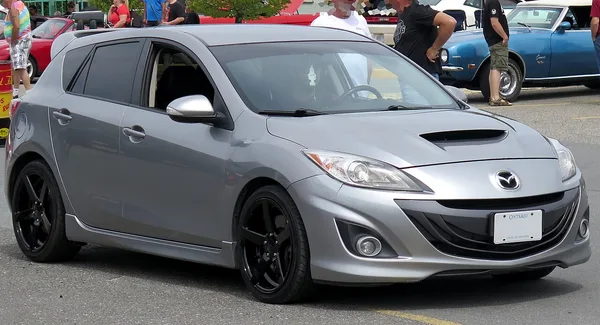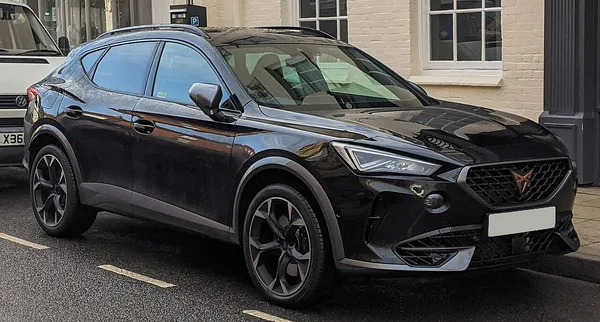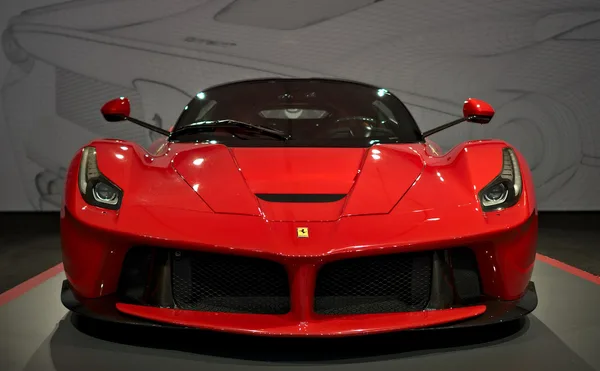
The malaise era is the nickname for American cars built from about 1973 to 1983, when an oil embargo, fuel economy and emissions rules, and 5 mph bumper laws drained horsepower and changed how cars looked. The low point is easy to pick. In 1975, the base Chevrolet Corvette made 165 hp. Hagerty writer Rob Sass says that by most accounts, journalist Murilee Martin coined the term, borrowing it from a famous speech by President Jimmy Carter. Carter never said the word. Carter's July 15, 1979, address warned of "a crisis of confidence," and the American Presidency Project files it under the title "The Malaise Speech" even though "malaise" appears nowhere in the text as delivered.
The rules behind it
The first blow was the oil embargo of October 1973. During that year's Arab-Israeli War, Arab members of OPEC banned oil exports to the United States. The State Department's Office of the Historian says the price of a barrel first doubled, then quadrupled, before the embargo was lifted in March 1974. On January 2, 1974, President Richard Nixon signed a law that blocked federal highway projects in any state with a speed limit over 55 mph. Congress followed with the Energy Policy and Conservation Act of 1975. It set Corporate Average Fuel Economy rules of 18 mpg for 1978 cars, rising to 27.5 mpg by 1985, which the Congressional Research Service describes as essentially doubling new-car fuel economy. The Environmental Protection Agency says automakers put catalytic converters on 1975 model cars, which ran only on unleaded gas. Bumpers changed even sooner. Federal Motor Vehicle Safety Standard 215 took effect in September 1972, so most 1973 cars had to protect their lights and safety parts in a 5 mph front impact and a 2.5 mph rear impact. For 1974, the 5 mph test applied front and back, which pushed nearly every automaker from slim chrome bumpers to heavy ones. Regulators cut the test to 2.5 mph in 1982, effective with 1983 models.
The oddest rule covered speedometers. Starting with 1980 models, a federal standard capped speedometer readings at 85 mph and called for the 55 mph mark to stand out. The 1980 Corvette's speedometer read only to 85. By June 1982, when Road & Track wrote about it, the rule had been rescinded.
What it did to the cars
Some of the lost horsepower was a change in math. For 1972, automakers switched from gross to SAE net ratings, which Hagerty calls more realistic. The Corvette's LT1 V8 was rated at 370 hp in 1970. After a 1971 compression cut and the switch to net ratings, it was listed at 255 hp for 1972. Sass figures that 200 net hp in 1984 was probably closer to 250 hp on the old gross scale.
The rest of the loss was real. With a single catalytic converter for 1975, the Corvette offered 165 hp, or 205 hp with the optional L82. California buyers of a 1980 Corvette got a 305 V8 rated at 180 hp. Pontiac's Trans Am got 200 hp from 455 cubic inches in 1975. Chevrolet dropped the Camaro Z28 for 1975 and brought it back for 1977 with 185 hp. Sass writes that by 1978, the fastest American car was a truck, the Dodge Lil' Red Express pickup.
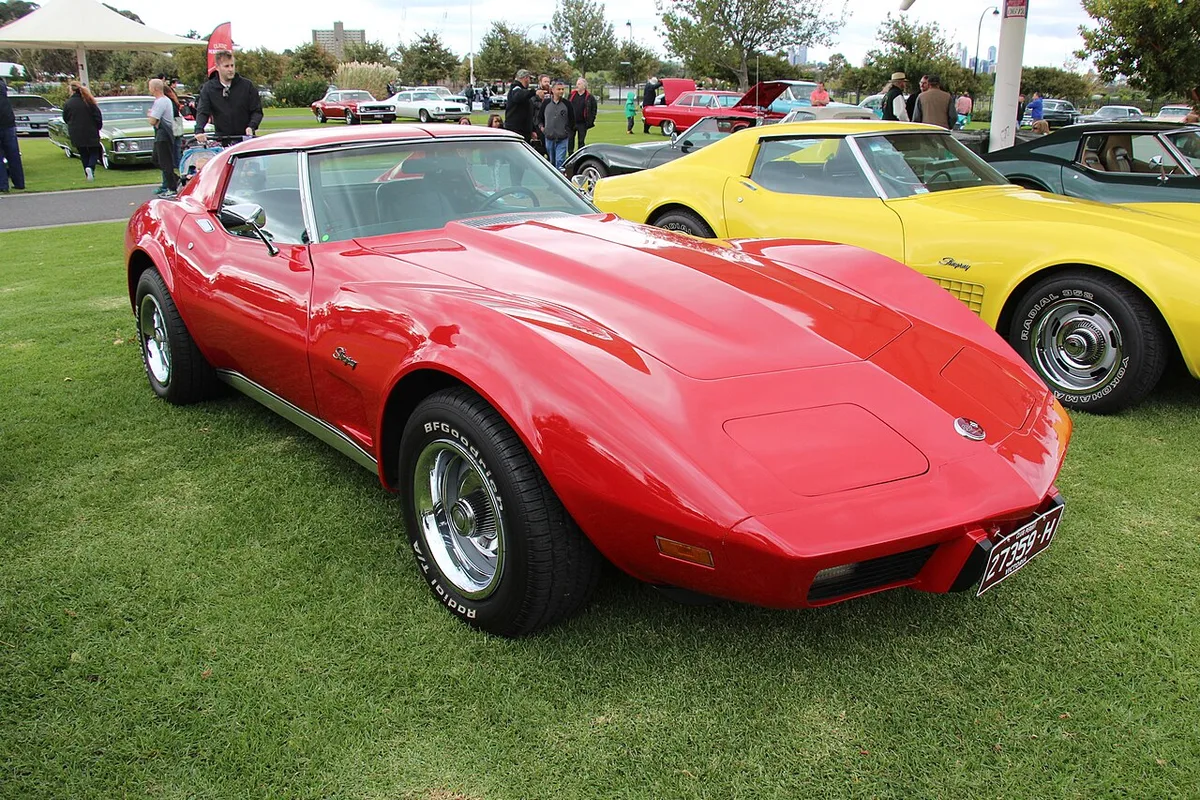
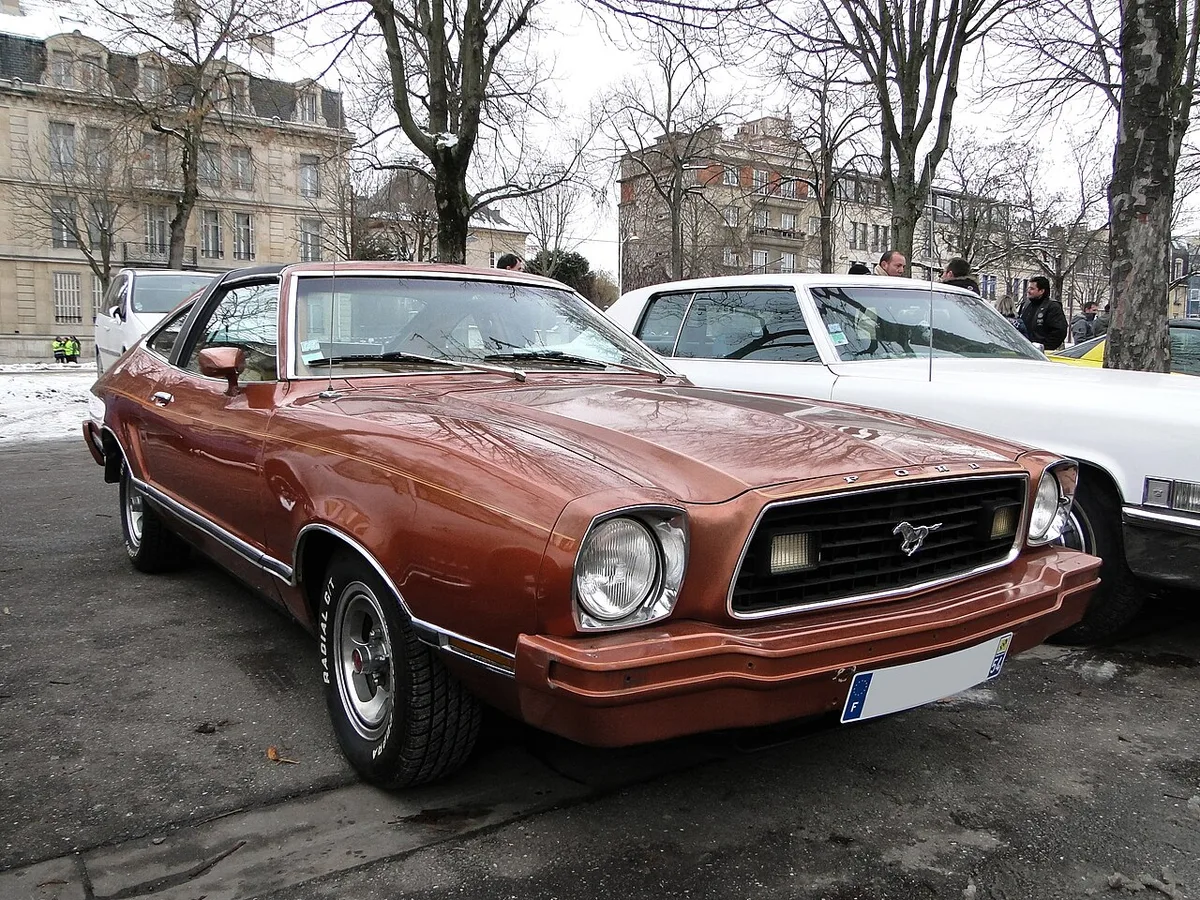
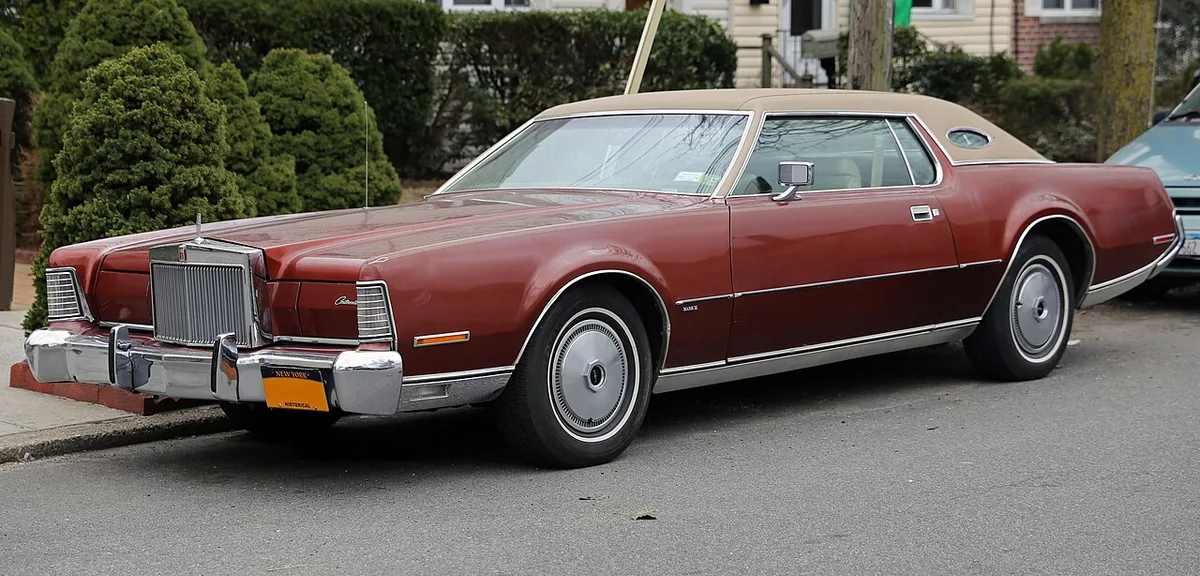
The Ford Mustang II shows why the label is partly a matter of taste. The 1974 car came with a 2.3-liter four rated at 85 hp or a 2.8-liter V6 with 105 hp, and 1974 was the only year a Mustang offered no V8. Buyers didn't mind. Martin notes that sales were nearly triple the 1973 Mustang's, and that the four-cylinder car had a better power-to-weight ratio than a 1973 Mustang with the base six. The looks changed as fast as the engines. Federal bumper standards forced a major facelift on the 1974 Camaro, with aluminum bumpers and a new fiberglass nose. The 1973 Corvette's body-color plastic front bumper made its nose about 30 pounds heavier. Hagerty's Thomas Klockau figures that Lincoln's 1974 Continental restyle was at least half due to the 5 mph rear bumper rule.
Lighting and rooflines followed. US cars had been held to round sealed-beam headlights since 1940, with quads allowed from 1957. In 1975, the National Highway Traffic Safety Administration allowed rectangular sealed beams, as one pair or as a set of four. (Round lamps have since come back for other reasons, which we covered in why round headlights are back.) Lincoln's 1972 Mark IV came with a vinyl roof and introduced an oval opera window, technically optional at first, that became a Lincoln trademark. For 1975, the Continental coupe got a more formal roof with a fixed opera-style quarter window.
Technology ended the slump. Sass credits fuel injection, three-way catalysts with oxygen sensors, and turbochargers. By 1984, the turbocharged Buick Regal Grand National made 200 hp and 300 lb-ft, the Camaro Z28 made 190 hp, and the 5.0-liter Mustang made 175 hp. Both pony cars topped 200 hp the next year, and 1984 also brought the fourth-generation Corvette. Ford won approval for composite headlights in 1983, and the 1984 Lincoln Mark VII became the first car sold in the US with them. The 55 mph limit lasted longer. It was modified in 1987 and repealed in 1995.
Pick the malaise-era face you'd defend and rate it on WhipJury.
Sources:
The term's origin, the Trans Am, the Lil' Red Express, the 1984 recovery, the gross versus net estimate, and the speed limit's end: Hagerty
The text of Carter's July 15, 1979, speech and its "Malaise Speech" title: American Presidency Project
The oil embargo, oil prices, and the March 1974 end: Office of the Historian
The January 2, 1974, speed limit law: Federal Highway Administration
The 1975 fuel economy law and the 18 mpg to 27.5 mpg schedule: Congressional Research Service
Catalytic converters on 1975 cars: Environmental Protection Agency
The 1973 and 1974 bumper standards: Hagerty
The 1982 bumper rollback: National Highway Traffic Safety Administration report, via the Transportation Research Board
The 85 mph speedometer rule and its rescission: Road & Track, via the Transportation Research Board
Corvette output by year, the 1973 nose, the 1975 converter, and the 85 mph speedometer: Hagerty
The Camaro Z28 and the 1974 facelift: Hagerty
The Mustang II engines and sales: Hagerty
Sealed-beam and composite headlights: Hagerty
The Mark IV opera window and vinyl roof: Hagerty
The 1974 and 1975 Continental changes: Hagerty
Photos via Wikimedia Commons: Alexandre Prévot (CC BY-SA 2.0), Sicnag (CC BY 2.0), Mr.choppers (CC BY-SA 3.0)
Frequently Asked Questions

Jeffrey Wiley has spent more time than he'd like to admit thinking about what makes a car look right. He writes about automotive design, car culture, and the opinions people have strong feelings about. He lives in north Georgia.