Car culture has its own language and it moves fast. A conversation about a Skyline build can cover RB26 specs, ATTESA AWD, coilovers, hellaflush stance, and RWB widebody kits before you've finished your first coffee. If you don't know the vocabulary, you're not lost exactly, but you're definitely translating while everyone else is talking.
That's what the WhipJury Car Culture Glossary is for. 187 terms, from foundational to deep-cut, covering everything from the basics every driver should know to the subcultures and tuner vocabulary that most automotive sites never bother to explain.
Why Car Terminology Is Worth Knowing
The obvious answer is that knowing the terms makes you a better participant in the conversation. But there's a more practical reason. Understanding what a term actually means changes how you evaluate a car. When someone says a build is OEM-plus, that tells you something specific about the philosophy behind the modifications. When a car is described as a sleeper, the visual argument becomes interesting in a specific way. When a widebody kit is mentioned, knowing whether it's a Liberty Walk treatment or a Rocket Bunny kit tells you something about the design intent before you see a photo.
That context matters in faceoffs. A car submitted to WhipJury carries its build story in the photo whether the voter knows how to read it or not, and voters who understand the vocabulary tend to rate with more precision. They're not just reacting to the color and the stance. They're reading the decisions.
Some Terms Worth Knowing Before Your Next Faceoff
Stance is one of the most loaded terms in the glossary. It refers to the overall visual relationship between the car's body and its wheels, including ride height, camber angle, and wheel fitment. A car with good stance looks planted. A car with bad stance looks like it can't decide what it wants to be. Stance is often the first thing that affects a faceoff result before any other design element registers.
Hellaflush is the specific end of the stance spectrum where wheels are pushed to the outer edge of the arches with significant negative camber, creating a flush or poked wheel-to-fender relationship. It's visually polarizing in exactly the way the faceoff format was designed to measure. Some voters find it exceptional. Many find it absurd. The faceoff results for hellaflush builds reflect this split almost perfectly.
Restomod describes a classic car that has been restored with modern mechanical components while keeping the original body and design intact. A 1969 Camaro with a modern suspension, a fuel-injected engine, and current brakes is a restomod. These cars tend to rate extremely well in faceoffs because they combine the design language of eras that understood visual commitment with the mechanical integrity that makes the photo look right.
Shooting brake is a body style that most people can't name but immediately recognize as interesting when they see one. A two-door wagon with a fastback roofline that extends to a vertical tailgate. The Ferrari GTC4Lusso is a shooting brake. The Volvo P1800ES is a shooting brake. They rate well in faceoffs because the body style is unusual enough to generate visual interest while being elegant enough to reward it.
Grand tourer is a category that has produced some of the best-looking cars in automotive history. Long-distance, high-speed travel in a two-door body with real interior space. The Aston Martin DB11, the Ferrari Roma, the Bentley Continental GT. Grand tourers win faceoffs at a disproportionate rate because the body style and the design intent align perfectly: elegant, capable, built to be looked at from outside and lived in from inside.
The Subculture Terms That Tell You Where a Car Came From
The glossary covers several Japanese car subcultures that are worth understanding if you spend any time rating JDM vehicles. Bosozoku describes the extreme Japanese style with massively extended exhaust pipes, exaggerated body modifications, and aggressive visual excess that deliberately violates conventional good taste. Bosozoku builds rate unpredictably in faceoffs because the style requires specific cultural context to evaluate fairly.
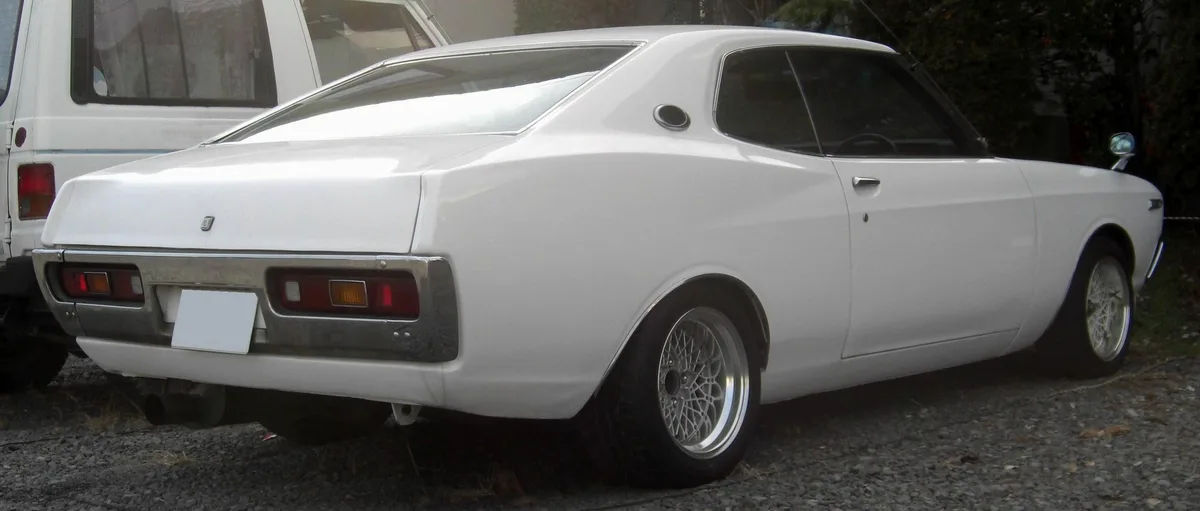
Shakotan is the lower-slung, slammed Japanese street style that influenced global stance culture. VIP style is the Japanese luxury modification culture centered on large sedans with deep dish wheels and lowered stance. Itasha is the practice of covering cars with anime character artwork. Kanjozoku refers to the illegal street racing culture on Osaka's loop road. Each of these is a specific visual world with its own logic and its own relationship to what looks right.
JDM itself, Japanese domestic market, is probably the most used and most misused term in car culture. Technically it refers to vehicles and parts produced specifically for the Japanese domestic market. Culturally it's used as shorthand for Japanese performance car culture broadly, including cars that were never actually sold in Japan. Knowing the distinction matters when someone claims their Honda is JDM spec.
Performance Terms That Affect How a Car Looks
Several performance modifications have significant visual consequences that show up in faceoff photos. Coilovers are adjustable suspension components that replace the stock spring and shock setup. Beyond the performance benefits, they allow precise ride height adjustment which directly changes how the car looks in a photo. A car on properly set coilovers typically looks better than the same car at stock height because the wheel arch gap tightens and the stance becomes more intentional.
Fender flares and widebody kits fill the wheel arches with wider wheels and tires, which is one of the single most effective visual upgrades available on most cars. When done well, a widebody conversion makes a car look more planted, more aggressive, and more expensive. When done poorly, it looks like someone bought a kit and installed it without considering the car's proportions. The difference is usually immediately visible in a faceoff.
The ducktail spoiler and the full GT wing are the two poles of rear aero philosophy and they generate different visual reactions. A ducktail is subtle, integrating into the rear bodywork with minimal visual disruption. A GT wing is functional, large, and impossible to miss. Both can look right or wrong depending on the car. A Porsche 911 GT3 wing is correct. The same wing on a grocery-getter is not.
The Event and Community Terms
Cars and Coffee is the informal weekend gathering format where car owners meet in parking lots, usually early morning, to show their vehicles and talk. It's one of the primary contexts in which cars are photographed by owners and enthusiasts, which means it's one of the primary sources of WhipJury submissions. Knowing what Cars and Coffee is explains why so many WhipJury submissions have parking lot backgrounds and morning light.
Radwood is the specific event format dedicated to cars and culture from the 1980s and 1990s. It's responsible for a significant revival of interest in vehicles from those decades and a corresponding spike in the prices and visibility of cars from that era. If you see a clean 1980s or 1990s car in a WhipJury faceoff with a particularly strong submission photo, there's a reasonable chance it was photographed at a Radwood event.
SEMA Show is the annual industry trade show in Las Vegas that functions as the primary showcase for aftermarket builds in America. SEMA builds are typically the most visually extreme and technically ambitious examples of whatever modification trend is currently dominant. They look spectacular in photos and sometimes impractical in person. They rate extremely well in faceoffs and rarely represent what the average build of the same type looks like.
Use the Glossary
187 terms is not comprehensive. Car culture generates vocabulary faster than any glossary can capture it and regional subcultures add their own layers that don't always make it into mainstream documentation. But 187 terms covers enough ground that anyone willing to spend twenty minutes with the WhipJury glossary will leave it with a substantially better ability to read what a car is communicating in a faceoff photo.
The vocabulary is the prerequisite for the conversation. The conversation happens on WhipJury.
Frequently Asked Questions

Cam Walsh has been obsessing over cars since before he could drive one. Based out of Atlanta, Cam covers automotive design, car culture, and the eternal debate over which whips actually look the part.