DuelsLeaderboardGarageBlogCarsGlossaryBrowse

RWB

Car culture term

RWB
Photo: Oleg Yunakov / Wikimedia Commons · CC BY-SA 4.0

What is RWB?

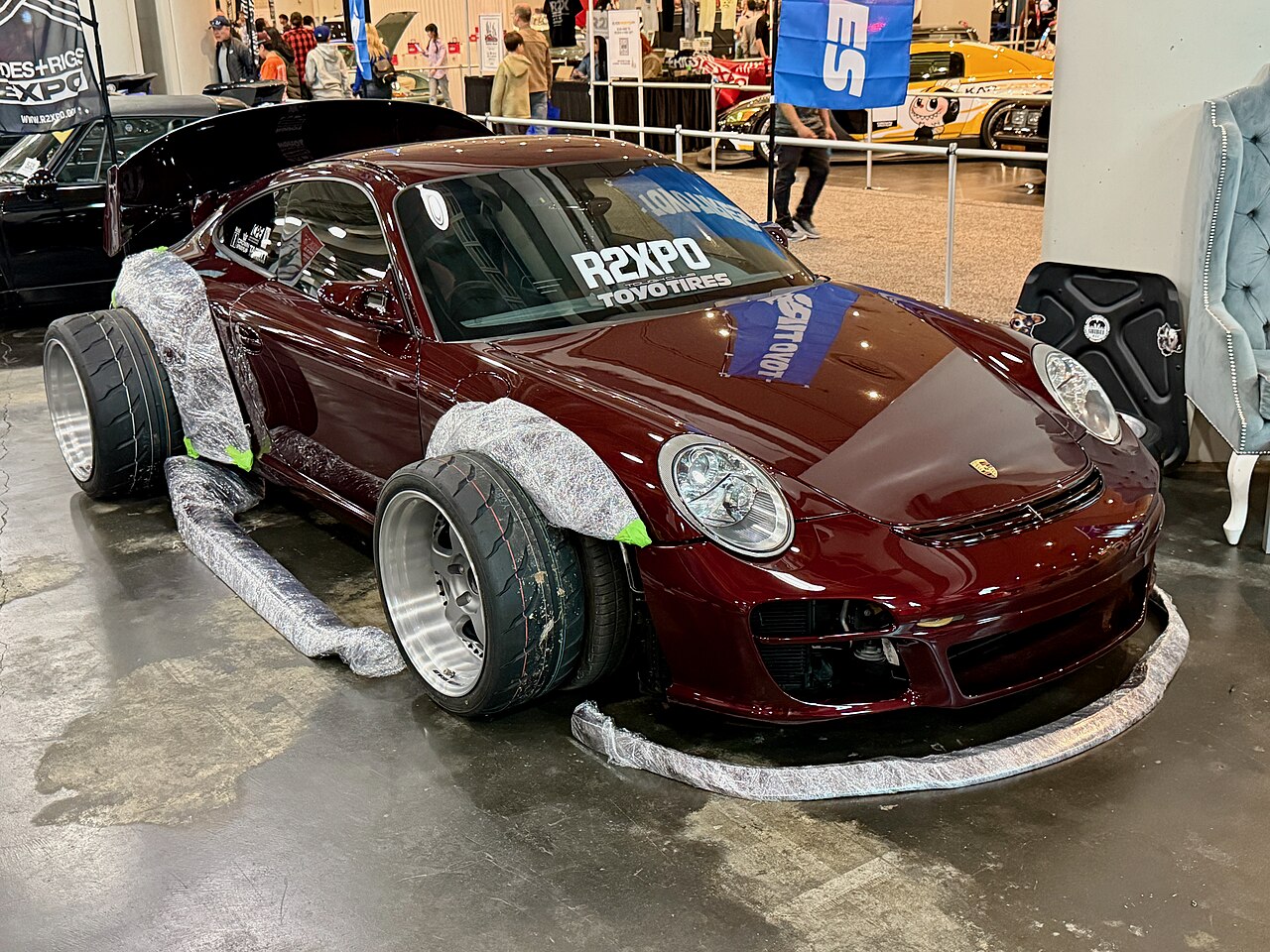
Rauh-Welt Begriff. Akira Nakai's iconic Japanese Porsche tuning house, famous for hand-built widebody 911s with riveted fender flares.

RWB stands for Rauh-Welt Begriff (German for "rough world concept"), the Japanese Porsche tuning house founded by Akira Nakai in the late 1990s. RWB is famous for hand-building widebody Porsche 911s with riveted fender flares, deep-dish wheels, and individualized livery. Each build is done by Nakai personally, who travels globally to build cars on-site for clients.

The aesthetic is unmistakable: massively flared fenders that Nakai cuts and rivets to the original 911 bodywork, often paired with bright color schemes, a low ride height, and oversized wheels (typically 17 or 18 inch with deep dish). The interior is usually retained close to stock. Most RWB builds are based on the 930 or 964 chassis, though more recent builds have used 993, 996, and 997 chassis.

Each RWB has a name (chosen by Nakai or the owner). Famous RWB cars include Stella Artois, Pandora One, Royal Maddness, and Big Daddy. The total number of RWB builds globally is now over 500 cars. Prices for an RWB conversion typically start around $25,000 to $50,000 (before donor car cost), with bespoke builds reaching higher.
Related terms

WidebodyJDM

Frequently asked questions

Who is Akira Nakai?
Akira Nakai is the founder of RWB and personally builds every RWB car. He travels globally to client locations and typically completes a build in 4-7 days on site. Nakai is famous for his hands-on approach and his refusal to delegate the actual fabrication work.
How much does an RWB build cost?
Conversion cost (excluding donor 911) typically starts around $25,000-$50,000 and goes up. Plus the cost of the donor 911 (a clean 964 starts around $50,000 used). Total cost for a complete RWB build is typically $80,000-$150,000 minimum, with bespoke high-end builds exceeding $250,000.
Are RWB builds reversible?
Not really. The fender flares are riveted directly to the original bodywork; removing them would damage the body panels. Most RWB builds are also painted in custom schemes that would require significant work to return to a stock-style finish. RWB owners generally accept the build as a permanent transformation.
What chassis does Nakai prefer?
Most early RWB builds were based on 930 (1974-1989) and 964 (1989-1994) air-cooled 911s. More recent builds have used 993, 996, and 997 water-cooled chassis. The 964 remains a particular Nakai favorite and many of the most famous RWB cars are based on it.
Are RWB cars track-driven?
Some are. Nakai himself has competed in time attack events with RWB cars. Most owners daily drive or show their cars rather than track them, but the chassis is genuinely capable of track use. The widebody allows wider tires than stock, which improves track performance.

RWB on the blog

The Car Vocabulary That Changes How You See Every Faceoff

Car culture has its own language and it moves fast. A conversation about a Skyline build can cover RB26 specs, ATTESA AWD, coilovers, hellaflush stance, and RWB widebody kits before you've finished your first coffee. If you don't know the vocabulary, you're not lost exactly, but you're definitely translating while everyone else is talking.

Back to Glossary