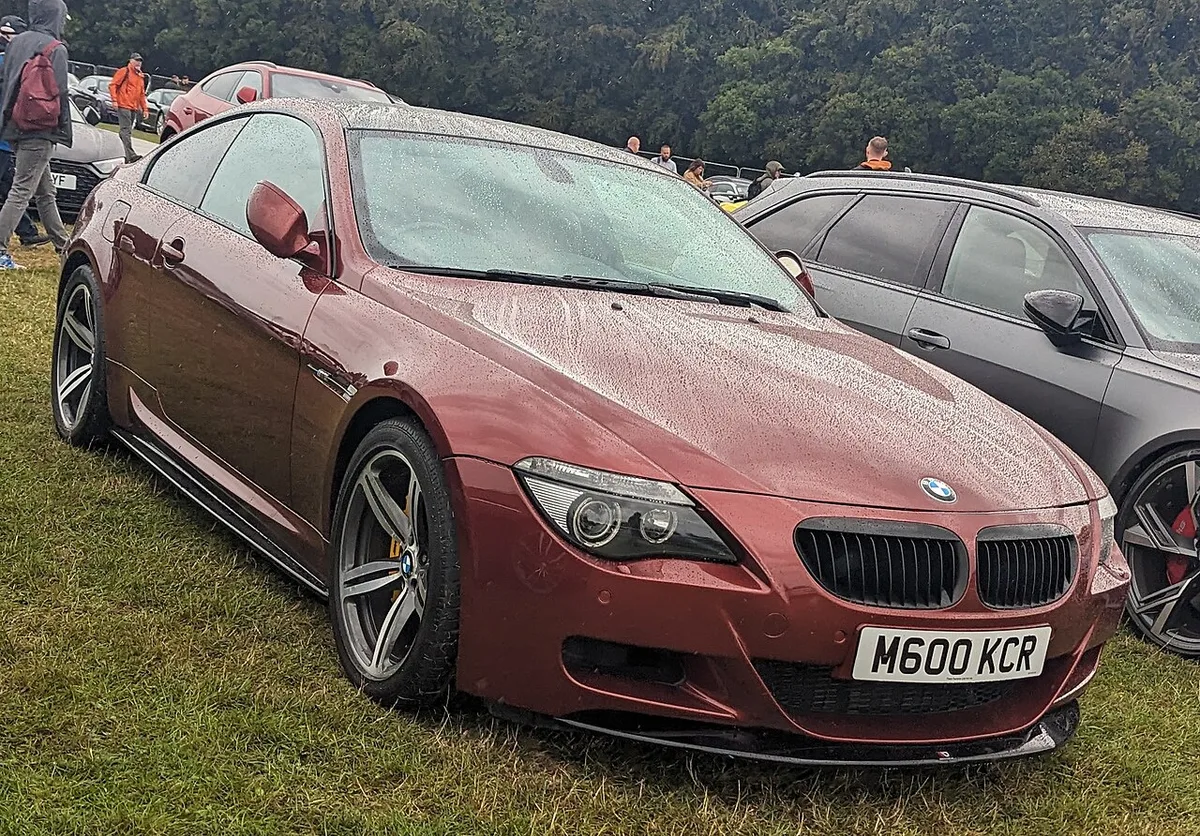
Yes, the BMW M6 built from 2005 to 2010 used a 5.0-liter V10, the same engine BMW put in the E60 M5 sedan. It was the only M6 with ten cylinders. The first M6 used an inline-six, and the one that followed in 2012 used a twin-turbo V8. BMW M's heritage page dates production from May 2005 to September 2010. The coupe came first, and the convertible made its debut at the British Motor Show in 2006. BMW built 14,152 of them: 9,087 coupes and 5,065 convertibles.
The US was the biggest market, with 3,528 coupes and 3,247 convertibles sold there. That is almost half of all V10 M6s.
The V10
The engine was known inside BMW as the S85, Hagerty notes. It was naturally aspirated, with no turbo or supercharger. BMW's global spec sheet lists 373 kW, which it printed as 507 hp, at 7,750 rpm. BMW of North America rated the same engine at 500 hp and 383 lb-ft of torque at 6,100 rpm. The redline sat at 8,250 rpm.
BMW carried over ideas from racing, including electronically controlled individual throttle valves. The V10 won the overall Engine of the Year award in 2005 and again in 2006. In the US, BMW quoted 0 to 60 mph in 4.5 seconds for the coupe, with top speed limited to 155 mph.
SMG first, then a manual
The M6 launched with a seven-speed SMG, an automated manual gearbox with shift paddles. BMW's Drivelogic system gave it 11 shift programs, six for manual shifting and five for automatic. The SMG is the only gearbox on BMW M's heritage spec sheet for the car.
US buyers got a second choice. BMW of North America said a six-speed manual would be offered as a no-cost option starting with March 2007 production. It was still on the list for the 2010 model year.
When M6 production ended in 2010, the engine went with it. With the M5 already discontinued, BMW said "production will now also cease for the unique V10 high-rev engine."
The M6s before and after
The first M6 was the M635CSi, the top model of BMW's E24 6 Series. BMW built 5,855 of them from 1984 to 1989. It used the M88 inline-six, an engine whose first version powered the BMW M1, and it made 210 kW, or 286 metric horsepower, through a five-speed gearbox. BMW of North America counts it as the first M6 and says it was sold in the US for 1987 and 1988.
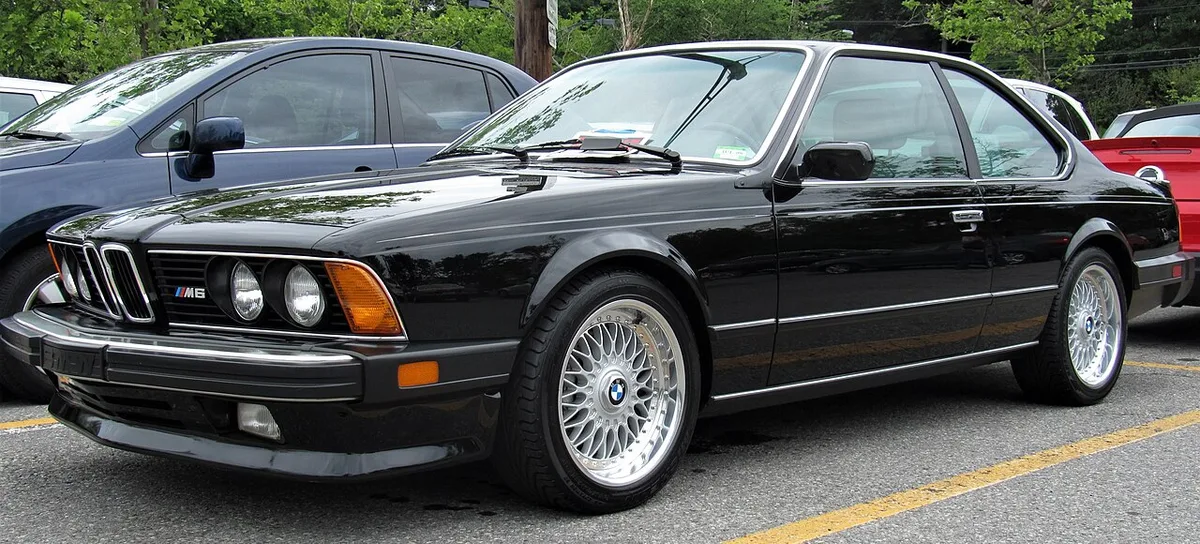
The next M6 was revealed in February 2012 with a 4.4-liter twin-turbo V8. BMW rated it at 560 hp from 6,000 to 7,000 rpm and 502 lb-ft from 1,500 rpm, with a 7,200 rpm limit. BMW said that was 10 percent more power and 30 percent more torque than the V10 cars. A seven-speed dual-clutch transmission was standard. For the 2014 model year, BMW of North America added a six-speed manual at no extra cost on the M6 coupe, convertible, and Gran Coupe.
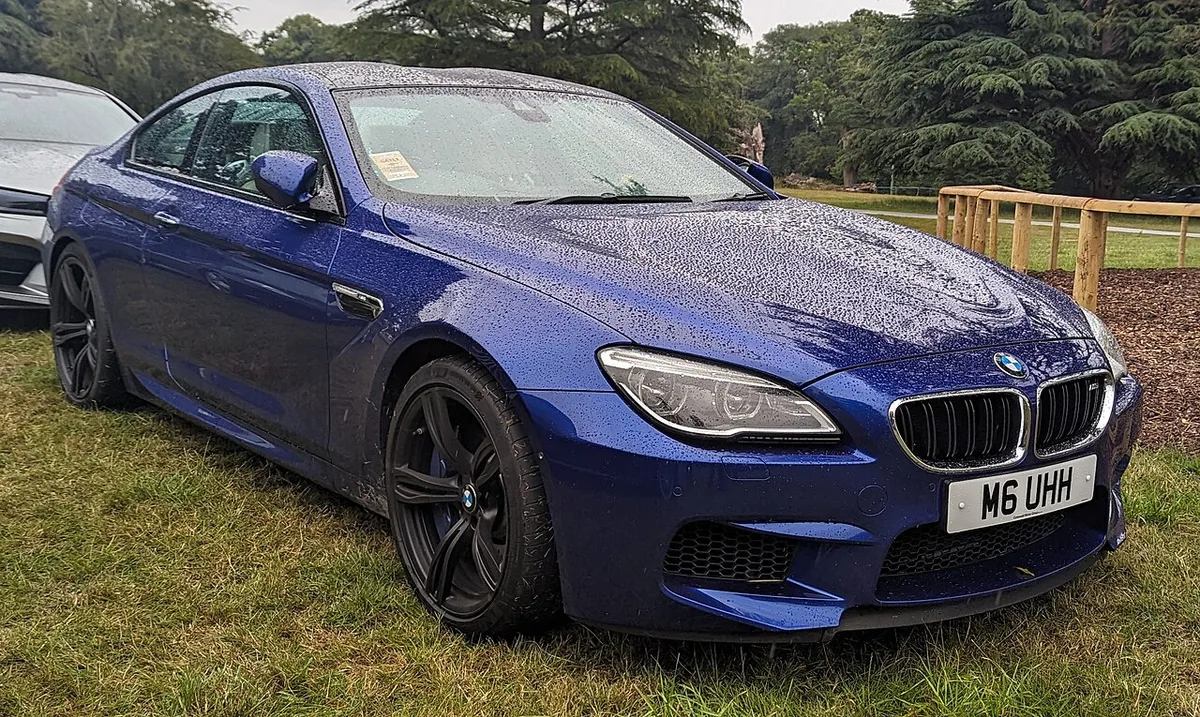
Put the V10 M6 up against the turbo car that replaced it, or against the V10 in the Lexus LFA, on WhipJury.
Sources:
Production dates, the convertible debut, output, redline, the SMG-only spec sheet, and the shared M5 engine: BMW M
Build totals, US sales, Engine of the Year awards, individual throttle valves, and the end of V10 production: BMW Group PressClub
US output and torque, 0 to 60 mph, top speed, Drivelogic, the manual from March 2007, and the 1987 to 1988 US M6: BMW Group PressClub USA
The manual for 2010: BMW Group PressClub USA
The S85 name: Hagerty
The M635CSi: BMW M
The 2012 M6 and its V8: BMW Group PressClub
The 2014 manual: BMW Group PressClub USA
Photos via Wikimedia Commons: Calreyn88 (CC0 1.0) and Justin Lippolis (CC BY-SA 4.0)
Frequently Asked Questions

Cam Walsh has been obsessing over cars since before he could drive one. Based out of Atlanta, Cam covers automotive design, car culture, and the eternal debate over which whips actually look the part.