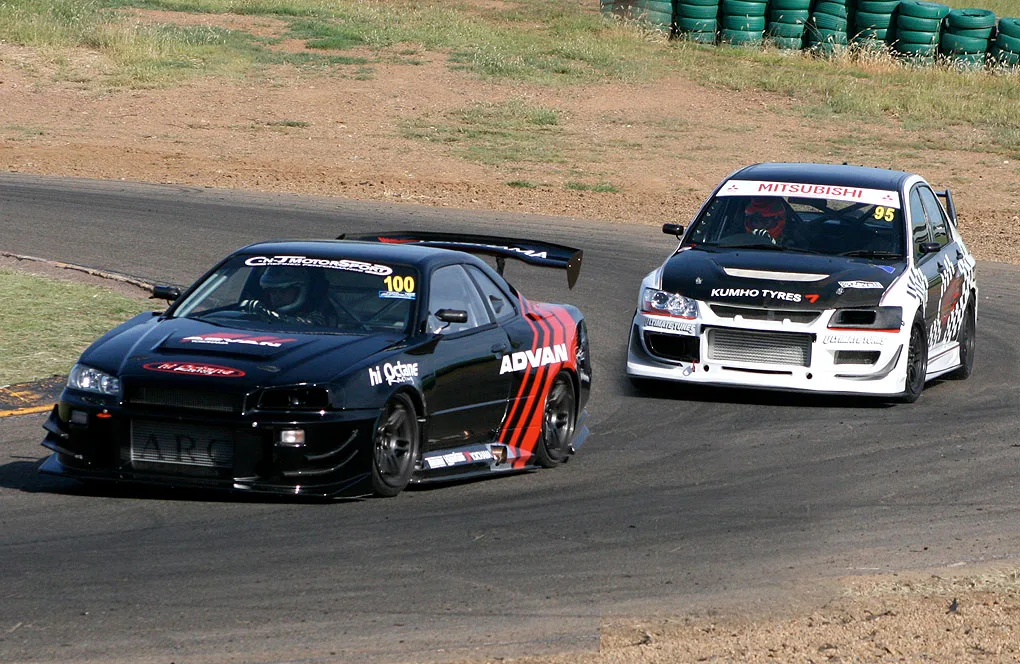
Time attack is racing against a stopwatch. Each car goes out to set the fastest single lap it can, and the quickest lap of the event wins. There's no grid and no wheel-to-wheel passing. Some sessions put several cars on track together, but every driver is still chasing a lap time. Japan's Tsukuba events show how stripped down it can get. Driving Line reported in 2018 that the Super Lap sessions allowed only two cars on track at once, each with one warm-up lap, two timed laps, and one cool-down lap. Most of those cars ran nothing else all day. At the World Time Attack Challenge (WTAC) in Sydney, the top five cars across all classes meet at the end in a Superlap Shootout.
From Tsukuba to Sydney
Tsukuba Circuit sits in Ibaraki Prefecture, about an hour north of Tokyo. It's a 1.271-mile, 12-turn track, and Driving Line calls it the home of time attack, with events there as early as the 1980s and the first official one in May 1994. According to Turn 14, coverage in the tuning magazine Option made the TC2000 layout a destination. The Best Motoring video series and Gran Turismo games then carried it around the world.
Tsukuba lap times became a currency of their own, with separate records by drivetrain and by engine aspiration, Turn 14 notes. The outright mark moved fast. In 2007, Nobuteru Taniguchi set the record at 53.589 seconds in an HKS Mitsubishi Lancer Evolution. Under Suzuki beat it in 2012 with a 52.649 in the Nissan Silvia S15, then cut it to 51.127 in 2015. HKS later ran 49.445 seconds with its TRB-03, a time attack Toyota 86, on full racing slicks, and The Drive says that lap isn't widely accepted in the time attack community. In January 2023, Toshiki Ando drove Escort Racing's Evo IX to 49.897 seconds, believed to be the first sub-50-second Tsukuba lap on street tires. The Drive says that car leans on a carbon fiber body and a paddle-shift gearbox, and it put down 750 all-wheel horsepower as of 2019.
WTAC runs at Sydney Motorsport Park, the circuit at Eastern Creek, and its organizers trace it back to the Superlap event at Oran Park. The 2024 event drew more than 28,000 spectators, its chief executive said. Its first dominant car was the Tilton Interiors Evo IX. For 2013, owner Kosta Pohorukov had Voltex Racing owner Akihiro Nakajima redesign its aero, MotoIQ reported. Garth Walden won in it in 2013, 2014, and 2015, and Walden's fastest lap in 2015 was a 1:23.777, according to New Zealand Classic Car. Suzuki's S15 was third in its class that year after going through four engines during the event week. Then the times fell hard. Barton Mawer drove Rod Pobestek's RP968 Porsche to a 1:17.860 in 2023 for its fourth straight outright win, matching the Tilton Evo's record. In 2024 it ran a 1:17.444 and won a fifth time in a row. No WTAC winner has gone faster since. Todd Hazelwood won the last two events in the Tanuki Racing Silvia S13, which WTAC described in 2023 as running an 1,100-hp VR38 V6. Hazelwood ran a 1:18.169 in 2025, and a 1:19.303 won it in 2026 after wind and rain wiped out the Superlap Shootout.
In the US, Global Time Attack says its team ran the first North American time attack in 2004, the original Super Lap Battle. Its 2026 finals run on the CW13 layout at Buttonwillow Raceway Park on November 14 and 15.
Why the cars look like that
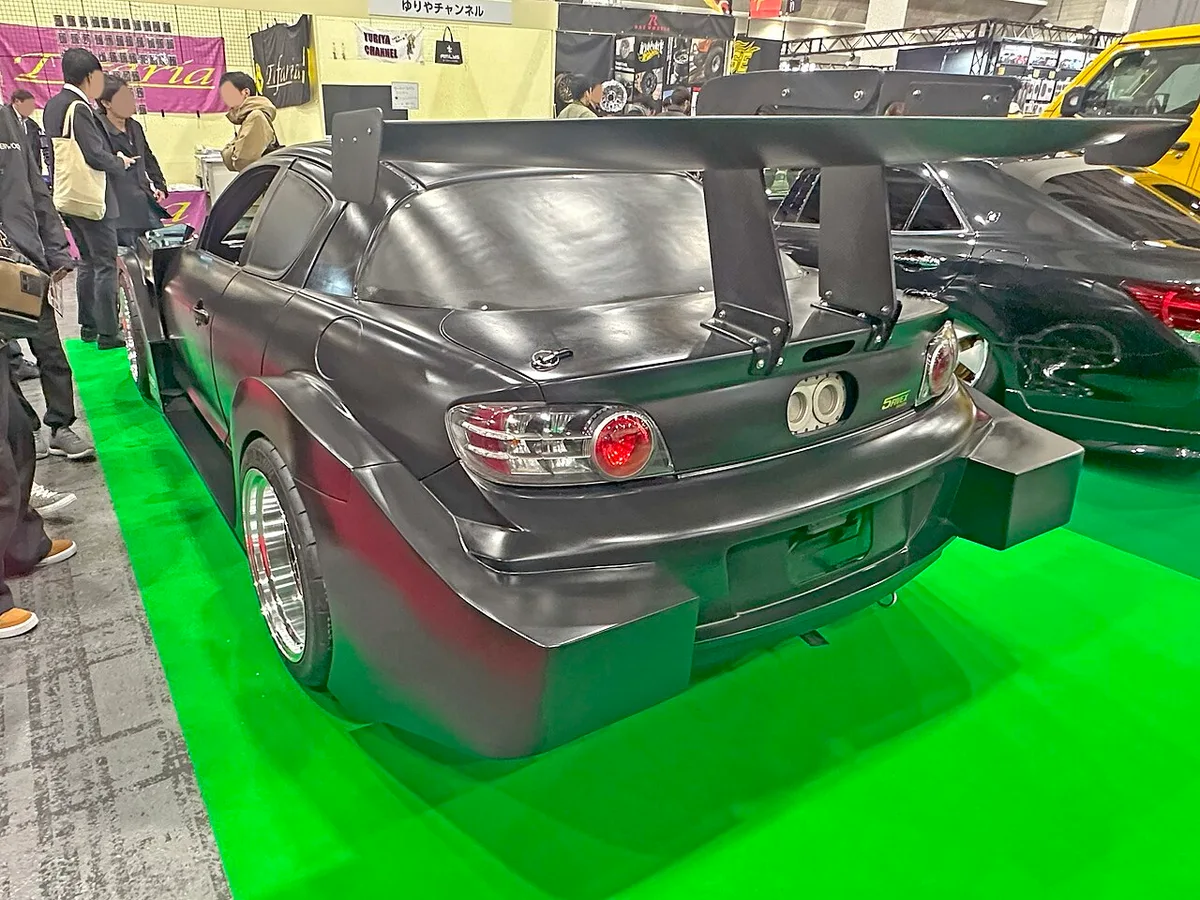
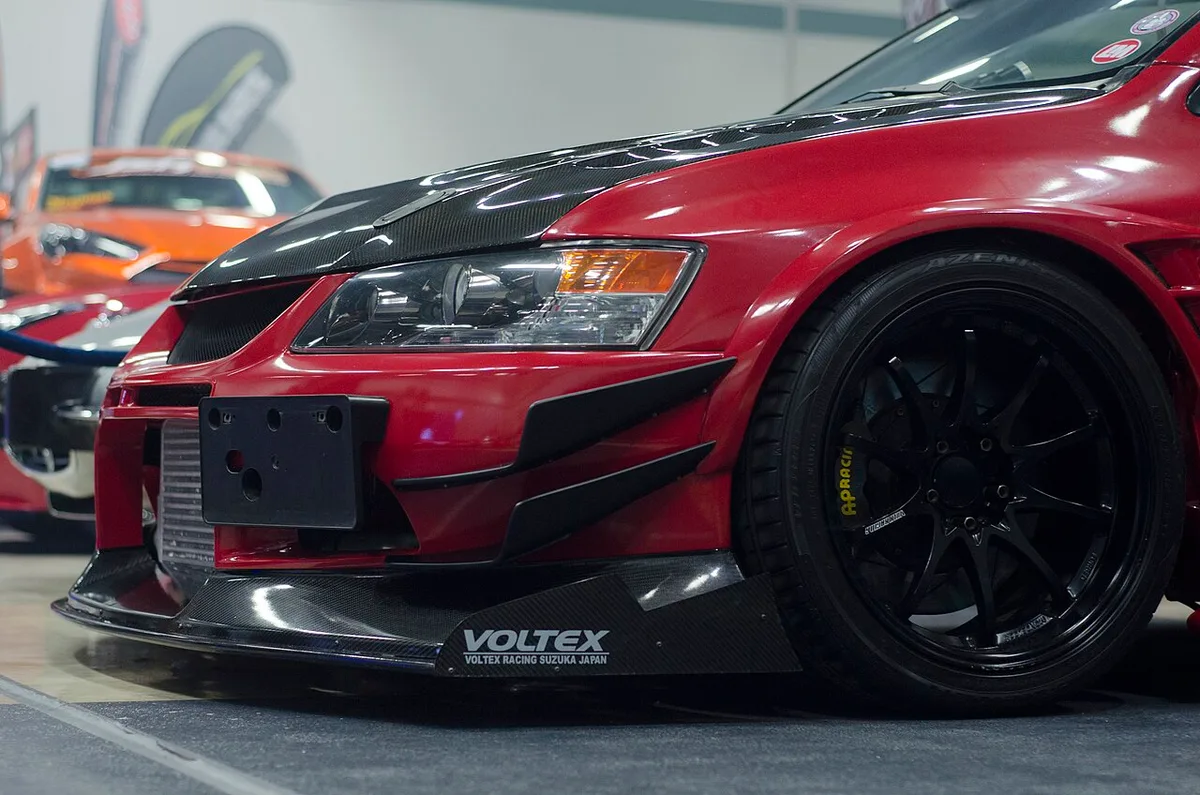
The rules shape the cars. Turn 14 explains that the main limit at Tsukuba is the semi-slick tire every car must run, so mechanical grip is roughly equal across the field. Teams find their speed in downforce, using GT wings, front splitters, and rear diffusers. A tightly regulated endurance racer keeps its splitter small. Time attack has no limit on splitter size, and since nobody races side by side, the parts can be huge and fragile. Turn 14 says they'd be wrecked within seconds in a wheel-to-wheel race.
WTAC pushed further in 2023, when it allowed slick tires in its Pro and Pro Am classes. The organizers said that let teams run more aero load than ever. Those loads are real. At WTAC 2025, Cameron McLeod said cracked wing mounts let the rear wing of McLeod's GT-R-powered Toyota 86 lift as it reached Turn 1 at 305 km/h, about 190 mph, and the car spun into the wall, Speedcafe reported. After the 2024 event, WTAC's chief executive said competitors had explored the limits of a rulebook without a major update since 2014, and that a revamp was under consideration.
We get into how a wing differs from a lip on the trunk in spoiler vs. wing.
Think a time attack wing would work on a road car? Rate the cars that wear one on WhipJury.
Sources:
Tsukuba Super Lap format, Tsukuba history, and lap record progression: Driving Line
Tsukuba's size and location, Option and Best Motoring, the record categories, and why the cars wear big aero: Turn 14
The street-tire record, the Escort Evo's build, and the HKS slicks dispute: The Drive
The Tilton Evo's aero redesign: MotoIQ
Walden's three wins: CFMedia
The 2015 lap and Suzuki's four engines: New Zealand Classic Car
RP968's 2023 record, the Oran Park link, the slick-tire rule, and the Tanuki S13: WTAC and WTAC
The 2024 record, the crowd, and the rulebook: WTAC
The 2025 result and McLeod's wing failure: Speedcafe
The 2026 result and the Superlap Shootout format: WTAC
Global Time Attack's history and 2026 finals: Global Time Attack and Global Time Attack
Photos via Wikimedia Commons: Creativedrive (CC BY-SA 3.0), Tokumeigakarinoaoshima (CC0), NoslivRage (CC BY-SA 4.0)
Frequently Asked Questions

Cam Walsh has been obsessing over cars since before he could drive one. Based out of Atlanta, Cam covers automotive design, car culture, and the eternal debate over which whips actually look the part.