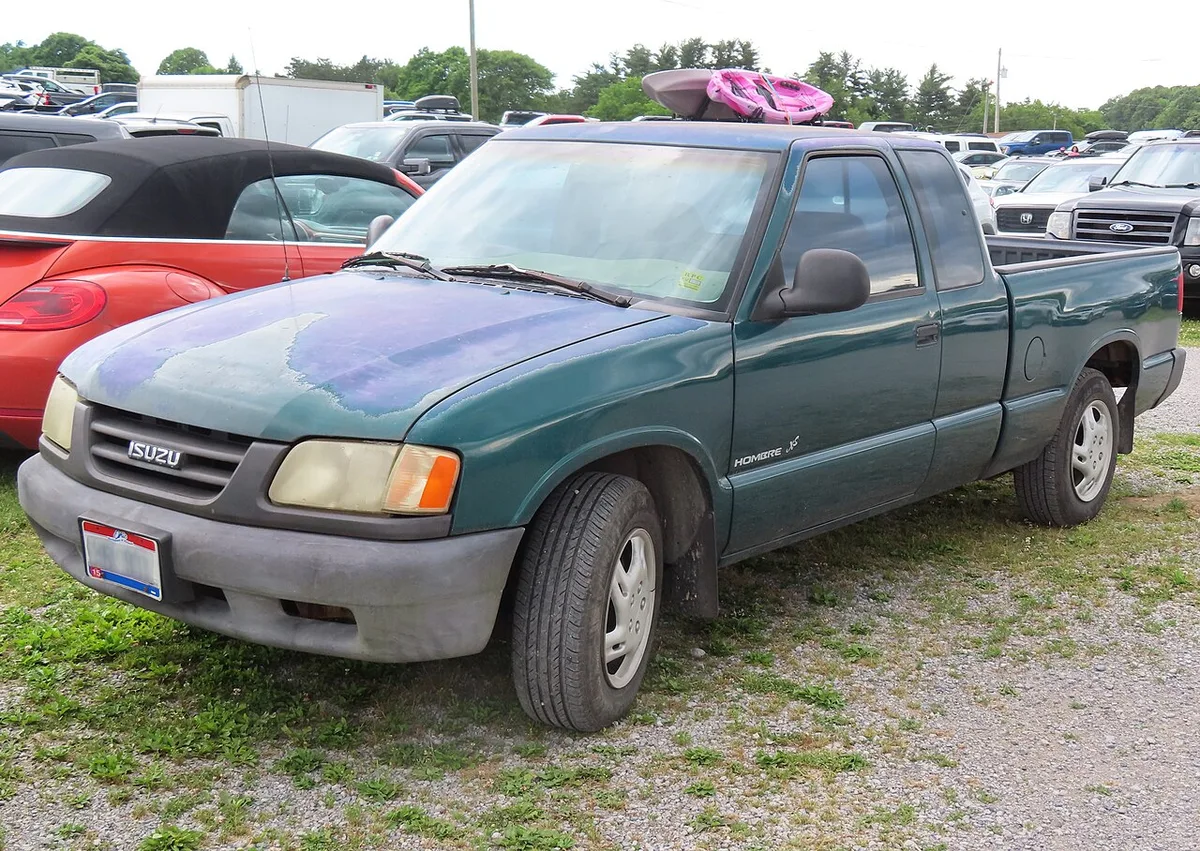
The Isuzu Hombre was a compact pickup that Isuzu sold in the US from the 1996 through 2000 model years. Under the skin it was a Chevrolet S-10. General Motors built it on the same Shreveport, Louisiana, assembly line as the S-10 and the GMC Sonoma, and Isuzu gave it its own sheetmetal from the windshield forward.
The Hombre replaced Isuzu's previous compact pickup, the TF Series. GM owned a minority stake in Isuzu at the time, and that tie gave Isuzu the right to use the S-10 design, according to Consumer Guide. Isuzu spokesman Bryan Farnsworth told The Seattle Times in 1996 that the name was meant to signal "one tough truck that will do the job."
What made it an Isuzu
The fenders, hood, side panels, front fascia, headlamps, and rear bumper caps all differed from the GM trucks. GM produced those body panels in Brazil. The Brazilian link even showed up in an early recall. NHTSA records show that some 1996 Hombres got a Brazilian domestic headlamp instead of the required US assembly.
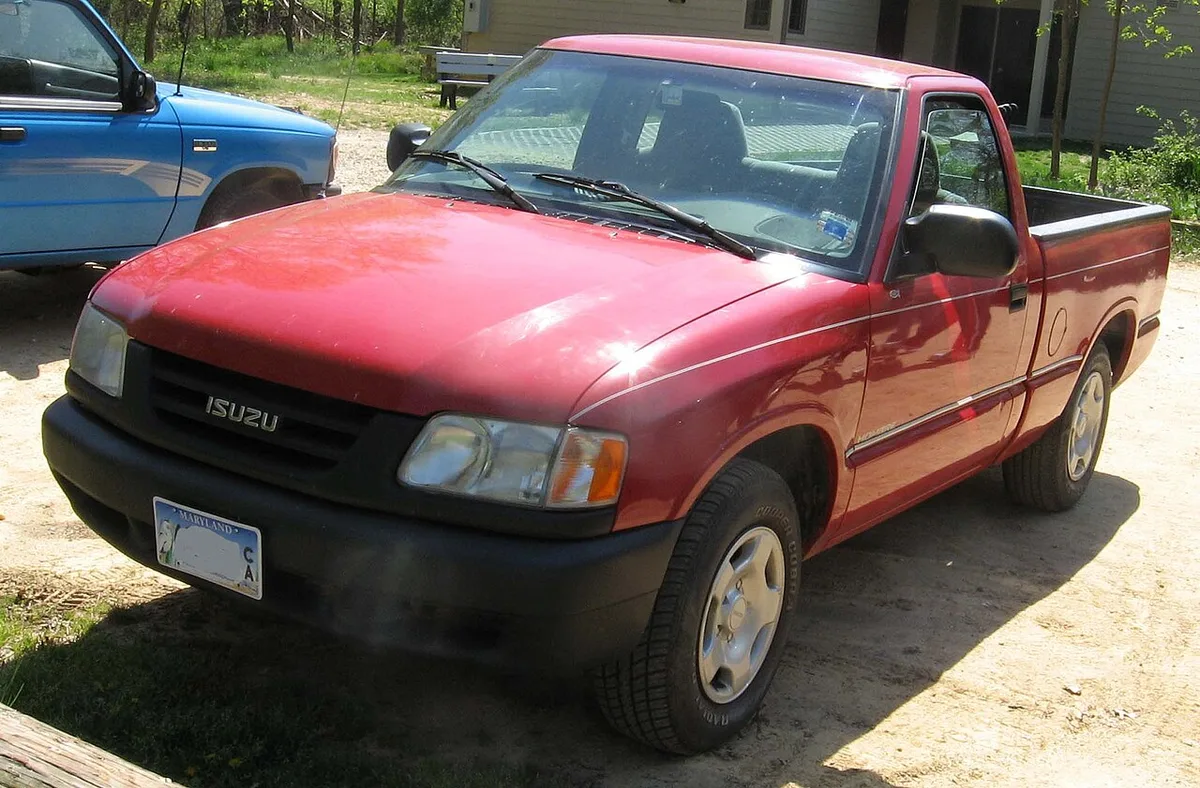
The rest was GM. The Seattle Times found a Delco battery and a Harrison air conditioner under the hood, and a dashboard that looked like the one in the S-10. The 1996 Hombre started at $10,999 for the base S and $12,063 for the XS. Isuzu was allocated 25,000 Hombres from the Shreveport production schedule that year.
Engines and body styles
The first Hombre came one way. It was a rear-drive regular cab with a 6-foot bed, a 2.2-liter four, and a five-speed manual. The Seattle Times listed the four at 118 hp. Four-wheel antilock brakes were standard, and the truck could tow 2,000 pounds.
Isuzu added the Spacecab extended cab for 1997, along with a 4.3-liter V6 and an available four-speed automatic. Four-wheel drive arrived for 1998, with a new dashboard and a passenger airbag. That year the V6 made 175 hp in two-wheel-drive Spacecabs and 180 hp in 4x4s, while the four dropped to 110 hp. A third door came to the Spacecab for 1999. For 2000, the V6 gained 5 hp in 2WD trucks and 10 hp in 4x4s.
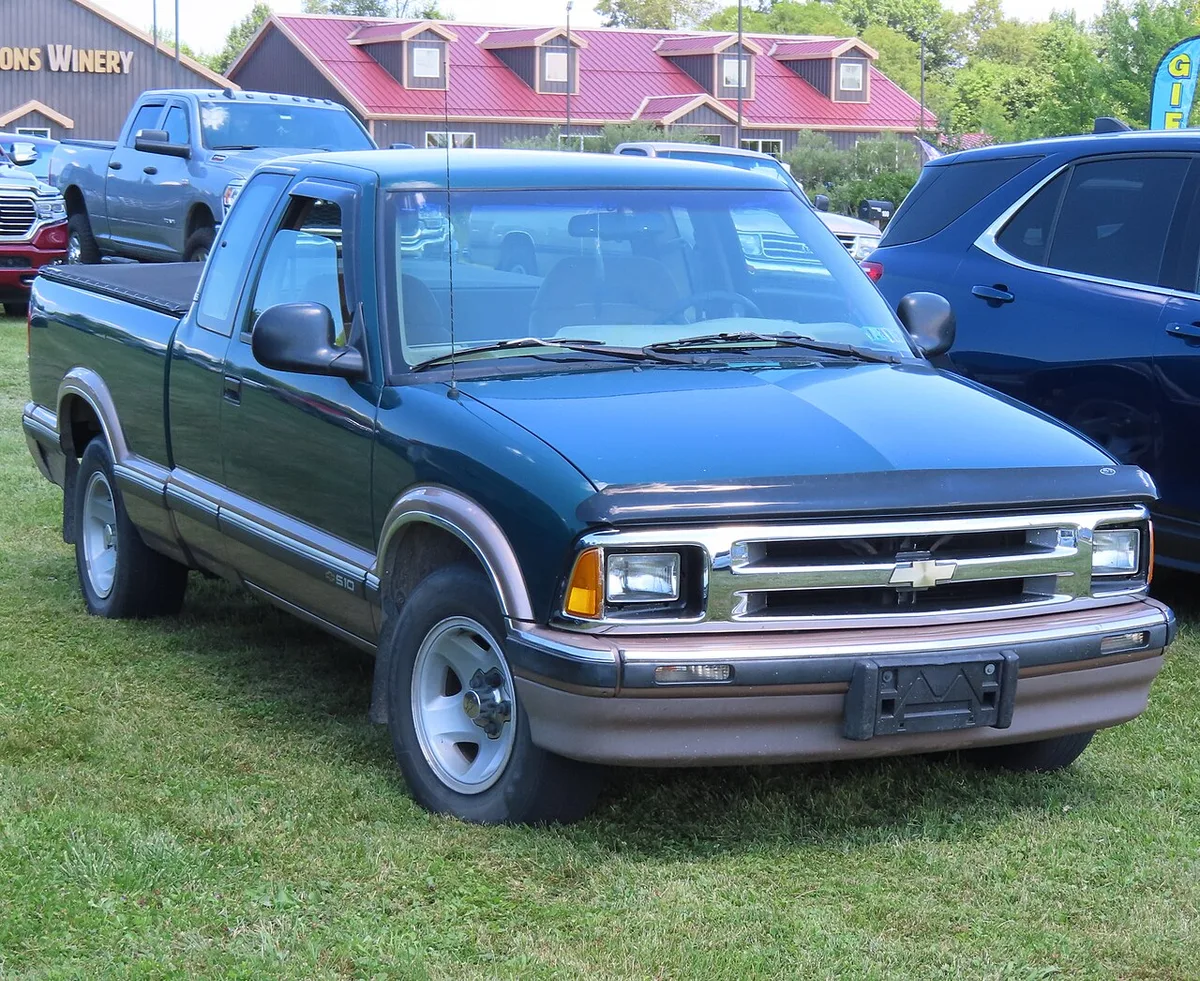
Put a Hombre next to an S-10 of the same years and the difference is mostly the nose. The Chevy wears a shiny silver grille, and the Hombre skips it for round, wraparound headlamps. Consumer Guide notes that Isuzu offered a narrower lineup than the GM twins, and that Hombres were less popular than the S-10 and Sonoma when new. The arrangement is a textbook case of badge engineering.
What came after
Isuzu sold the Hombre through 2000 and had no pickup again until the i-Series went on sale for the 2006 model year. That truck was a rebadged Chevrolet Colorado. Sources disagree a little on the Hombre's last year. The EPA's fuel economy database lists a few 2001 and 2002 versions, while Consumer Guide's history and NHTSA's recall and complaint records stop at 2000.
By then, Isuzu leaned on GM for its whole US lineup. Its last two models were the Ascender, based on the Chevrolet TrailBlazer, and the i-Series. In January 2008, Isuzu Motors America said it would stop selling new passenger vehicles in the US on January 31, 2009, because GM planned to end production of both. Isuzu had sold just 7,098 vehicles in the US in 2007. "We were unable to secure any commercially viable replacements for these vehicles," said Terry Maloney, the company's president.
Think the Hombre's face beat the S-10's? Rate both on WhipJury.
Sources:
The launch, prices, Shreveport build, GM parts, front-end changes, 1996 engine and towing specs, allocation, the TF Series, and the Farnsworth quote: The Seattle Times
The GM stake, Brazilian body panels, year-by-year changes, horsepower figures, and sales compared with the S-10: Consumer Guide
The 1996 headlamp recall and the lack of later records: NHTSA
The model years listed for the Hombre, 1996 to 2002: EPA and DOE, fueleconomy.gov
The Hombre ending in 2000 and the 2006 i-Series: The Truth About Cars
The exit date, the reason, the TrailBlazer link, and the Maloney quote: Just Auto
The announcement date and 2007 sales: Motor Authority
Photos via Wikimedia Commons: MercurySable99 (CC BY-SA 4.0) and IFCAR (public domain)
Frequently Asked Questions

Jeffrey Wiley has spent more time than he'd like to admit thinking about what makes a car look right. He writes about automotive design, car culture, and the opinions people have strong feelings about. He lives in north Georgia.