What is DCT?
Dual-clutch transmission. An automated manual transmission using two separate clutches for odd and even gears, allowing fast shifts.
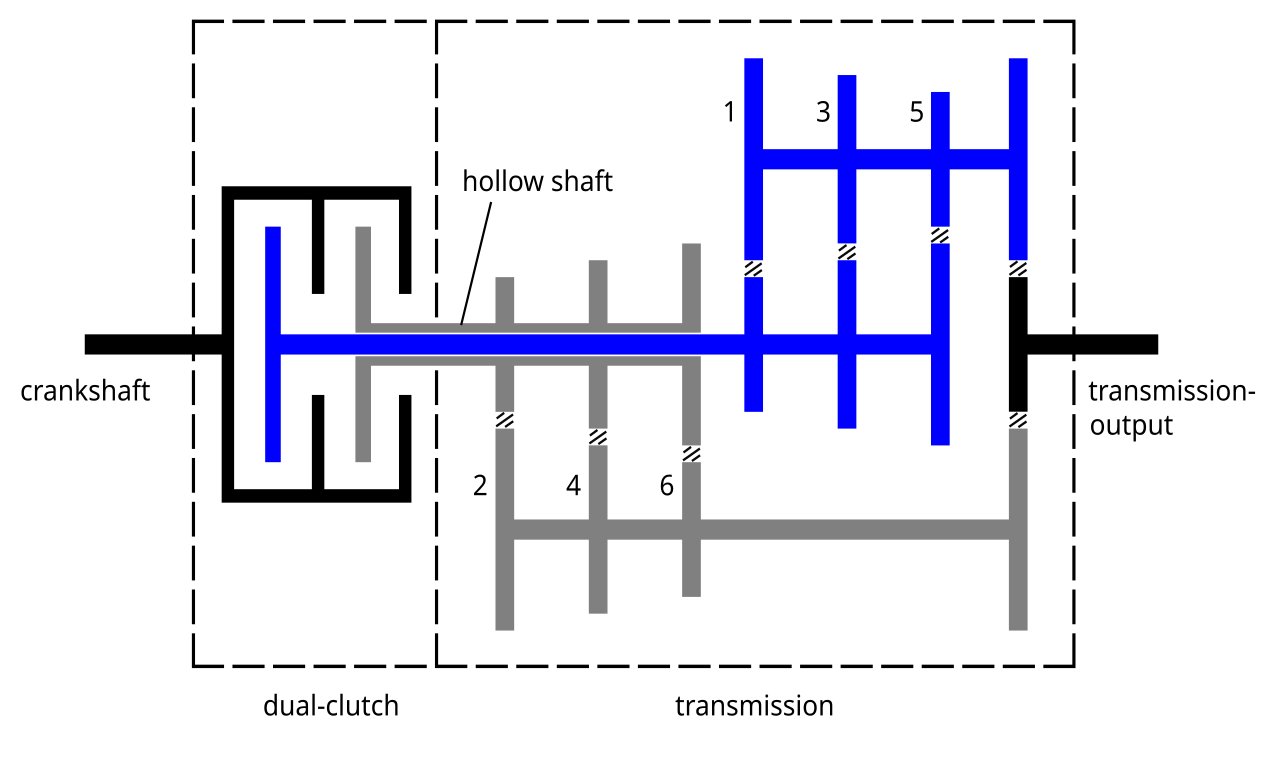
DCT (dual-clutch transmission) is an automated manual transmission with two separate clutches: one engages the odd gears (1, 3, 5, 7) and the other engages the even gears (2, 4, 6). The transmission can pre-engage the next gear while the current gear is still active, then transfer drive between clutches in milliseconds. The result is faster shifts than a conventional automatic and smoother shifts than a robotized manual.
DCT became widespread in performance cars in the late 2000s. Volkswagen DSG (introduced 2003 on the Mk4 Golf R32), Porsche PDK (Doppelkupplungsgetriebe, introduced 2008 on the 911 Turbo), BMW DCT (formerly DCT M Drivelogic), and various GM, Ford, and Honda implementations have spread the technology widely. Modern dual-clutch units are available in 6, 7, 8, or 9 forward gears.
The advantages of DCT include shift speed, fuel economy (often slightly better than torque-converter automatics), and the ability to be operated manually with paddle shifters. Disadvantages include complexity (more moving parts than a single-clutch automatic), wear on the clutch packs (especially in low-speed traffic), and higher maintenance costs. The Porsche PDK is widely considered the benchmark for refined dual-clutch operation.