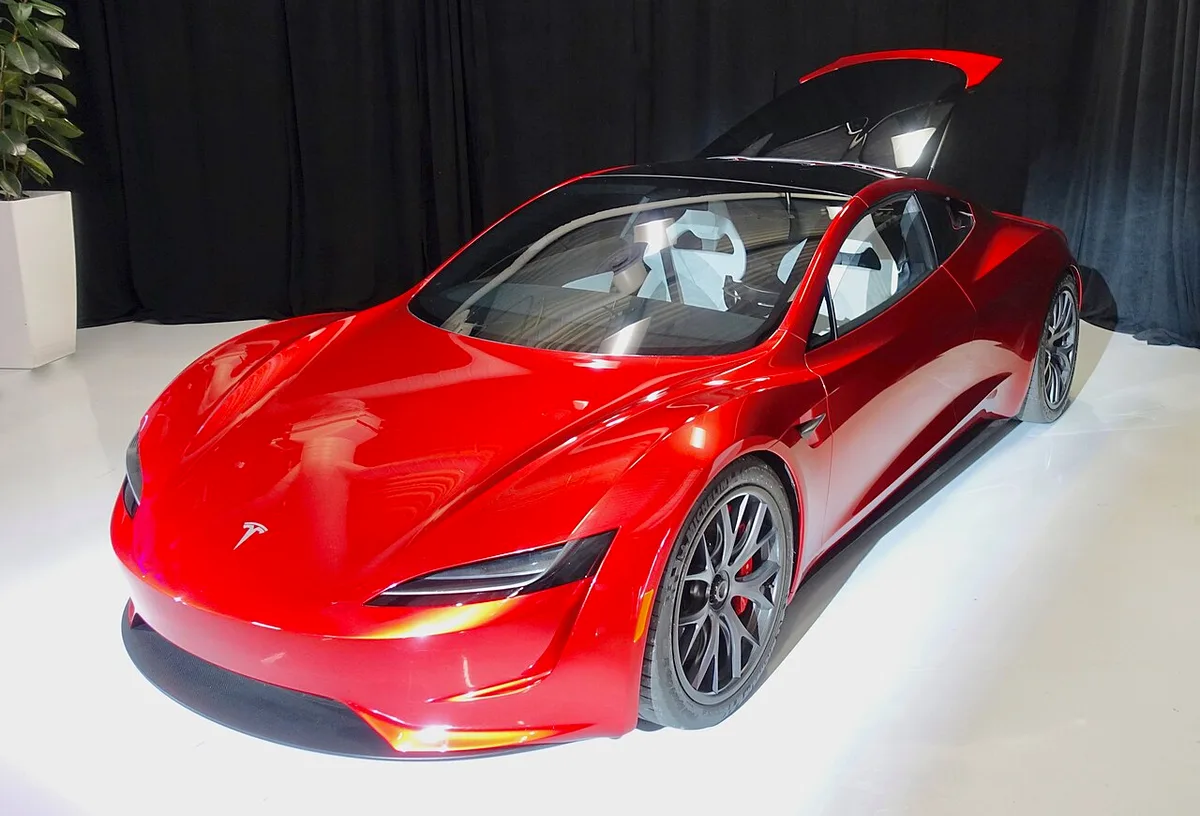
I think the 2017 Tesla Roadster concept is a much better-looking car. The production-bound Roadster revealed on October 15, 2026, trades the concept's smooth curves for a faceted wedge that looks like a low-polygon Lamborghini.
The concept appeared in November 2017 as a surprise at the end of Tesla's Semi event, Not a Tesla App reported. Its nose was rounded and sculpted, with swept-back headlights, a Tesla badge, and a wide lower intake. From the side, it had flowing curves and rounded fenders. Motor1 writer Adrian Padeanu said its clean design "still holds up remarkably well today," and Padeanu still prefers it.
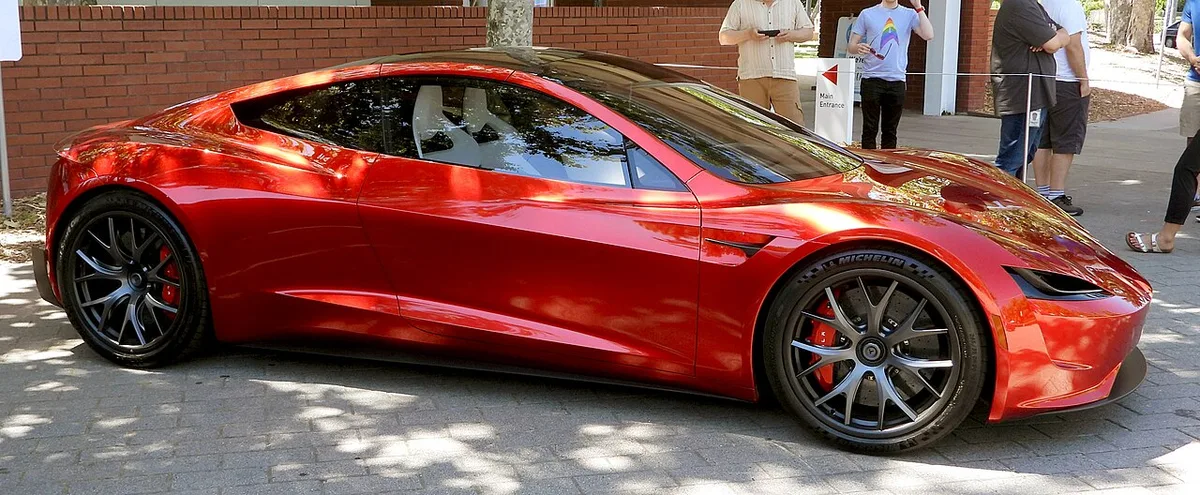
The new car went the other way. Tesla says its design language moved from the S3XY lineup to the angular look of the Cybertruck, Cybercab, and Optimus, and it names the SR-71 Blackbird and F-35 fighter jet as inspiration. Motor1 called the result Cybertruck-esque. Not a Tesla App describes a flat, faceted hood with a V-shaped center panel and a wedge silhouette closer to a Lamborghini.
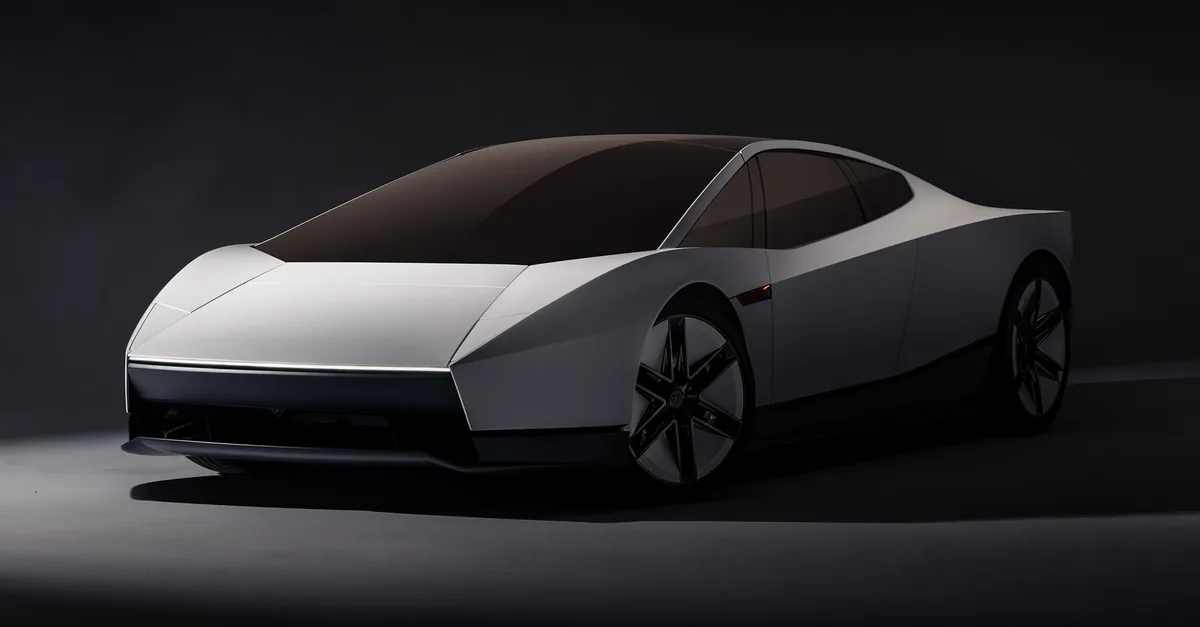
Why it reads as a low-poly Lamborghini
A low-polygon 3D model builds a shape from a small number of flat faces. The new Roadster's body works the same way. Large flat planes meet at hard creases, with little curvature between them. The hood is one faceted panel split by a V. From the side, the body is a near-straight wedge from the nose to the tail.
We aren't the only ones who see Lamborghini in it. Hagerty design columnist Matteo Licata, who teaches car design history at IAAD in Turin, wrote that the Roadster follows the supercar formula Marcello Gandini set with the original Lamborghini Countach prototype in 1971. The cabin sits far forward, as on a Lamborghini, though here it makes room for a pressurized nitrogen tank instead of a V12. Licata said the big surfaces and sharp creases make the Countach "immediately spring to mind," while the front end evokes the Murciélago and Huracán.
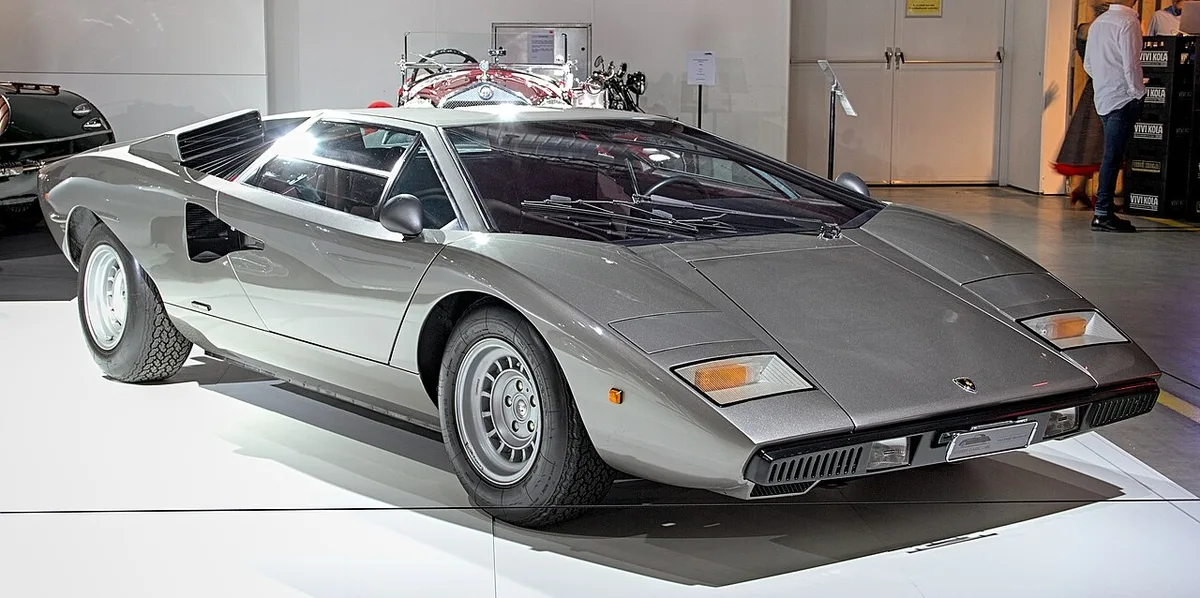
The Autopian's David Tracy made a list of cars the Roadster resembles and started with the Murciélago's hood and headlight shape. The Countach made the list, and an Autopian contributor matched the overall silhouette to the Aventador. Tracy liked the car anyway and called it "a familiar wedge-y design and nothing groundbreaking."
Licata's sharpest note was about surfacing, which is where we think the low-poly feel comes from. Licata wrote that the flanks and rear look somewhat fragile, and that the car seems like it needed more time in the clay room. The verdict: "somewhat safe and derivative, if cleanly penned."
The flat panels also lost their reason. When the Cybertruck reached buyers in 2023, Tesla CEO Elon Musk said its body panels had to be angular because its stainless steel can't be stamped by a conventional press, the Associated Press reported. The Roadster is painted, and Tesla lists magnesium, titanium, and carbon fiber among its materials. On this car, the facets are a style choice.
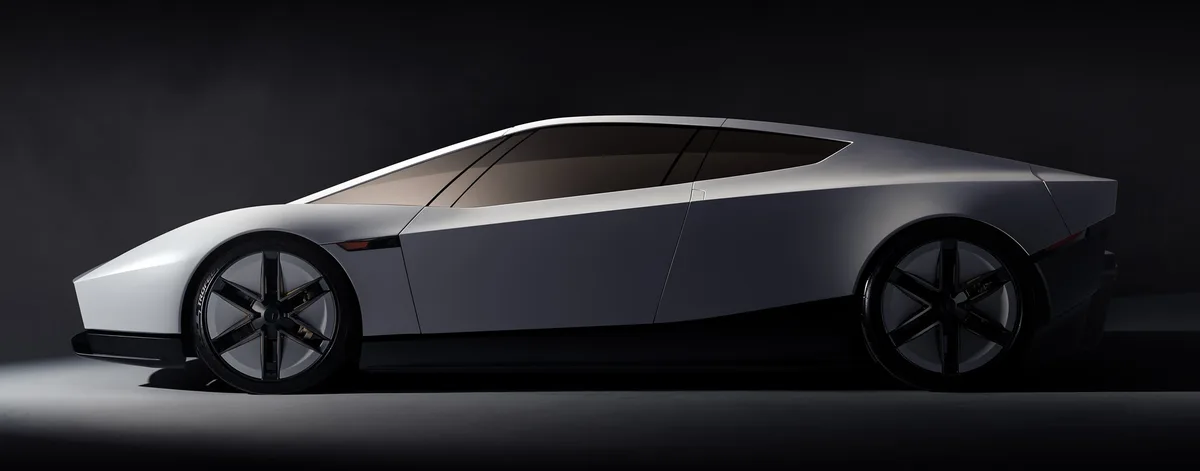
The concept had the better roof, too. Tesla promised "seating for four" and a lightweight, removable glass roof that stored in the trunk. The new car seats two, and its roof is fixed. Only the upper glass panels in the doors lift out, which InsideEVs says makes it a T-top like the 1968 Chevrolet Corvette Stingray. The concept's glass ran as one dark sweep over the cabin. On the new car, gold-tinted glass that Tesla says mimics spacesuit visors sits inside a hard frame.
The lights follow the same pattern. The concept wore swept-back headlights and thin taillights with TESLA lettering across the tail. The new car hides its headlights behind panels that drop down, runs a slim light bar across the lower nose, and adds a full-width taillight like the refreshed Model Y. The pop-down headlights are clever, and Licata liked them. Motor1 called the switch to light bars "inevitable," and that's our worry. A full-width bar marks a car as being from this decade.
Age is the real test, and the concept has already passed nine years of it. The new shape is tied to a Tesla look that started with the Cybertruck's unveiling in 2019. Production isn't due until 2028, as our reveal coverage explains, and by then that look will be nine years old.
Put the curvy concept and the faceted production car side by side and cast your own vote on WhipJury.
Sources:
The design change, the concept holding up, light bars, the two-seat layout, inspiration, and Padeanu's preference: Motor1
The 2017 debut, front and rear details on both cars, Tesla's design-language statement, the faceted hood, and the Lamborghini silhouette: Not a Tesla App
Licata's review, the Gandini and Lamborghini comparisons, and Licata's background: Hagerty
Tracy's list of look-alikes: The Autopian
The fixed roof and T-top panels: InsideEVs
Hidden headlights, full-length taillight, paint, glass, materials, and seating: Tesla
The 2017 seating and glass roof: Tesla, archived December 2017
The Cybertruck's 2019 unveiling and stainless steel panels: Associated Press via NBC Bay Area
Photos: Tesla; via Wikimedia Commons: Steve Jurvetson (CC BY 2.0), Editor928111 and Alexander Migl (CC BY-SA 4.0)
Frequently Asked Questions

Jeffrey Wiley has spent more time than he'd like to admit thinking about what makes a car look right. He writes about automotive design, car culture, and the opinions people have strong feelings about. He lives in north Georgia.