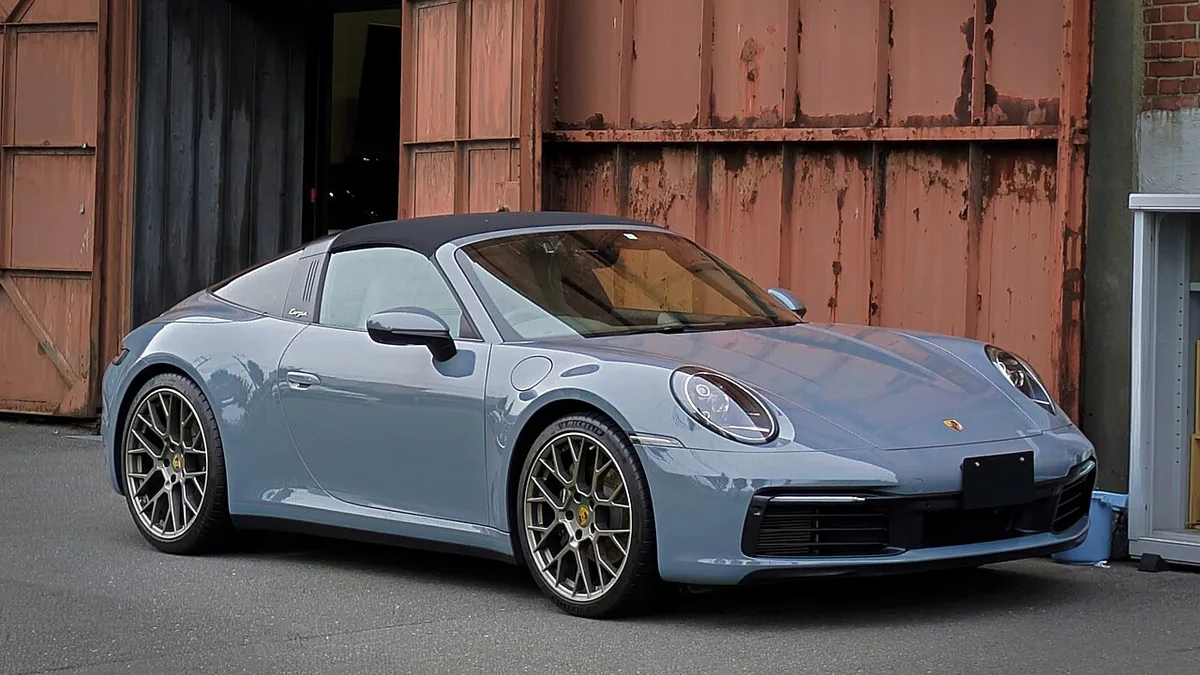
A targa top is a roof panel above the front seats that lifts off, while a fixed, full-width roll bar behind the seats stays in place along with the rear section of the roof. Porsche introduced the idea on the 911 Targa at the Frankfurt motor show in September 1965. Its own history calls the car "the first safety cabriolet in the world with a fixed safety or roll bar." The name came from the Targa Florio, the road race in Sicily where Porsche had enjoyed racing success since the mid-1950s. Porsche briefly considered "911 Flori." Then Harald Wagner, head of domestic sales, asked, "Why don't we just call it Targa?" The Italian word also means "number plate," and Porsche says legend has it that nobody noticed until copywriters were working on the sales brochure.
Why the 911 Targa got a roll bar
Porsche says the Targa answered tougher safety demands for open cars in the US, where some voices wanted convertibles banned outright. The concept was older than that. In 1962, Porsche met with coachbuilders Reutter and Karmann to weigh three open-top designs: a classic soft top, a roadster with a reduced frame, and a convertible with a fixed roll bar. The roll bar version was the most convincing on engineering, then sat in a drawer for lack of capacity until US rules tightened in the mid-1960s.
On the first cars, the steel bar was covered in brushed stainless steel. The roof section above the front seats came off, and the plastic rear window could be unzipped and folded down, so owners could drive the car four ways. Porsche filed for a patent in August 1965, and the Targa joined the 911, 911 S, and 912 from autumn 1966. A fixed glass rear window became optional in late summer 1967 and standard a year later.
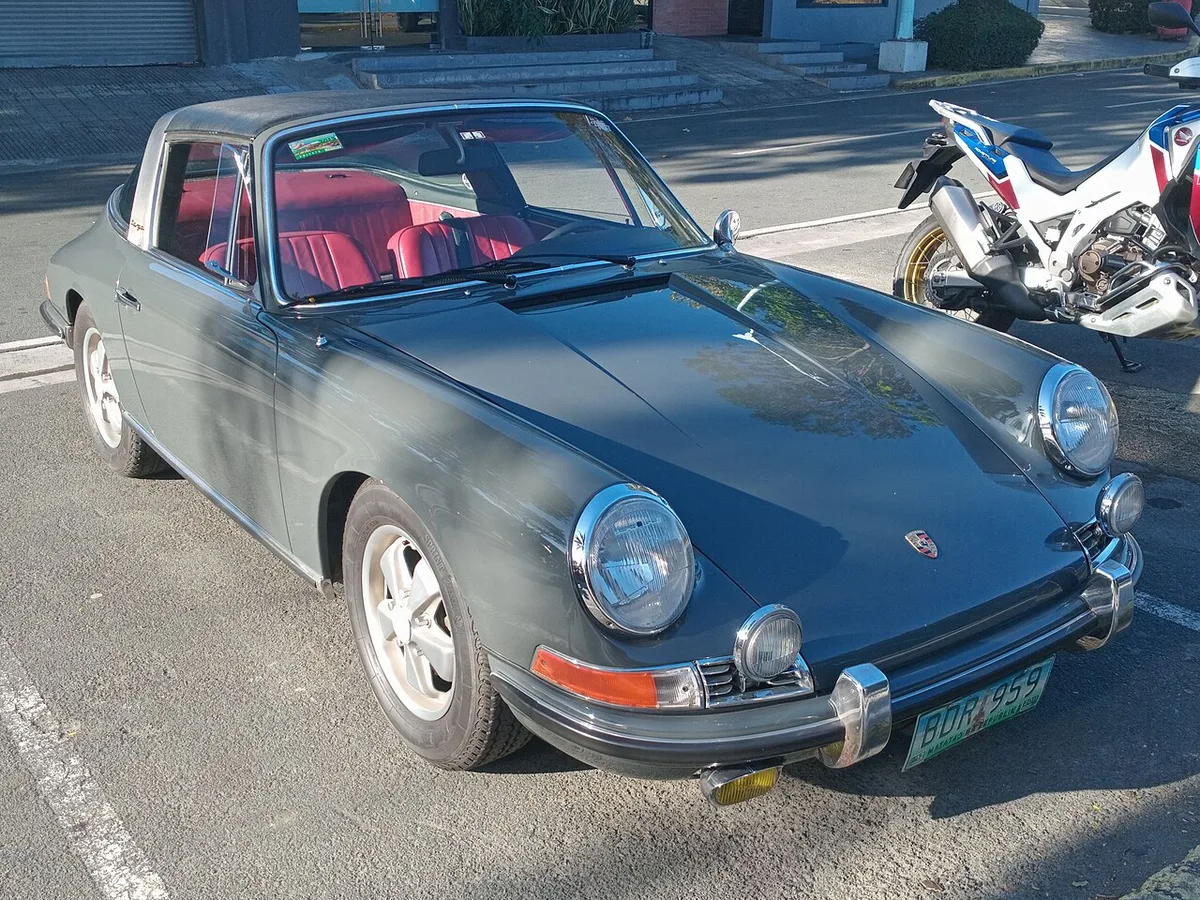
The ban never happened. Top Gear points out that the US government never outlawed convertibles, and Autocar calls the fears groundless. Porsche kept building the Targa anyway. The first three 911 generations produced 87,663 of them, and Porsche carried the idea over to the 914 and the Carrera GT.
Porsche also locked up the word. The US Patent and Trademark Office registered TARGA for automobiles on April 28, 1970, to Dr. Ing. h.c. F. Porsche AG, and the registration is still live after its latest renewal in 2019. Porsche was not first with a lift-off roof, though. Autocar points to the "Surrey Top" on the 1961 Triumph TR4 and to the Toyota S800, sold in Japan from 1965 with a removable roof panel.
Targa, T-top, or convertible?
A T-top splits the opening into two panels, one over each seat, with a fixed post running down the middle of the roof. Every Chevrolet Corvette coupe from 1968 to 1982 had T-tops, according to Hagerty. A targa has no center post, so one panel spans the whole opening. The C4 Corvette was first designed with a two-piece T-top, until Chevrolet chief engineer Lloyd Reuss decided it needed a one-piece "Targa" panel like the 911 Targa and the Ferrari 308 GTS. Hagerty writer Gary Witzenburg says losing the post forced months of structural redesign. The lower structure had to get beefier, and the taller side rails raised the door sills high enough to make climbing in awkward. The 1984 Corvette launched with a targa-style removable roof panel as standard. The labels blur in practice. Autocar counts the 1986 MR2 T-bar, whose two glass panes stowed behind the seats, among targa-topped cars. It does the same for the fourth-generation Supra Aerotop and its pair of lift-out glass panels.
A convertible goes further, folding away the whole roof, rear window included. Autocar argues the Targa's biggest selling point is that it keeps the 911's rear-end shape intact, which the cabriolet does not, though the extra weight still costs some handling sharpness.
So is a 911 Targa an open car? Porsche treats it as one. It sells the Targa as the third body style next to the coupe and cabriolet, and says the roof turns the 911 into an open-top car in 19 seconds. Since the 991 Targa of January 2014, the roof has been fully automatic. The glass rear window swings back, the roof segment folds and tucks behind the rear seats, and the wide bar stays put. That came after a detour. The 993 Targa of 1995 dropped the bar for a sliding glass roof, and the 996 and 997 kept that layout. The Targa has been all-wheel drive only since 2006. In July 2025, Porsche added a Targa 4S below the Targa 4 GTS, giving buyers two versions, and it offers the roof module in black, blue, red, or brown.
Does the bar make the 911 look better than the coupe? Cast your vote on WhipJury.
Sources:
The 1965 debut, the "safety cabriolet" quote, the name, Wagner, the patent, the rear window changes, the 87,663 total, and the 993 to 997 glass roofs: Porsche
The 1962 meeting, the stainless bar, the four ways to drive, the 914 and Carrera GT, and the 2014 return of the bar: Porsche Christophorus
The Targa as the third 992 body style and the wide roll hoop: Porsche
The 19-second roof, all-wheel drive since 2006, the Targa 4S and Targa 4 GTS, and the roof colors: Porsche
The TARGA trademark registration: USPTO
The convertible ban that never came: Top Gear
The TR4, S800, MR2, and Supra roofs and the groundless fears: Autocar
The Targa versus cabriolet trade-off: Autocar
The C4 Corvette roof redesign: Hagerty
Corvette T-tops from 1968 to 1982: Hagerty
The 1984 Corvette's standard roof panel: Hagerty
Photos via Wikimedia Commons: Aos.1905 and Ethan Llamas (CC BY-SA 4.0)
Frequently Asked Questions

Jeffrey Wiley has spent more time than he'd like to admit thinking about what makes a car look right. He writes about automotive design, car culture, and the opinions people have strong feelings about. He lives in north Georgia.