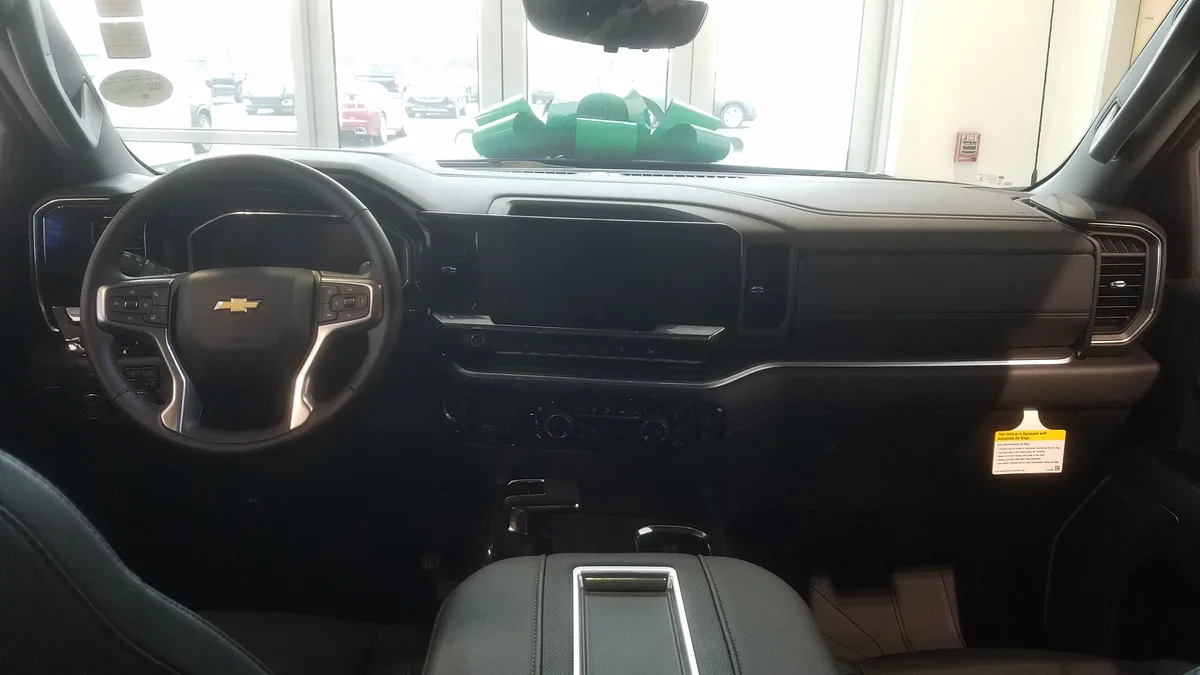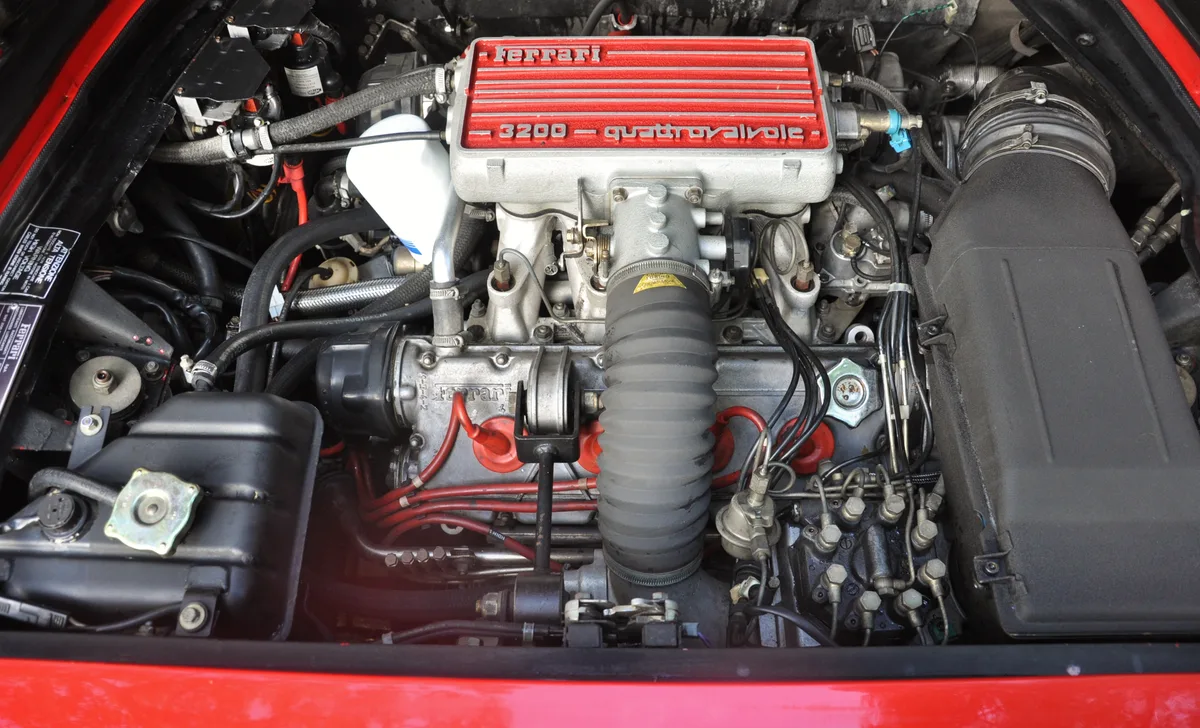
Stand in any new car dealership and do a slow scan of the lot. Then do the same thing at the dealership next door. The silhouettes blur together. The crossover proportions are interchangeable. The front ends all have versions of the same aggressive grille flanked by the same split headlight treatment. The colors are white, gray, silver, black, and maybe one brave soul in red. You couldn't tell a Nissan Rogue from a Hyundai Tucson from a Chevrolet Equinox at fifty yards and that's not an accident. It's the output of a specific set of industry forces that have been running in the same direction for twenty years.
Platform Sharing Killed Visual Diversity
Most new cars are built on shared platforms, modular chassis architectures that underpin multiple models across a manufacturer's lineup and sometimes across brand families entirely. The Volkswagen Group's MQB platform underlies the VW Golf, the Audi A3, the Seat Leon, the Skoda Octavia, and over a dozen other vehicles. Toyota's TNGA platform supports vehicles from the Corolla to the RAV4 to the Camry. The economies of scale are enormous. The design consequences are significant.
When a platform defines the wheelbase, the track width, the firewall position, the suspension geometry, and the floor height, it constrains what the body can be before a designer has drawn a single line. Two vehicles on the same platform will share proportions at a fundamental level regardless of how different the styling attempts to be. The hood length is constrained by the firewall position. The roofline height is constrained by the floor height and the headroom requirement. The wheel arch position is constrained by the track width. These are not styling decisions. They're engineering decisions that styling has to work around.
The result is that an entire manufacturer's lineup, and sometimes multiple manufacturers' lineups sharing a platform family, produces vehicles with similar visual DNA regardless of intent. The styling can be differentiated at the surface level through headlight shapes, grille treatments, and character line direction. The underlying proportion is shared. And proportion is the thing you read first from fifty yards.
Aerodynamics Converges Toward the Same Shapes
Fuel economy regulations and increasingly stringent emissions standards have pushed every manufacturer toward lower drag coefficients, and lower drag coefficients converge toward a narrow range of shapes. The optimal aerodynamic form for a passenger vehicle is a teardrop profile with a sloped front, a smooth underbody, a fastback rear that allows clean airflow separation, and minimal surface interruption. Every manufacturer's aerodynamic engineers are solving the same equation and arriving at similar answers because the physics of airflow don't offer many options.
This is most visible in EVs, where range anxiety makes aerodynamic efficiency a marketing priority rather than just a regulatory one. The Mercedes EQS, the Lucid Air, the BMW i4, and the Hyundai Ioniq 6 all share a fastback silhouette with a steeply raked windshield and a smoothly tapering tail. None of these design teams copied each other. They all had aerodynamicists in the room and the aerodynamicists all said the same things. When efficiency is the primary design constraint and efficiency has a physics answer, design converges.
Combustion vehicles face the same pressure at lower intensity. The difference between a 0.28 drag coefficient and a 0.32 drag coefficient translates to measurable fuel economy improvement across millions of units sold. Manufacturers optimize. Optimization pulls toward similar shapes. The boxy, upright vehicles that dominated earlier decades are structurally inefficient aerodynamically and the regulatory environment has made that inefficiency progressively more expensive to maintain.
Safety Regulations Created a Design Template
Pedestrian impact standards, roof crush requirements, side impact protection, frontal crash compatibility between different vehicle heights. Each of these regulatory requirements constrains what a car can be at a structural level in ways that push designs toward common solutions. The A-pillar has to be thick enough to support the roof in a rollover. The hood has to have enough clearance above hard components to absorb pedestrian impact energy. The bumper structure has to absorb low-speed impacts within a defined zone.
When every manufacturer in every market is solving the same regulatory constraints with the same engineering approaches, the structural solutions look similar. The styling sits on top of those solutions. You can make the headlights look different and give the grille a unique shape, but you can't change the A-pillar thickness or the hood height without regulatory consequence. The template is built into the regulations and the regulations are global.
The NCAP safety rating system has added a design constraint that didn't exist twenty years ago. A five-star NCAP rating is a marketing asset and a commercial necessity in most markets. Achieving it requires specific structural approaches that are well understood and widely applied. Manufacturers are not just solving safety regulations in isolation. They're solving them in the context of a rating system that rewards specific solutions, and those solutions have become industry standard practice. Standard practice produces standard-looking results.
The Crossover Segment Removed the Incentive for Differentiation
When every manufacturer is selling primarily crossovers and SUVs, and when the crossover format is itself visually constrained by the practical requirements of elevated ride height, four doors, and substantial cargo space, the design differentiation has to happen within a narrow band. There's only so much you can do with a tall boxy vehicle before it either compromises the practicality that defines it or starts to look like something it's not.
The sedan and coupe segments that previously gave design teams the most visual freedom, low proportions, defined roofline options, the coupe's rear door elimination benefit, have been decimated by the crossover's commercial success. The design work that produced the most visually interesting cars, the sports sedan, the grand tourer, the performance coupe, now happens in segments that represent a small fraction of total sales. The mainstream market has converged on a format that is inherently less visually diverse and the mainstream design effort has followed the mainstream market.
Global Markets Require Global Compromises
A car sold in the United States, Europe, China, and Australia simultaneously has to satisfy regulatory requirements, consumer preferences, and distribution economics across all four markets. The design that works globally tends to be the design that offends no one specifically, which is a different goal from the design that excites someone specifically. Regional design studios produce concepts that reflect local taste. Global product planning committees produce vehicles that reflect the intersection of all markets simultaneously.
This is why the vehicles with the most distinctive design frequently come from manufacturers that are either strongly regional or deliberately niche. Alfa Romeo designs for a specific buyer and accepts that this buyer is a minority of the total market. Mazda designs from a coherent internal philosophy and applies it consistently regardless of whether every market validates every decision. These manufacturers produce recognizable, specific-looking vehicles because they're not trying to satisfy everyone simultaneously.
The manufacturers trying to maximize global volume produce globally averaged designs. They look like what they are: vehicles designed by consensus across markets, platforms, regulatory environments, and cost targets simultaneously. The consensus produces competent, inoffensive, interchangeable results.
The Trend Cycle Compressed
Design trends in the automotive industry used to move slowly enough that manufacturers developed distinct identities within them. The chrome era of the 1950s lasted long enough for each manufacturer to produce a substantial body of work with its own character. The wedge design era of the 1970s similarly. Individual brands had time to interpret a broad trend in their own specific way.
Social media and global design coverage have compressed the trend cycle dramatically. A design language introduced by one manufacturer is visible globally within hours. Competitors begin responding within months. By the time a vehicle designed in response to a trend reaches production three to five years later, the trend has already been adopted broadly enough that the responding vehicle looks like one of many rather than one of a kind. The split headlight treatment that looked distinctive on the first vehicles to use it now appears on vehicles from a dozen manufacturers simultaneously because the trend spread faster than the product cycle could differentiate.
The manufacturers who look most distinctive are the ones who either ignore trends entirely or set them early enough to own them. Mazda's Kodo language was distinctive when introduced and has remained recognizable through a decade of iteration because Mazda committed to it and didn't chase what competitors were doing. The manufacturers who look least distinctive are the ones who responded to what was working elsewhere and arrived after everyone else had already responded to the same thing.
What This Means in a Faceoff
When two vehicles from the same segment go head to head on WhipJury, the one that wins is almost always the one that looks most specific. Not the most aggressive or the most dramatic necessarily, but the one that looks like it came from a clear decision rather than from a process of elimination. A Mazda CX-5 wins faceoffs against technically comparable crossovers because it looks like someone chose every surface intentionally. A generic segment crossover in silver loses the same faceoffs because it looks like the output of a product planning spreadsheet, which is largely what it is.
The visual convergence that makes parking lots blur together is not inevitable. It's a specific set of decisions, platform sharing, aerodynamic optimization, global market averaging, trend following, and regulatory compliance taken as a template rather than a constraint. The manufacturers who treat those constraints as the starting point rather than the answer still produce vehicles worth looking at. They're the ones worth submitting to a faceoff.
Find the cars that don't look like everything else on WhipJury.
Frequently Asked Questions

Cam Walsh has been obsessing over cars since before he could drive one. Based out of Atlanta, Cam covers automotive design, car culture, and the eternal debate over which whips actually look the part.