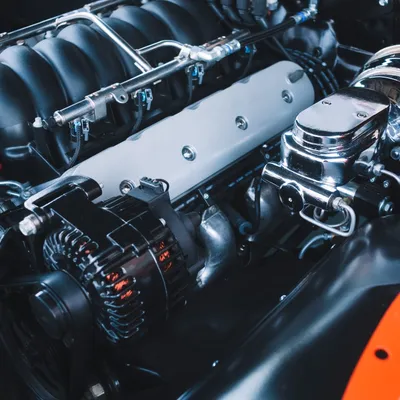
A restomod is a classic car that has been restored with modern mechanical components while keeping the original body largely intact. The name is a compression of restoration and modification. You take a 1969 Camaro, strip it to the shell, put in a modern fuel-injected LS engine, current suspension geometry, four-wheel disc brakes, modern wiring, and air conditioning that actually works. The body stays. The bones get replaced. The result drives like a modern car and looks like something from fifty years ago.
Whether that result looks better than stock is a more interesting question than it first appears, and the answer is not straightforward.
What Restomod Actually Means in Practice
The definition covers a wide range of builds. At the conservative end, a restomod might be a 1967 Mustang with a modern five-speed transmission, updated brakes, and a refreshed interior while everything visible from the outside is factory correct. From twenty feet away you can't tell it's been touched. From the driver's seat it's a completely different experience than the original.
At the aggressive end, a restomod might be a first-generation Corvette C1 body sitting on a completely custom tube chassis with a supercharged modern V8, six-piston brakes, and a suspension system that could embarrass a current sports car on a track. The body has been modified to accommodate wider wheels, a lower ride height, and sometimes subtle aero additions that didn't exist on the original. The car looks like a 1950s Corvette and performs like nothing from that decade.
Most restomods live somewhere between those poles. The key characteristic is that the visual identity of the original car is preserved while the mechanical contents are modernized to varying degrees. This is what separates a restomod from a custom or a hot rod, where the body itself might be significantly modified or fabricated. A restomod respects the original shape. A custom treats it as a starting point.
The Visual Argument for Restomods
Restomods tend to rate extremely well in WhipJury faceoffs and the reason is specific. Classic car bodies from the muscle car era and the sports car era of the 1950s through 1970s were designed without the regulatory constraints that define modern automotive design. No pedestrian impact standards requiring hood height. No side impact door beams adding visual mass. No bumper regulations forcing heavy assemblies onto front and rear ends. The original designs were made purely to look right and perform the job, with no safety committee involved in the proportion decisions.
A 1970 Dodge Challenger body has proportions that modern design teams cannot replicate in a production car. The hood is longer relative to the wheelbase than any current Challenger. The wheel arches are tighter. The roofline is lower. The overall stance is more planted. These proportions were achievable in 1970 because nobody required the body to absorb crash energy or protect pedestrians. They're not achievable today at production scale without regulatory violation.
A restomod takes that original body, restores it to better than factory condition, and lowers it on modern suspension to a ride height the factory couldn't achieve with 1970 technology. The wheel arches get filled with wider wheels and tires than the original fitment. The paint quality exceeds anything that came from the factory fifty years ago. The result is a car that has the design DNA of a classic but presented at a quality level the original never reached. That's a compelling combination.
Builders That Define the Category
SEMA-quality restomod builders have turned the category into a legitimate industry. SpeedKore, Ringbrothers, and Detroit Speed produce cars that cost as much as supercars and look better than most of them in a faceoff. A Ringbrothers 1969 Mustang is not a nostalgia play. It's a serious design object that happens to share a body with a car from fifty years ago. The fabrication quality, the surface finishing, the attention to panel gaps and surface texture exceeds what most manufacturers deliver on six-figure vehicles.
Singer Vehicle Design applied this philosophy to the Porsche 911 and created what is arguably the most talked-about restomod program in automotive history. Singer takes early air-cooled 911 bodies, typically 964-generation cars, and rebuilds them to a specification that addresses everything the original got slightly wrong while keeping the design language completely intact. The proportions are the 964's. The execution is beyond anything Porsche produced in that era. Singer 911s sell for over a million dollars and rate at the very top of any faceoff they enter because the design is correct and the quality is extraordinary.
Icon 4x4 does for the Toyota FJ40 what Singer does for the 911. The original FJ40 Land Cruiser body is one of the best utility vehicle designs ever produced, honest and purposeful in ways that the current Land Cruiser has long since abandoned. Icon rebuilds them on modern frames with modern powertrains and presents them at a quality level that makes the original look like a rough draft. The result wins faceoffs against current production trucks regularly because the design language is better, full stop.
When Restomods Look Worse Than Stock
Not all restomods improve on the original, and being honest about when they don't is important for understanding what the category actually does well.
Wheel fitment is the most common failure point. Modern wider wheels and tires fill the arches and create a more aggressive stance, but they need to be sized correctly for the specific body. A classic car that gets stretched to accommodate wheels significantly wider than the original arches can accommodate without flares ends up with a stretched, awkward look where the tire is visually fighting the body rather than complementing it. The wider stance reads as wrong rather than improved because the body wasn't designed for those proportions.
Ride height is the second issue. Lowering a classic improves the visual stance in most cases, but taken too far it creates clearance problems that become visible in the photo. A car sitting so low that the body panels are nearly touching the tire creates a stressed look rather than a planted one. The sweet spot is significantly lower than stock but not so low that the functional relationship between the wheel and the arch looks compromised.
Modern interior conversions can also hurt a restomod's visual presentation if they're visible through the glass. A 1967 Mustang fastback with a Recaro seat and a digital instrument cluster visible through the side window looks like a collision between eras rather than a synthesis of them. The best restomods handle this by either keeping the interior period-correct in appearance while modernizing the components, or committing fully to a contemporary interior in a way that reads as intentional rather than incongruous.
The OEM-Plus Alternative
The restomod's closest relative in the design conversation is the OEM-plus build, which applies to modern cars rather than classics. OEM-plus means factory-correct in appearance with higher-quality execution in the details: upgraded wheels that look like they could have come from the factory, subtle lowering that doesn't read as modified, high-quality paint with no visible modification. The philosophy is the same as the conservative restomod. Improve the execution without changing the design argument.
OEM-plus builds often rate better in faceoffs than more heavily modified versions of the same car because they look like the manufacturer's vision executed perfectly rather than someone else's vision imposed on the manufacturer's canvas. A 911 in the right color with correct-spec wheels at a slightly lowered ride height rates higher than the same car with aftermarket body work and aggressive wheel fitment in many faceoffs, because the clean version is asking the design to earn its score rather than relying on visual noise to generate a reaction.
Does a Restomod Look Better Than Stock?
Usually yes, when the builder understood the original design and improved its execution rather than changing its argument. The best restomods take bodies that were designed correctly in the first place and present them at a quality level and ride height the original production could never achieve. They win faceoffs against the original stock versions and against most modern cars because they're combining classic proportion with modern execution quality.
When a restomod loses to stock it's almost always because the builder imposed a personal vision on a design that didn't need it, or because the modifications created visual tension between era and proportion that the original never had. A 1969 Camaro on correct-era proportioned wheels at a sensible ride height with excellent paint quality is nearly impossible to beat in a faceoff. The same car on aggressively stretched tires with a front splitter that has no relationship to the body looks like it's trying to be something the original design never intended.
The design already existed. The restomod's job is to let it be seen properly. The builders who understand that produce cars that win faceoffs. The ones who use the classic body as a canvas for their own statement produce cars that are interesting but less beautiful than what they started with.
See how restomods perform against modern builds and stock classics on WhipJury. The faceoff results tell you more about what actually looks better than any build thread ever will.
Frequently Asked Questions

Jeffrey Wiley has spent more time than he'd like to admit thinking about what makes a car look right. He writes about automotive design, car culture, and the opinions people have strong feelings about. He lives in north Georgia.