What is Hot rod?
An older American car (typically pre-1949) modified for performance and individualistic style. The original DIY car culture.
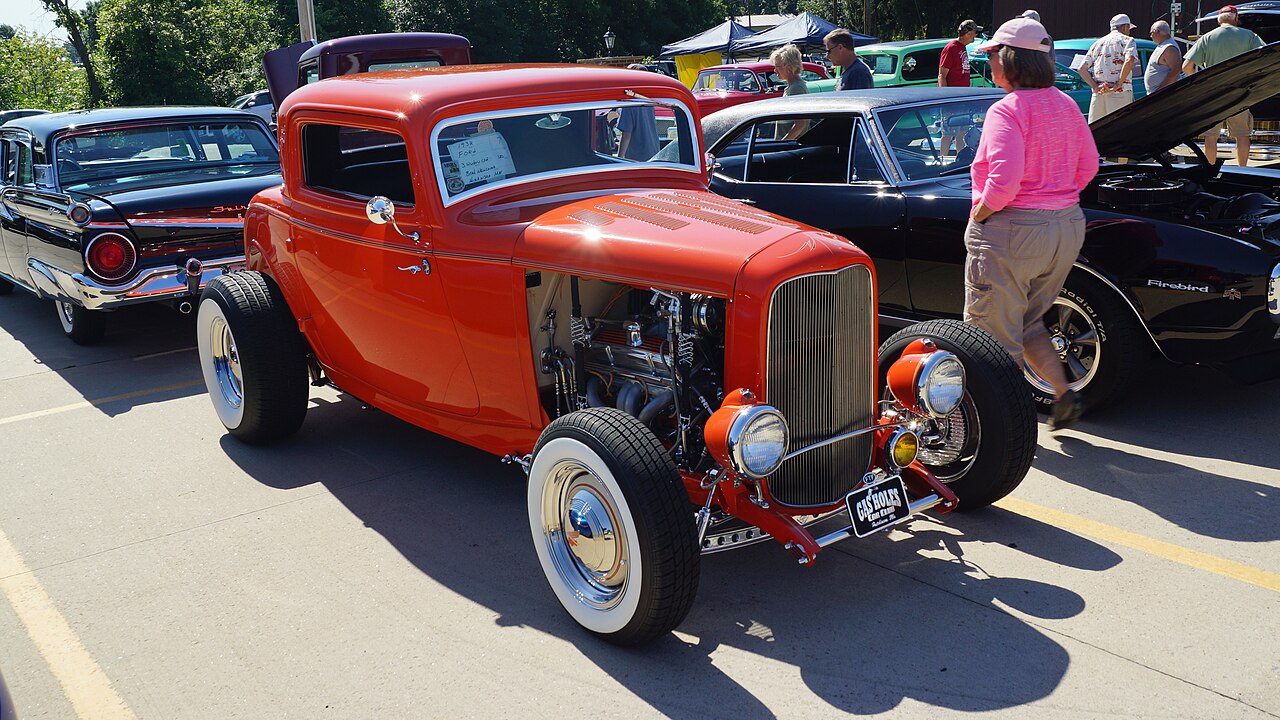
Hot rod describes an older American car (typically pre-1949 model years) modified for higher performance and individualistic style. The hot rod tradition emerged in 1940s and 1950s California, where young enthusiasts modified affordable older cars (often Ford Model A, Model B, and 1932 Ford coupes and roadsters) by removing fenders, hoods, and bumpers, swapping in larger flathead V8 engines, and racing on dry lakebeds and abandoned military airstrips.
The hot rod aesthetic emphasizes performance modification over original style. Common modifications include engine swaps (modern V8s into older chassis), suspension reworking (typically lowered front, sometimes raised rear), large rear wheels with skinny front wheels, exposed mechanical components, and individualistic paint or pinstriping. The visual language is distinct from later modification movements like restomod or stance.
The modern hot rod scene continues to thrive in the United States. Major events include the Goodguys Rod & Custom Association shows, the Bonneville Speed Week (where hot rods race for top speed records), and the ongoing publications and websites dedicated to the culture. The movement has influenced and overlapped with the lowrider, kustom, and rat rod subcultures.