DuelsLeaderboardGarageBlogCarsGlossaryBrowse

Muscle car

Car culture term

Muscle car
Photo: Leonard J. DeFrancisci / Wikimedia Commons · CC BY-SA 4.0

What is Muscle car?

An American mid-size or compact car with a large displacement V8 engine. The category began with the 1964 Pontiac GTO and peaked in the late 1960s and early 1970s.

Muscle car describes an American category of mid-size or compact cars fitted with disproportionately large displacement V8 engines. The formula emerged in the early 1960s, peaked in the late 1960s and early 1970s, declined under the 1973 oil crisis and emissions regulations, and was revived in the modern era.

The 1964 Pontiac GTO is widely credited as the first true muscle car. Pontiac took a mid-size LeMans and offered the 389 V8 from the larger Bonneville as an option, creating a relatively compact body with disproportionate power. Every American maker followed within two years. The 1968-1972 period is the muscle car peak, with the Plymouth Hemi Cuda, Dodge Challenger R/T, Pontiac Trans Am, Chevelle SS, Chevrolet Camaro Z/28, Ford Mustang Boss 429, and many others competing for performance dominance.

Modern muscle cars include the Dodge Challenger and Charger Hellcat (and Demon variants), Ford Mustang GT and GT500, Chevrolet Camaro SS and ZL1, and the various Pontiac G8 GXP and Cadillac CTS-V cars from the 2000s and 2010s. The category has evolved to include modern handling and braking but maintains the V8 power and aggressive styling that defined the original era.
Related terms

Pony carHot hatchGrand tourer

Frequently asked questions

What is the difference between muscle car and pony car?
Muscle car traditionally refers to a mid-size or compact body with a large V8. Pony car specifically refers to the Ford Mustang and its direct competitors (Chevrolet Camaro, Pontiac Firebird, Plymouth Barracuda, Dodge Challenger). Pony cars are a subcategory of muscle cars; not all muscle cars are pony cars.
Are modern Hellcats muscle cars?
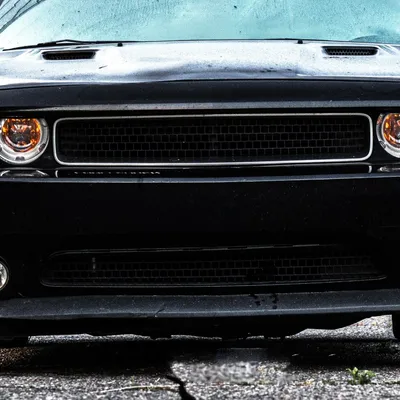
Yes, by general consensus. The Challenger and Charger Hellcat (and Demon, Redeye, and other variants) maintain the muscle car formula: large displacement V8, rear-wheel drive, aggressive styling, and substantial straight-line performance. The handling and braking are more modern but the spirit is muscle car.
What is the most legendary muscle car?
Subjective. The 1969 Camaro Z/28, the 1969 Boss 302 Mustang, the 1970 Hemi Cuda, the 1970 Chevelle SS 454, the 1970 Buick GSX, and the 1971 Trans Am SD-455 all have strong cases. The Hemi Cuda Convertible has the strongest auction case, with multi-million-dollar examples.
Why did muscle cars decline in the 1970s?
Several factors. The 1973 oil crisis raised fuel prices and reduced consumer demand for high-displacement engines. EPA emissions regulations starting in 1970 progressively reduced output through compliance modifications (lower compression, different cams, restrictive exhaust). Insurance costs for high-performance cars rose dramatically. The combination effectively ended the muscle car era for nearly two decades.
Are muscle cars going away with EVs?
The internal combustion muscle car category is contracting. Stellantis (Dodge) ended the LX-platform Hellcat program in 2023. Chevrolet Camaro production ended in 2024 with no immediate successor. Mustang continues with new GTD and standard V8 variants. Future muscle cars may use electric powertrains; the Charger EV is one early example.

Muscle car on the blog

The cheapest manual sports cars you can still buy new, ranked by how expensive they look

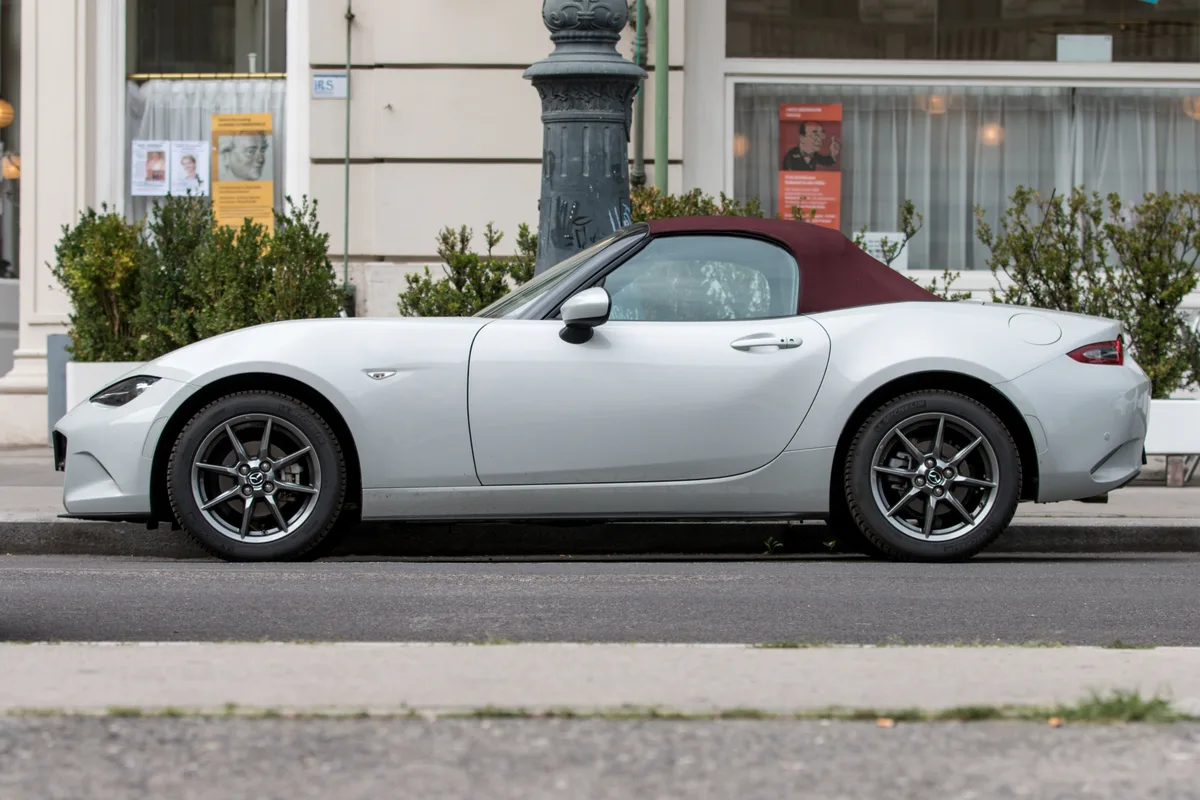
You can still buy a new manual sports car for about $30,000 in 2026, but the list is short. Here's every one that matters, with current prices, ranked by how much more expensive it looks than it is. The Miata and GR86 win, and the reason is proportions.

What Is a Hellcat Engine?

A Hellcat engine is Dodge's 6.2-liter supercharged HEMI V8, and it landed in 2015 making 707 horsepower in cars anyone could buy. Dodge kept escalating from there, ending with a 1,025 horsepower Demon 170. Here's what's inside it and why it mattered.

Turbo vs Supercharged: What's the Difference and Which Is Better?

Turbochargers and superchargers do the same job, cramming extra air into the engine to make more power, but they get there in opposite ways. One runs on exhaust gas, the other steals power from the engine itself. Here is the real difference and which one wins, depending on what you want.

1JZ vs 2JZ: What's the Difference and Which One Should You Swap?

The 1JZ and 2JZ are both Toyota inline-six engines from the same family, and people use the names like they are interchangeable. They are not. The 1JZ is a 2.5-liter that loves to rev. The 2JZ is a 3.0-liter that became famous for surviving four-figure horsepower on stock parts. Which one you want depends entirely on what you are building.

Back to Glossary