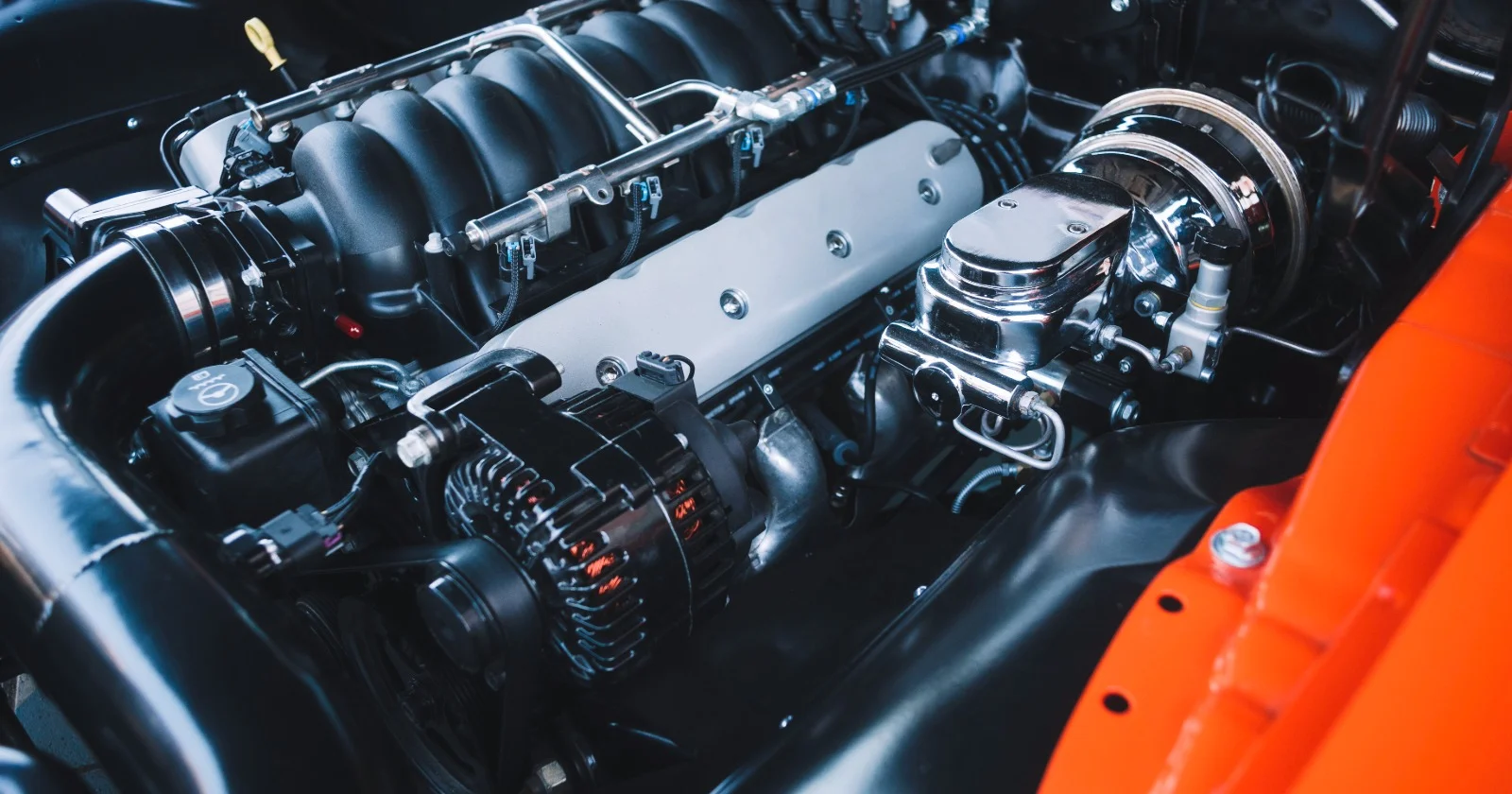
A forced induction system does one job: it forces more air into the engine than it could breathe on its own, so more fuel can be burned and more power made. There are two main ways to do it, and the whole turbo-versus-supercharger debate comes down to where each one gets its energy.
They reach the same destination by opposite roads, and each road has a real cost. Here is how they differ and which one is actually better, which depends entirely on what you are after.
How a Turbocharger Works
A turbocharger is driven by the engine's own exhaust. Spent gases leaving the engine spin a turbine wheel, which is connected by a shaft to a compressor wheel that jams fresh air into the intake. The clever part is that it runs on energy that would otherwise be wasted out the tailpipe, which is why turbocharged engines can add a lot of power without hurting fuel economy much.
The catch is lag. At low rpm there is not enough exhaust flow to spin the turbo, so there can be a delay before the power arrives. Modern turbos, including twin-scroll designs, have shrunk that delay a lot, but the character is still less immediate than the alternative.
How a Supercharger Works
A supercharger skips the exhaust entirely and is driven mechanically, spun by a belt connected to the engine's crankshaft. Because it is tied directly to engine speed, it makes boost the instant the engine turns, with no lag and a smooth, linear delivery that builds predictably with rpm.
Nothing is free, though. A supercharger takes power from the engine to run, a cost known as parasitic loss. You are spending some horsepower to make more horsepower, so the net gain is real but the method is less efficient than a turbo.
The Real Trade-Offs
Put simply: a turbo is more efficient and can make big power from a small engine, but it can lag and it heats the intake air more. A supercharger responds instantly and delivers torque in a linear, muscular way, but it drinks more fuel and steals engine power to operate. Turbos are also more complex to install because they tie into the exhaust, while a supercharger tends to bolt on more directly.
Which One Is Better?
There is no single winner, only a better fit for the goal. If you want efficiency and the most power per liter, the turbo wins, which is exactly why nearly every new factory performance car is turbocharged. If you want instant, linear response and a big, lazy power delivery, the supercharger wins, which is why it lives on in large-displacement muscle engines like the supercharged Hellcat V8s. Pick the character you want, not the label.
Forced Induction in the Faceoff Arena
Boost does not change how a car looks on its own, but the build around it usually does. A tastefully turbocharged or supercharged car often wears the evidence: an intercooler behind the bumper, a hood vent, a certain intent. Voters who understand what is under the hood tend to read that intent correctly.
Upload your boosted build to WhipJury and see whether the crowd rates the whole package as highly as the power figure.
Sources:
How turbochargers and superchargers differ and their trade-offs: Hagerty
Efficiency, lag, and parasitic loss compared: JD Power
Frequently Asked Questions

Cam Walsh has been obsessing over cars since before he could drive one. Based out of Atlanta, Cam covers automotive design, car culture, and the eternal debate over which whips actually look the part.