Chrome left cars in two waves. A US bumper rule for the 1974 model year killed the slim chrome bumper, and rules on the hexavalent chromium used in chrome plating are now pushing automakers such as Stellantis to drop chrome trim altogether.
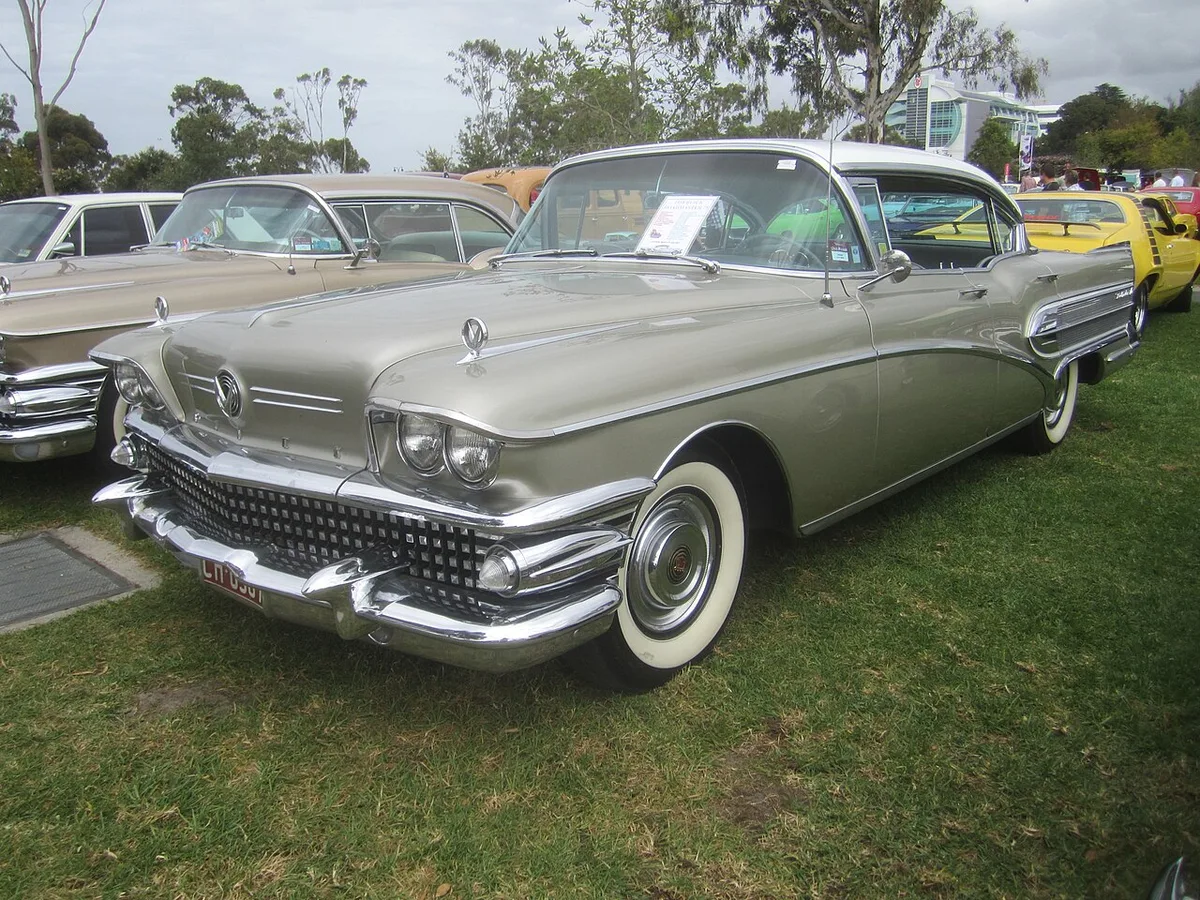
Chrome first showed up on cars in the 1920s as a shinier, easier-to-maintain substitute for nickel and brass, according to Leslie Kendall, head curator of the Petersen Automotive Museum. "Chrome on a car is the automotive equivalent of using jewelry on an outfit," Kendall told CNN. The 1950s were the peak. Stellantis chief global designer Ralph Gilles told CNN that the big American cars of that decade wore "giant chrome bumpers and giant chrome grills." Hagerty writer Thomas Klockau calls the 1958 Buicks, along with that year's Cadillacs and Oldsmobiles, arguably the most chromed-up cars ever made. A 1958 Roadmaster 75 four-door hardtop ran 219.1 inches long and weighed 4,668 pounds, and the new top-line Limited added 15 vertical chrome hash marks to the body. It was part of what WhipJury has called the last great era of American car design.
The bumper rules came first
Through the 1972 model year, bumpers were almost always curved, chrome-plated stamped metal mounted close to the body, writes Hagerty's Rob Siegel. The first federal bumper rule, Standard 215, took effect in September 1972, so most automakers met it with their 1973 cars. It required bumpers to protect lights and other safety parts in a 5 mph front impact and a 2.5 mph rear impact, and lights built into bumpers moved onto the body.
For 1974, the rule demanded that lighting survive 5 mph hits front and rear, from any angle. Siegel writes that this pushed nearly all manufacturers to abruptly drop their curved chrome bumpers. Many European makers bolted on big aluminum bumpers that stood nearly a foot off the body on hydraulic cylinders, and BMW kept its larger US-only bumpers until 1988. Those bumpers became a visual marker of the malaise era.
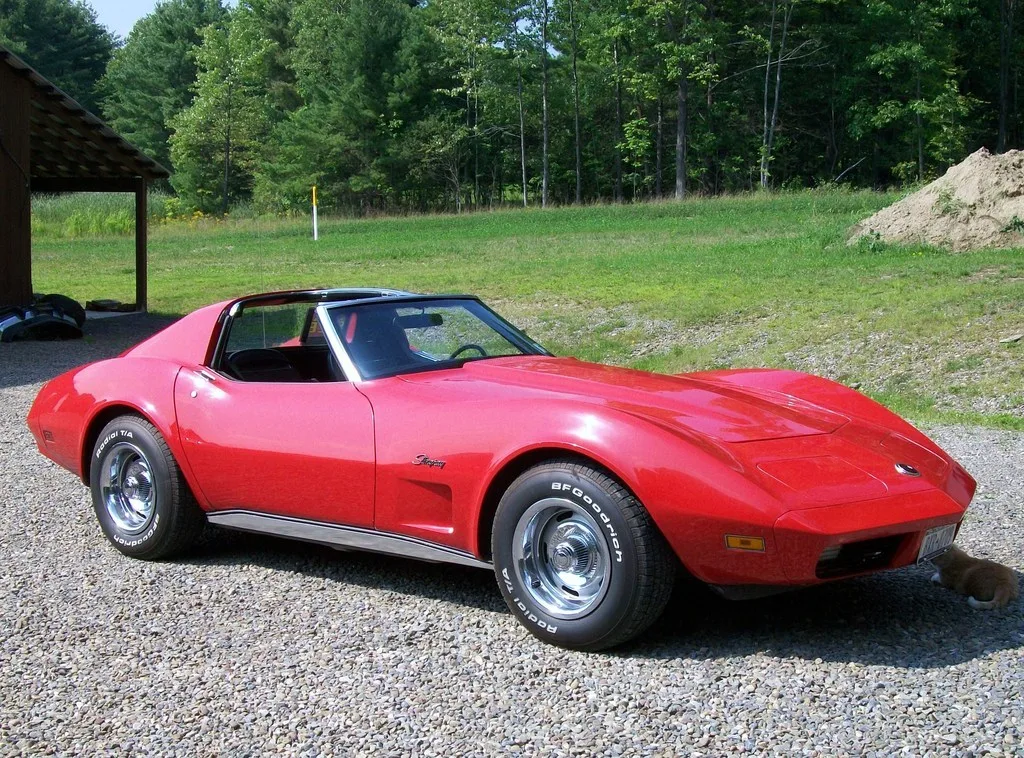
Chevrolet took a different route. The 1973 Corvette nose used plastic energy-absorbing structures under a body-color flexible urethane cover, according to RM Sotheby's, and 1973 was the only year a Corvette paired that soft nose with a chrome rear bumper. Siegel rates the 1974 Corvette's 5 mph bumper integration as probably the best in the business.
The rule is still on the books, at half the speed. Today's version, 49 CFR Part 581, calls for 2.5 mph barrier and pendulum hits and 1.5 mph corner hits on passenger cars. The lamps must stay crack-free and the hood, trunk, and doors must still work, but the bumper face bar itself is allowed to take damage. Like pop-up headlights, the chrome bumper lost out to a safety rule about what a car's nose has to survive.
Then the plating rules arrived
Traditional chrome plating uses hexavalent chromium, and the Occupational Safety and Health Administration says that compound is known to cause cancer. OSHA lists chrome plating baths as an exposure source, and its 2006 standard caps worker exposure at 5 micrograms per cubic meter of air over an eight-hour average. The finished trim on a car is safe, regulators told CNN. The risk falls on platers and the air around their shops.
The European Union put chromium trioxide, a hexavalent chromium compound, on its REACH authorization list in April 2013, classing it as a category 1A carcinogen with a sunset date of September 21, 2017. The California Air Resources Board told CNN that hexavalent chromium "is 500 times more toxic than diesel exhaust." Its 2023 rule orders decorative chrome platers to stop using it by January 1, 2027, or by January 1, 2030, under an alternative path.
Stellantis named its response "Death of Chrome." Gilles said the safer trivalent process falls short: "The problem is the luster isn't as good." Polished stainless steel looks a lot like chrome but costs more. The Jeep Wagoneer S has no chrome at all, even as an option, and Gilles said every new Stellantis model will follow. Volkswagen told CNN, "We are also using light as the new chrome."

Buyers were already paying to lose the shine. Blackout packages swap chrome badges and grilles for black pieces, and Gilles once blacked out a personally owned 2016 Chrysler minivan, a look that reached showrooms as the Chrysler Pacifica S Package. Kelley Blue Book points to Nissan's Midnight Edition, Toyota's Nightshade Edition, and Kia's Nightfall Package, and notes that these packages usually cost extra, which turns the missing chrome into a paid option.
BMW made high-gloss black Shadowline side window trim standard on the 4 Series coupe, Gran Coupe, and convertible in 2023. Sebastian Kroes, head of interior design for BMW's Neue Klasse, told CarExpert for a March 2026 report, "Chrome doesn't work at night," adding that light does.
Mercedes-Benz is holding on. The grille on the electric GLC pairs a wide chrome frame with an optional pattern of 942 backlit dots, and Mercedes says "The chrome grille is one of the most visual representations of the brand's DNA."
Chrome, gloss black, or a grille that lights up? Vote on the faces you like best on WhipJury.
Sources:
Chrome in the 1920s, the 1950s peak, Gilles and Volkswagen quotes, the CARB statement, Death of Chrome, the Wagoneer S, stainless steel, and blackout packages: CNN
The 1958 Buicks: Hagerty
Pre-1973 chrome bumpers, Standard 215, the 1974 rule, European bumpers, BMW, and the Corvette: Hagerty
The 1973 Corvette urethane nose: RM Sotheby's
Today's bumper standard: eCFR, 49 CFR Part 581
Hexavalent chromium health effects and chrome plating baths: OSHA
The exposure limit: OSHA, 29 CFR 1910.1026
The REACH listing and sunset date: EUR-Lex, Regulation (EU) No 348/2013
California's phaseout dates: California Air Resources Board
Chrome-free packages and their cost: Kelley Blue Book
The 4 Series Shadowline trim: BMW Group
The Kroes quote: CarExpert
The GLC grille: Mercedes-Benz, via Automotive World
Photos via Wikimedia Commons: Sicnag (CC BY 2.0), Robert Spinello (CC BY-SA 3.0), and Elise240SX (CC BY-SA 4.0)
Frequently Asked Questions

Jeffrey Wiley has spent more time than he'd like to admit thinking about what makes a car look right. He writes about automotive design, car culture, and the opinions people have strong feelings about. He lives in north Georgia.