Headlights got thin because the parts inside them got small. Lighting supplier ZKW says a regular headlight lens is usually about 50 mm tall, while the visible lens on its stripeZ LED modules is only 22 to 30 mm, with light output comparable to the bigger modules. That is about half the height for the same job. The numbers keep falling. Valeo lists its Thinbilite module, which handles both low and high beam, at a lens height of about 15 mm. Marelli showed a full-width headlamp at Auto China 2026 in Beijing built from modules of just 15 mm by 120 mm, and said the design is ready for production. Small modules can also be multiplied. ZKW pitches splitting the lighting functions across two, three, four, or more separate eyes, and its stripeZ Pixel module uses 48 LEDs to mask parts of the high beam for glare-free driving.
Automakers have used that space to draw slits. When BMW gave its first look at the iX on November 11, 2020, it said the SUV had the slimmest headlight units ever fitted to a series-produced BMW, with the daytime running lights drawn as flat strips along the top edge. The main lamps are darkened and set back into the inner sections, so they only show when switched on.
Why the lights split in two
Once the lamps got small, designers could also pull them apart. A split headlight puts the thin daytime running light up high, near the hood line, and drops the real headlights into a separate, darker housing lower in the bumper. Hyundai described that layout on the first Kona in April 2017, with "the LED Daytime Running Lights positioned on top of the LED headlights."
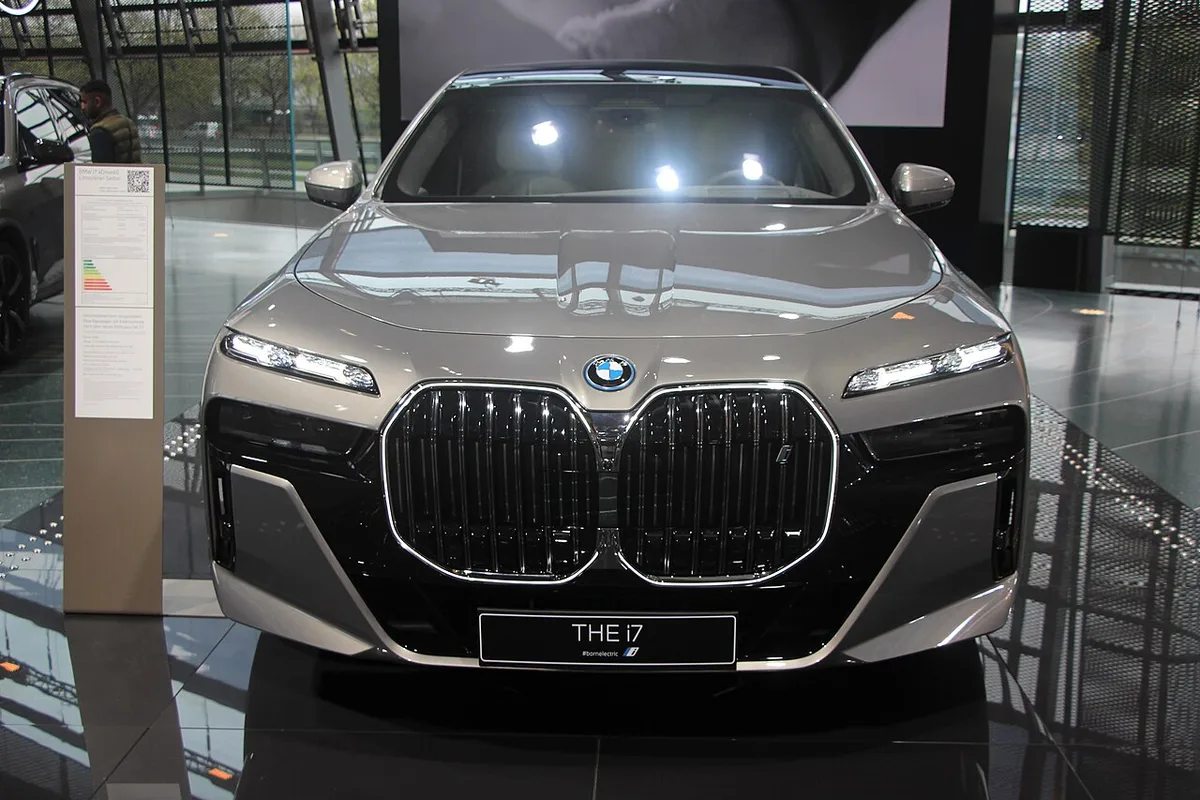
Other brands got there sooner. The Drive points to the 2011 Nissan Juke, the 2014 Jeep Cherokee, and the 2014 Citroën C4 Cactus. BMW used it on the 7 Series revealed on April 20, 2022. A very slim strip set high in the nose holds the daytime lights, sidelights, and turn signals, and the low and high beams sit deep in the front apron. BMW also offers optional crystal headlights with their own light effect. The electric version, the i7, is in the photo at the top of this page.
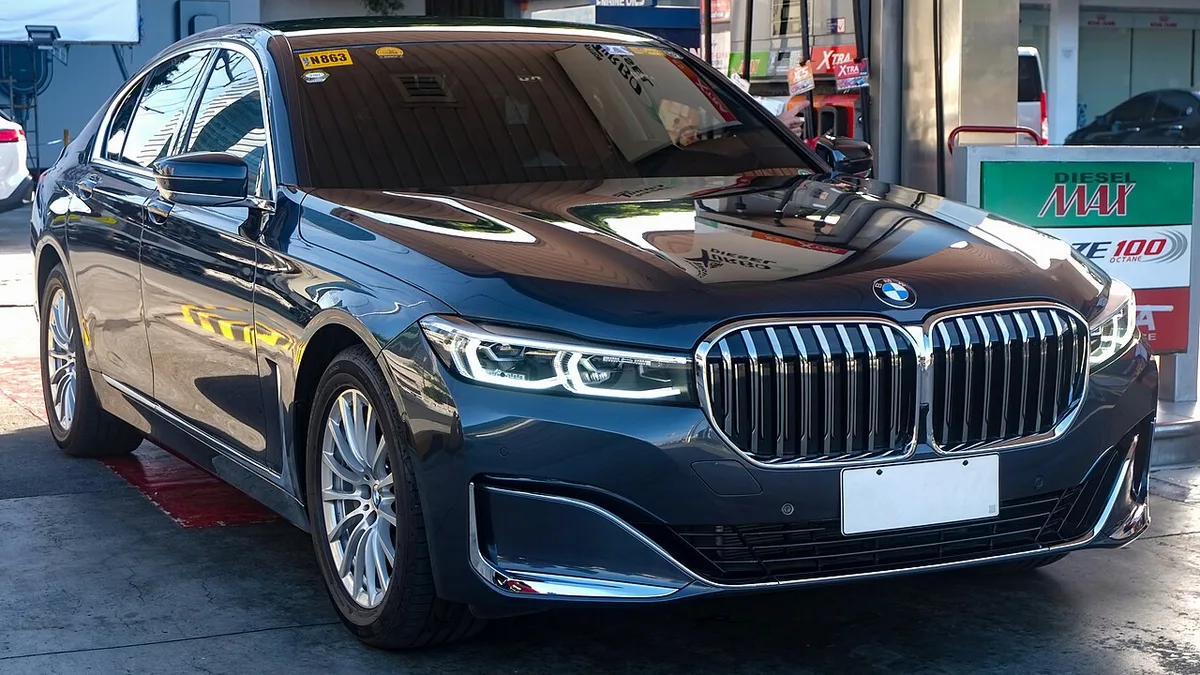
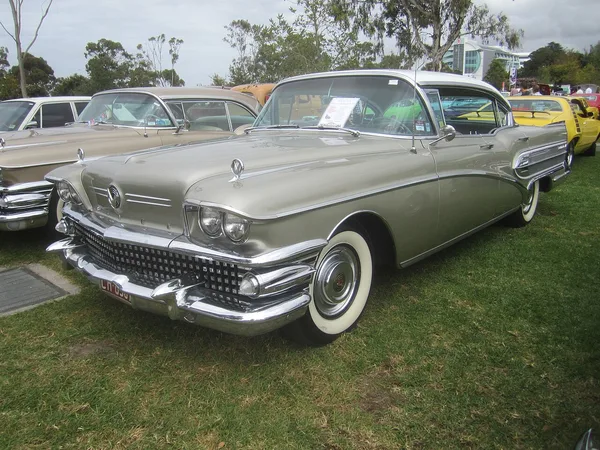
The 7 Series before it, shown above, kept its running lights and main beams in one housing per side. The second-generation Kona, revealed on December 20, 2022, went further than the first. Hyundai stretched one light bar across the nose and moved the headlamps into the wheel-arch cladding.
It is easy to assume a safety rule forced all this. The Drive asked in 2022, and the automakers all said design drove it. "It was strictly an aesthetic choice," BMW spokesperson Jay Hanson said of the i7. Jeep spokesperson Amy Delcamp said the Cherokee look started with a designer's sketch, and Hyundai spokesperson Derek Joyce cited strong consumer sentiment in pre-launch research. A spokesperson for the National Highway Traffic Safety Administration (NHTSA) told the outlet there is no relational mounting height requirement between daytime running lights and headlights.
What the rules actually say
The rules leave plenty of room. In the US, Federal Motor Vehicle Safety Standard 108 requires low and high beams to sit between 22 and 54 inches off the ground. Daytime running lights are permitted but not required, and a standalone running light can sit no higher than 1.067 meters, about 42 inches. That ceiling is a foot lower than the one for headlamps, so nothing in the US standard pushes running lights above the headlights.
Europe follows UNECE Regulation 48, which allows dipped beams between 500 and 1,200 mm off the ground and daytime running lamps between 250 and 1,500 mm. The European Commission made running lights mandatory on new cars and small delivery vans from February 7, 2011. Motor1 wrote in 2025 that LED running lights have become "more of a design statement than a technical feature."
Brands now treat that running light as a logo. Hanson called the i7's lights a "progressive interpretation of BMW's well-known double-round headlights with halo rings." Hyundai shaped the lamps on the 2023 Santa Fe as an H that reinterprets its emblem. Frank Huber, president of Marelli's lighting business, said lighting will "further enhance brand identity" in future cars. Air plays a part too. Hyundai says the new Kona's clean nose contributes to its aerodynamic performance, and BMW closed the iX grille entirely because the electric drive needs only a small amount of cooling air.
The trend has limits. Jeep dropped the split Cherokee lights for a more traditional look with the 2019 facelift, and some brands went the other way and brought back round headlights. The same small LED hardware is part of why modern headlights feel so bright. Hiding the lamps used to take motors and hinges, and why pop-up headlights disappeared is its own story.
Put a split-light SUV up against a round-eyed one on WhipJury.
Sources:
Standard and stripeZ lens heights, the multi-eye layout, and the Pixel module: ZKW
The Thinbilite module: Valeo
The Thin Corner-to-Corner Headlamp and the Huber quote: Marelli
The iX headlights and closed grille: BMW
The 7 Series split headlights: BMW
The first Kona lighting layout: Hyundai
The second-generation Kona: Hyundai
The Santa Fe H lights: Hyundai Motor Group
Early split-light cars, automaker and NHTSA statements, and the 2019 Cherokee change: The Drive
Running lights as a design statement: Motor1
US headlamp and running light heights: FMVSS 108 (eCFR)
European dipped beam and running lamp heights: UN Regulation 48 (EUR-Lex)
The EU running light mandate: European Commission
Photos via Wikimedia Commons: Wikisympathisant and Ethan Llamas (CC BY-SA 4.0)
Frequently Asked Questions

Jeffrey Wiley has spent more time than he'd like to admit thinking about what makes a car look right. He writes about automotive design, car culture, and the opinions people have strong feelings about. He lives in north Georgia.