You aren't imagining it. Oncoming headlights really have got harder to look at, and there are three separate reasons, only one of which is raw brightness.
Regulators have noticed too. The National Highway Traffic Safety Administration has received thousands of public complaints about headlight glare.
LEDs changed the light itself
The main shift is from halogen bulbs to LEDs, which are now standard on most new cars. LEDs can produce considerably more light, measured in lumens, than the halogen bulbs they replaced.
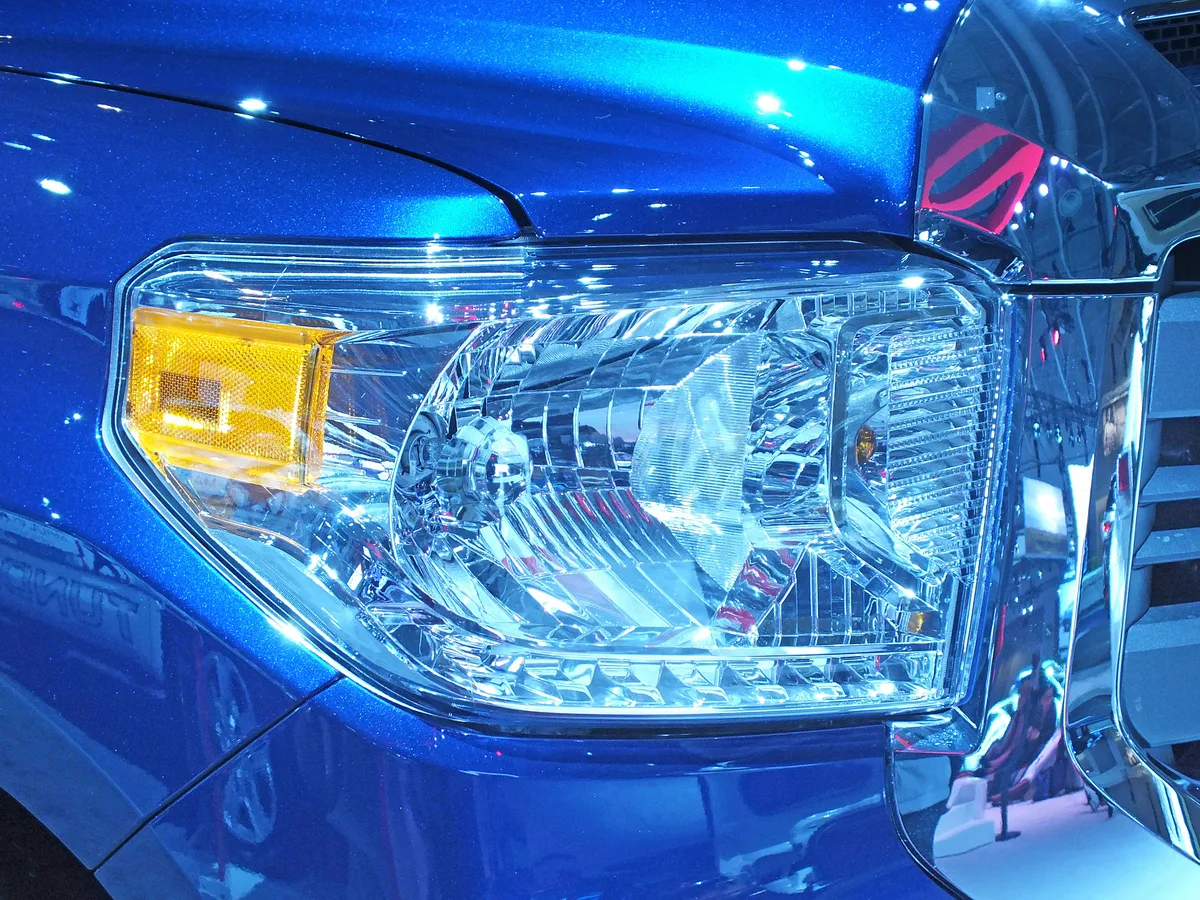
Color matters as much as output. A halogen bulb glows warm and yellowish. Most LEDs are a hard white that leans blue, and bluer light is perceived as brighter even at identical measured illuminance. So an LED headlight can look far more aggressive than a halogen one while putting out a similar amount of usable light. Higher color temperatures also don't necessarily light the road better, which is worth knowing before anyone buys the bluest bulbs available.
Then there's how the light is arranged. A halogen unit has one filament behind a reflector, spreading light fairly softly. An LED headlight uses an array of small diodes, each aimed precisely, and that concentrated output reads as a set of hard points rather than a glow. Small, intense sources are exactly what the human eye finds uncomfortable.
Cars got taller
The second reason has nothing to do with bulbs. Headlight height is set by where the car's nose is, and the fleet has been rising for two decades as buyers moved from sedans into crossovers and trucks.
A headlight aimed correctly on a tall SUV still sits closer to eye level for the driver of a low car, so light that's technically within limits lands where it does the most damage. That's also part of why pickup trucks getting bigger is a lighting problem as well as a styling one, and why glare complaints rose alongside SUV sales.
The fix already exists
The technology that solves this is called adaptive driving beam, and it's been standard in Europe for years. The headlights stay on high beam but selectively black out the portion of the beam covering an oncoming car, so the road stays lit while the other driver sits in a shadow that moves with them.
NHTSA issued a final rule permitting adaptive driving beam on new US vehicles, with glare limits attached, and the National Transportation Safety Board has backed the technology as a benefit to pedestrians and cyclists. Adoption is still working through the fleet, so most of the cars blinding you tonight don't have it.
There's a design consequence in all this. Because LEDs need so little space, headlights shrank into thin slits, and that's a big part of why so many new cars wear the same narrow, angry face. The same freedom is now pushing the other way, with round headlights coming back.
Sources:
LED output, color temperature, and beam concentration: Reader's Digest
NHTSA glare complaints and the adaptive driving beam rule: NTSB
Frequently Asked Questions

Jeffrey Wiley has spent more time than he'd like to admit thinking about what makes a car look right. He writes about automotive design, car culture, and the opinions people have strong feelings about. He lives in north Georgia.