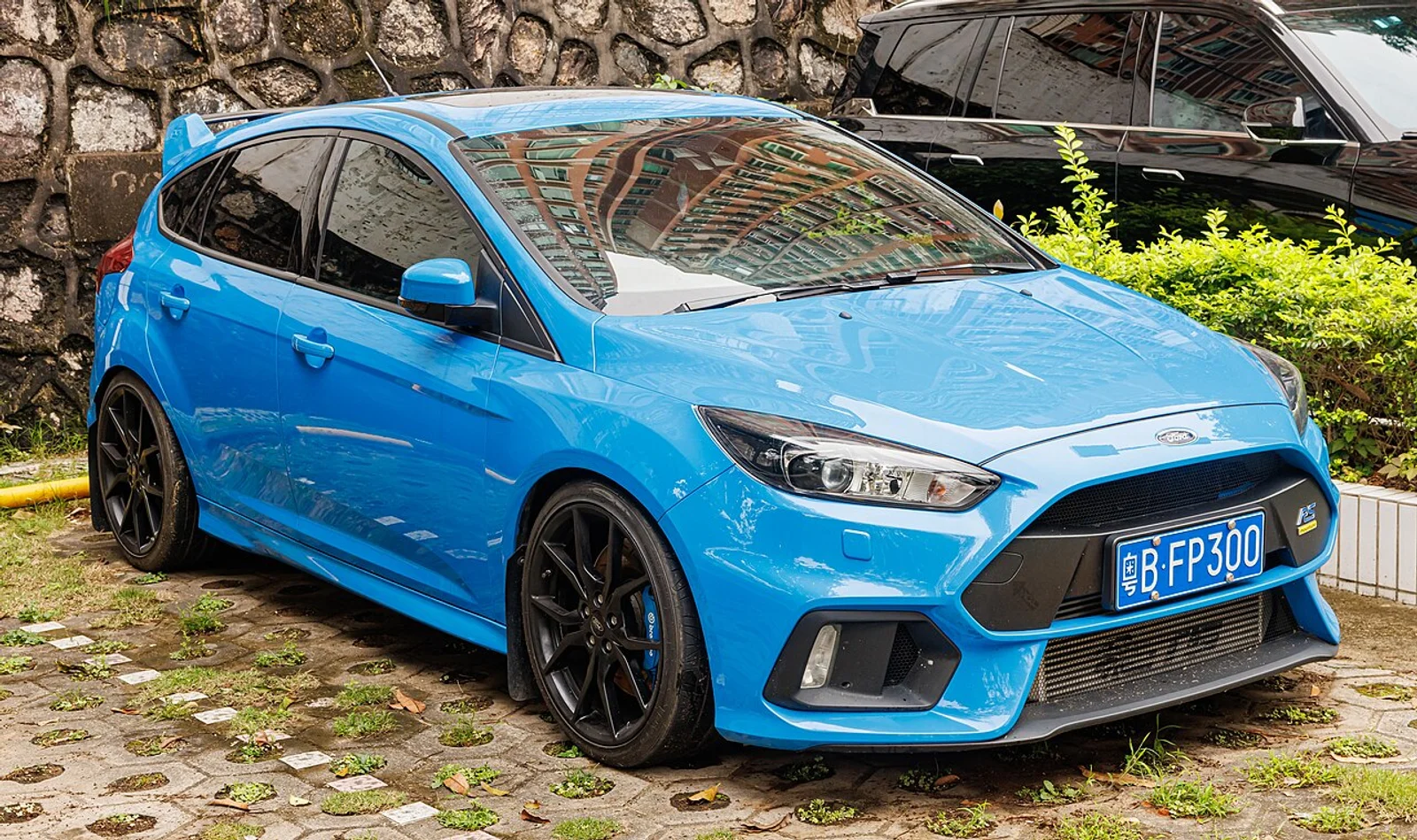
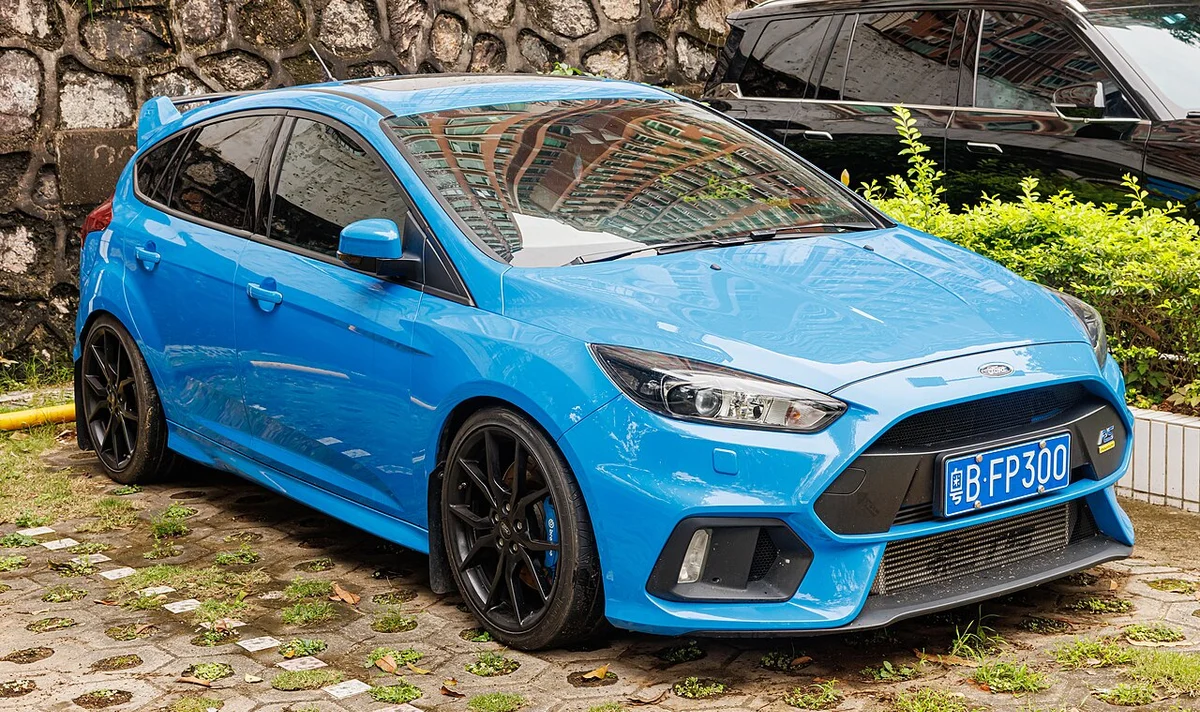
The Ford Focus RS only existed for three model years, and people still won't stop talking about it. Ford built the Mk3 RS from 2016 to 2018, then killed it off. That's the whole run. Yet it comes up in every argument about the best hot hatch ever built.
Here's what Ford actually put in the thing, and why owners stay loyal to a car that shipped with a real engine problem.
Rally Bones in a Hatchback
The recipe was simple enough. Start with a Focus, drop in a 2.3-liter turbocharged EcoBoost four making 350 horsepower, then send that power to all four wheels. The clever bit is the all-wheel-drive system, a twin-clutch setup supplied by GKN that could move torque side to side across the rear axle instead of only front to back.
That sounds like a small distinction and it isn't. Most all-wheel-drive hatchbacks just grip and go, which is fast but numb. The RS could send more power to the outside rear wheel and help the car rotate into a corner, so it behaved less like a safe family hatch and more like something built to be thrown around.
Ford put a button in it labeled Drift Mode, and plenty of people assumed that was marketing nonsense. It wasn't. The mode leaned on that same rear torque shuffling to let the car hold a slide, turning oversteer into something the electronics would help you find rather than shut down.
It was a genuinely strange thing for a mainstream manufacturer to ship. A Focus that would happily hang its tail out, sold at a Ford dealer with a warranty, is not a normal product decision. That's a big part of why the car built such a following so fast.
The Head Gasket Problem
Now the part owners still argue about. A batch of early cars, mostly 2016 and 2017 builds, left the factory with the wrong head gasket fitted, one intended for the 2.3-liter Mustang EcoBoost. The two engines share a block but use different cylinder heads with different coolant passages, so coolant ended up sitting where it shouldn't and parts of the head ran hotter than designed.
Over enough heat cycles that caused head distortion and gasket failure, and some cars showed trouble at surprisingly low mileage. Ford eventually addressed it, and later 2017 and 2018 cars are the ones buyers now hunt for. It's the single biggest thing to check before you buy one, and any honest RS conversation includes it.
Three model years and out. That scarcity matters, but it isn't the whole story. The RS arrived with a specific personality, loud and slightly unhinged in a class that had drifted toward polished competence. Rivals like the Volkswagen Golf R were arguably the better daily car, quieter and more grown up, and that's exactly what the RS refused to be.
It also came at the end of an era. Ford has since walked away from small performance cars in most markets, so the RS reads as a last hurrah rather than one entry in a continuing line. Cars that mark an ending tend to get remembered harder.
Why It Still Wins Votes
The RS has an advantage that has nothing to do with its spec sheet. It looks like what it is. The wide arches, the big rear wing, and that stance all say the car was built to do something, and voters read that intent immediately.
Put a clean one up against a faster but more sensible rival on WhipJury and the RS tends to win on character. Being interesting beats being competent more often than people expect.
Sources:
The head gasket issue and Ford's fix: CarThrottle
Mk3 RS specs, AWD system, and which build years to look for: Wayside Performance
Frequently Asked Questions

Cam Walsh has been obsessing over cars since before he could drive one. Based out of Atlanta, Cam covers automotive design, car culture, and the eternal debate over which whips actually look the part.