People say spoiler and wing as if they're the same thing. They aren't, and the difference isn't just pedantry. A spoiler and a wing are two different devices doing two different jobs, and understanding which is which tells you whether the thing on the back of a car is doing real work or just posing.
Here's the actual difference, and the more uncomfortable question underneath it: does the one on your car do anything at all?
What Each One Actually Does
A spoiler's job is in the name: it spoils airflow, in the useful sense of managing it. Mounted close to the body, usually along the trailing edge of a trunk or hatch, it disrupts the air flowing over the car to reduce lift and, often, to cut aerodynamic drag. A spoiler doesn't need a precise airfoil shape to work, because it's about controlling the airflow near the body rather than generating a large force. Most production cars that have anything on the back have a spoiler, and a good one improves stability without you ever noticing it's there.
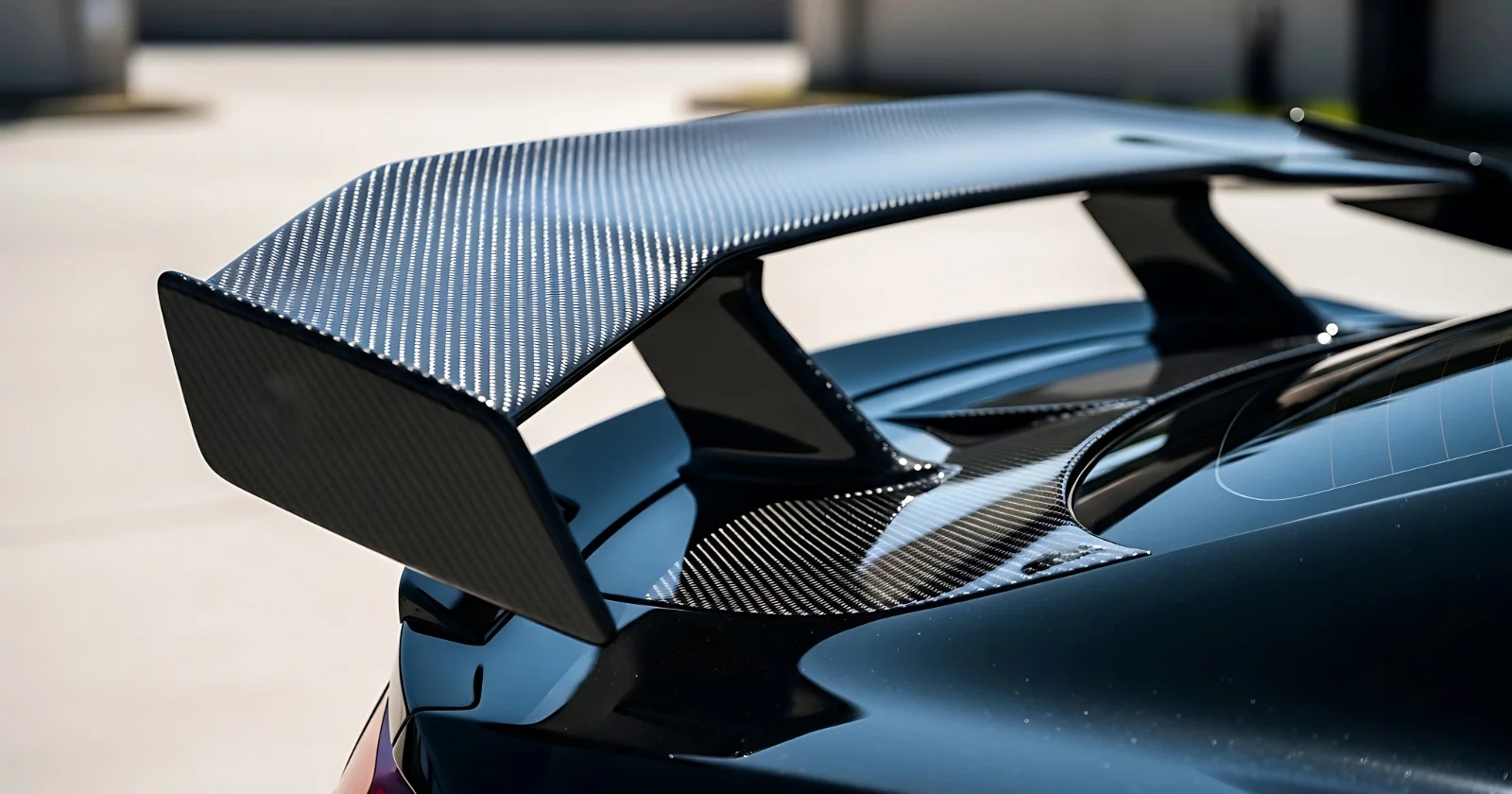
A wing is a different animal. It's a shaped airfoil, mounted up in clean air away from the body, and it works like an upside-down aircraft wing: air passing over and under it generates downforce that pushes the back of the car into the road. That extra grip is real and valuable at high speed, which is why race cars run big wings. But it comes at a cost, because a wing that makes downforce also makes drag. There's no free grip.
So Does Yours Do Anything?
This is where it gets honest. A wing only earns its keep at speed, generally faster than most people drive on the road. At normal street speeds, a big rear wing produces very little useful downforce and mostly just adds drag and weight. That doesn't make it pointless, but it does mean the reason to fit one is usually how it looks, not what it does.
There's nothing wrong with that, as long as everyone is honest about it. A wing on a dedicated track car is doing a job. A giant wing bolted to a car that never sees a track is a styling choice, and it lives or dies on whether it suits the car. When it doesn't, it's one of the fastest ways to make a car look like it's trying too hard.
The design lesson is about proportion and intent. A subtle spoiler that follows the car's lines almost always works, because it reads as part of the design. A wing has to be earned by the rest of the car: a low, aggressive, purposeful build can carry a real wing and look fantastic, while a mild economy car wearing an enormous one looks borrowed from a video game. The device has to match the car's story.
Aero in the Faceoff Arena
Few additions swing a faceoff harder than a rear wing, in both directions. The right wing on the right car looks like serious intent and pulls votes. The wrong wing on the wrong car is one of the most reliable ways to lose them. It's a high-risk styling move, which is exactly why it's worth getting right.
Put your build on WhipJury and find out whether the crowd reads your aero as purposeful or as too much.
Sources:
How spoilers and wings differ and what each does aerodynamically: HotCars
Downforce, drag, and why wings mainly help at speed: Wikipedia
Frequently Asked Questions

Jeffrey Wiley has spent more time than he'd like to admit thinking about what makes a car look right. He writes about automotive design, car culture, and the opinions people have strong feelings about. He lives in north Georgia.