DuelsLeaderboardGarageBlogCarsGlossaryBrowse

Diffuser

Car culture term

Diffuser
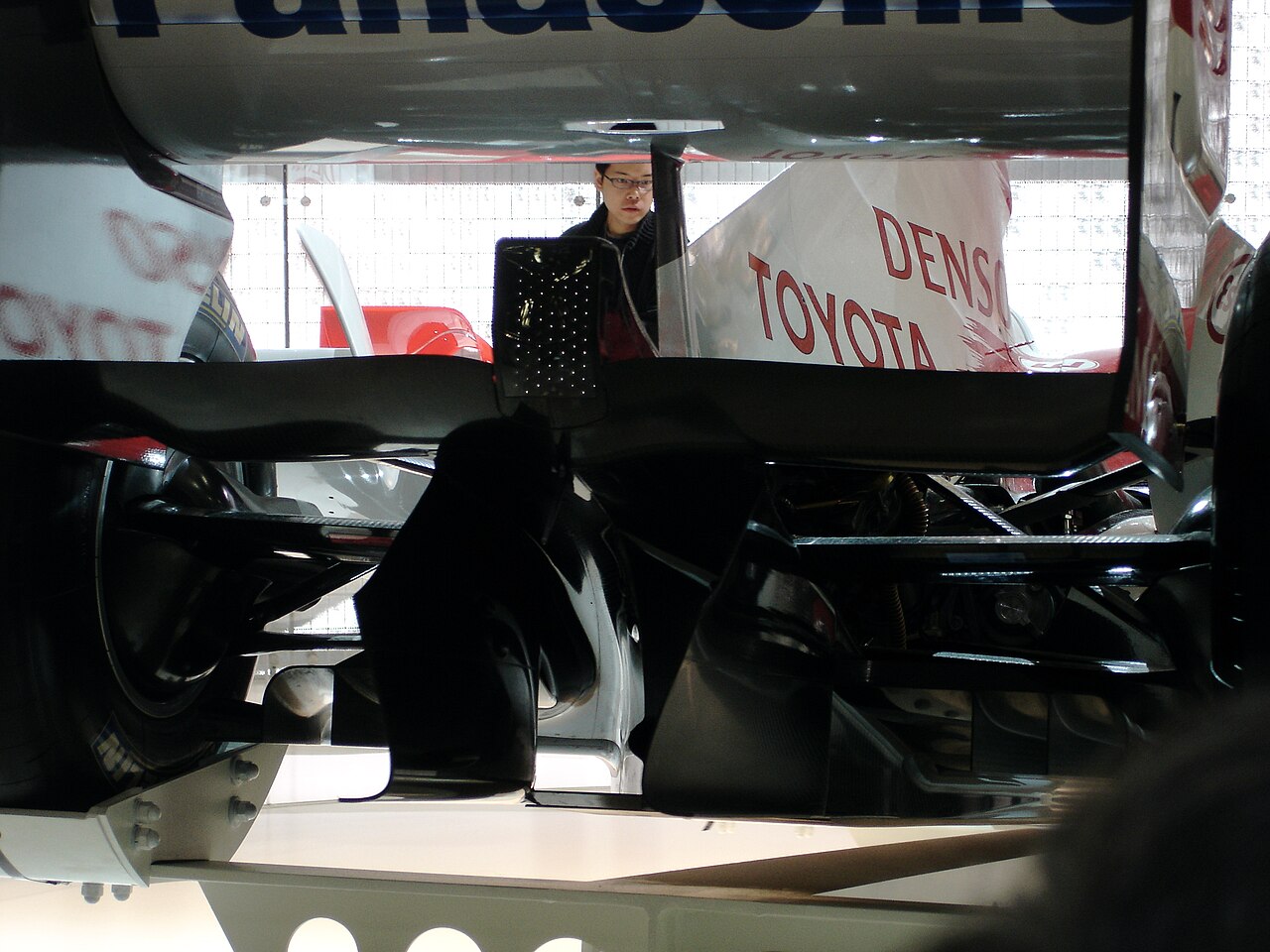
Photo: iMorpheus / Wikimedia Commons · CC BY 2.0

What is Diffuser?

A rear underbody aerodynamic surface that accelerates air leaving the underbody, creating low pressure and downforce at the rear.

Diffuser is an aerodynamic surface located at the rear underside of a car, behind the rear axle. The diffuser angles upward toward the rear of the car, accelerating the air flowing under the car as it exits. The accelerated air creates a low-pressure zone under the car, which generates downforce by sucking the body downward toward the road.

Diffuser design integrates with the rest of the underbody aerodynamics. The flat underbody (or undertray) channels air smoothly under the car at high speed. The diffuser at the rear accelerates that air upward, completing the venturi effect that creates downforce. Modern race cars (Formula 1, Le Mans prototypes) use highly developed diffuser designs to generate enormous downforce. Production cars use simpler diffusers for moderate downforce gains.

Modern road cars with notable diffusers include the Ferrari SF90, Porsche 911 GT3 RS, Lamborghini Huracan STO, and Aston Martin Vulcan. Aftermarket diffuser kits (often integrated with rear bumper replacements) are popular on track-focused builds. The combination of front splitter, rear wing, and rear diffuser creates a complete aerodynamic package.

Related terms

SplitterDownforceWing

Frequently asked questions

Why does the diffuser angle upward?
The upward angle creates an expansion volume for the air leaving the underbody. As the air expands, its velocity increases, creating low pressure. The pressure differential between the low-pressure underbody and the higher-pressure ambient air sucks the car downward, creating downforce. The angle and length of the diffuser determine its effectiveness.
Are diffuser fins functional?
Properly designed fins (vortex generators or strakes) yes. They organize the airflow under the car, preventing turbulence and improving the pressure differential. Decorative fins on cosmetic diffusers are typically not functional. Race-grade diffusers have carefully designed fin patterns that significantly affect downforce generation.
Why are diffusers so common on supercars now?
The combination of underbody aerodynamics and rear diffusers is one of the most effective downforce-to-drag ratios available. Modern computational fluid dynamics has enabled diffuser designs that generate significant downforce with relatively low drag penalty. Most modern supercars (since the mid-2000s) include some form of rear diffuser.
Can a diffuser work without an undertray?
Marginally. Without smooth airflow under the car (which the undertray provides), the diffuser receives turbulent air and produces less downforce. Most effective diffuser implementations require both the smooth undertray and the angled rear surface. Some aftermarket diffuser kits include both components.
Does the Lamborghini Huracan STO have a diffuser?
Yes. The Huracan STO has an aggressive rear diffuser integrated with the rear bumper, plus a flat underbody floor. The combination generates significant rear downforce. Combined with the front splitter and air ducts, the STO has one of the most aerodynamically focused production supercars of its era.

Diffuser on the blog

Honda's hardcore Type R HRC is reportedly heading to production

Honda Racing Corporation's track-focused Civic Type R could become a full production model by 2027, according to Japanese outlet Response. What's confirmed is the aero kit itself, which HRC president Koji Watanabe says will be sold as accessories. Takuma Sato tested it at Suzuka and called it "way better" than standard.

What is a ricer? Where the word came from, and why it still stings

A ricer is a car modified to look fast without being made faster: big wing, loud muffler, stick-on vents, decals for sponsors it doesn't have. The word comes from "rice burner," a slur aimed at Japanese bikes and cars, and the acronym people cite is a cover story. Here's the history, the line between a ricer and a real build, and why the industry does the same thing.

Electric Cars Have a Design Problem Nobody Is Talking About

Electric vehicles solved the engineering problem. The range improved. The charging infrastructure is building out. The performance numbers are extraordinary. What nobody solved is the design problem, and the design problem is not about styling. It is structural. It is baked into the format at a level that cannot be fixed with better headlights or a more aggressive front end. The best EV designers in the world are working against physics and losing in specific ways that are visible in every faceoff where an EV goes up against a comparable combustion car...

Back to Glossary