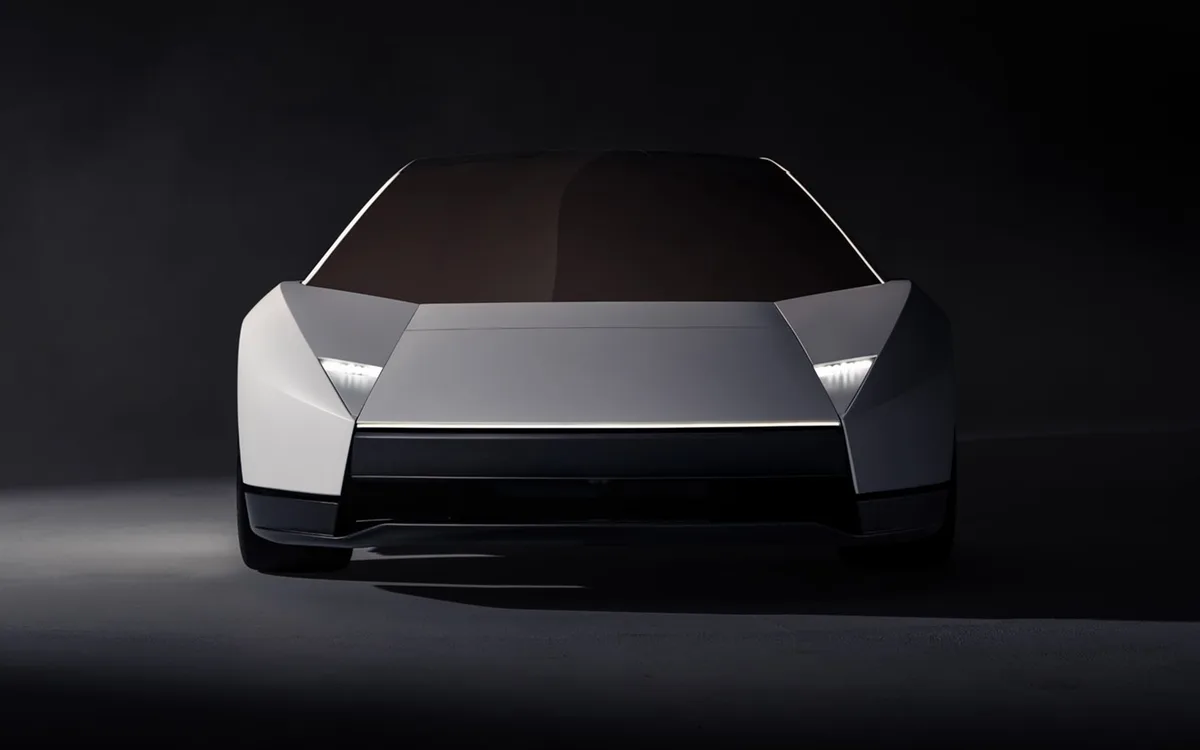
Tesla revealed the new Roadster on October 15, 2026, and its headlights flip an old idea upside down. The low- and high-beam lamps sit behind a panel that drops down when the lights are switched on, Motor1 reported. Tesla's designers call them pop-down headlights.
Tesla chief engineer Lars Moravy and designer Franz von Holzhausen showed how the system works in a video interview with Top Gear, Motor1 said. Classic pop-up headlights rose out of the bodywork when switched on. The Roadster keeps its lamps tucked behind the front bodywork, which leaves the nose unbroken when the lights are off. Tesla's Roadster page lists "hidden headlights" next to a full-length taillight and flush-mounted aerodynamics. The lamps themselves are tiny. Motor1 traced the idea to the Cybertruck, whose headlights measure 0.8 inches tall, and said the Roadster's are even slimmer. They sit in small openings at the two front corners, with a slim light bar running across the lower nose, Not a Tesla App reported. Tesla hasn't said whether they will use matrix LEDs. Hagerty design columnist Matteo Licata, who teaches car design history at IAAD in Turin, called the main headlights the slimmest, most compact units yet seen on any vehicle. Licata described the flaps as a "reverse-pop-up" solution and a charming take on the retractable lights of old. The praise had limits. Licata called the overall styling "somewhat safe and derivative, if cleanly penned."
Lights hidden behind moving covers go back decades. Motor1 pointed to the 1992 Jaguar XJ220 as one of the closest matches, since its front-hinged panel dropped down to reveal the headlights. The Ferrari Daytona SP3 uses a movable eyelid that partly covers its lamps. American cars such as the Buick Riviera and Dodge Charger hid theirs behind covers too.
The flip-up kind is gone from new cars. The last mass-produced cars sold in the US with pop-ups were the fifth-generation Chevrolet Corvette and the Lotus Esprit, and both ended production in 2004, Motor1 reported. Neither was directly replaced by a car with pop-ups.
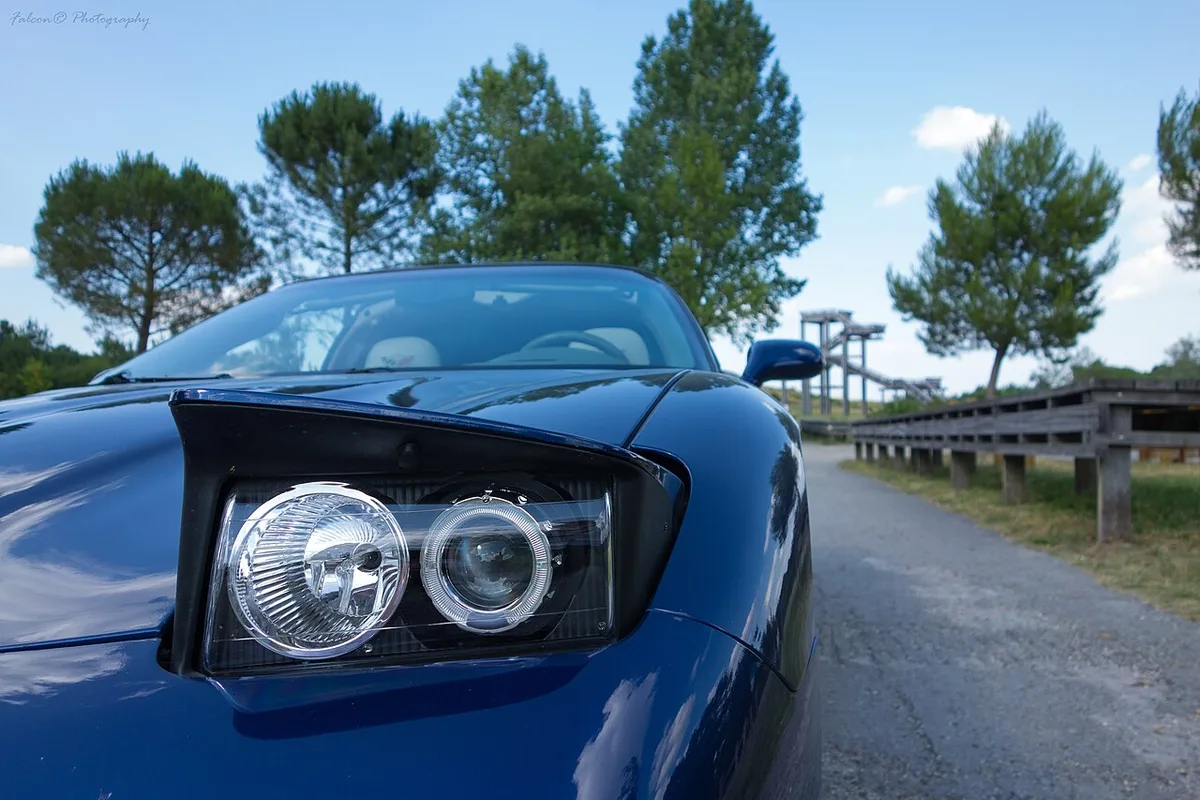
Several changes ended them, as our look at why pop-up headlights disappeared covers in more detail. In the 1980s, changes to the federal headlight standard, FMVSS 108, let automakers use composite lamps shaped into the bodywork. A pop-up needed motors, gears, hinges, and wiring that a fixed lamp didn't, which added cost and gave many owners the famous wink, with one side open and the other shut. Flush-mounted lamps also became more desirable as aerodynamics improved.
Pedestrian rules were the last straw, Motor1 said. A raised lamp is a hard, protruding surface, and European pedestrian-protection rules made that much harder to engineer. The US never banned pop-ups outright.
Motor1 suggested the Roadster's panel could also help aerodynamics while the lights are hidden, and said it remains to be seen whether the system reaches production exactly as shown. Tesla says the Roadster will arrive in 2028, and our reveal coverage explains why buyers are skeptical of that date.
Line up the Roadster's face against the pop-up cars it borrows from on WhipJury.
Sources:
How the headlights work, the Top Gear demo, the Cybertruck comparison, and earlier covered headlights: Motor1
Hidden headlights on the Roadster: Tesla
Licata's review and background: Hagerty
Lamp placement, the light bar, and matrix LEDs: Not a Tesla App and Not a Tesla App
The reveal and the 2028 target: The Drive
The last pop-up cars, FMVSS 108, cost, aerodynamics, and pedestrian rules: Motor1
The Esprit's 2004 end: SMMT
Photos: Tesla; Corvette via Wikimedia Commons: Falcon® Photography (CC BY-SA 2.0)
Frequently Asked Questions

Jeffrey Wiley has spent more time than he'd like to admit thinking about what makes a car look right. He writes about automotive design, car culture, and the opinions people have strong feelings about. He lives in north Georgia.