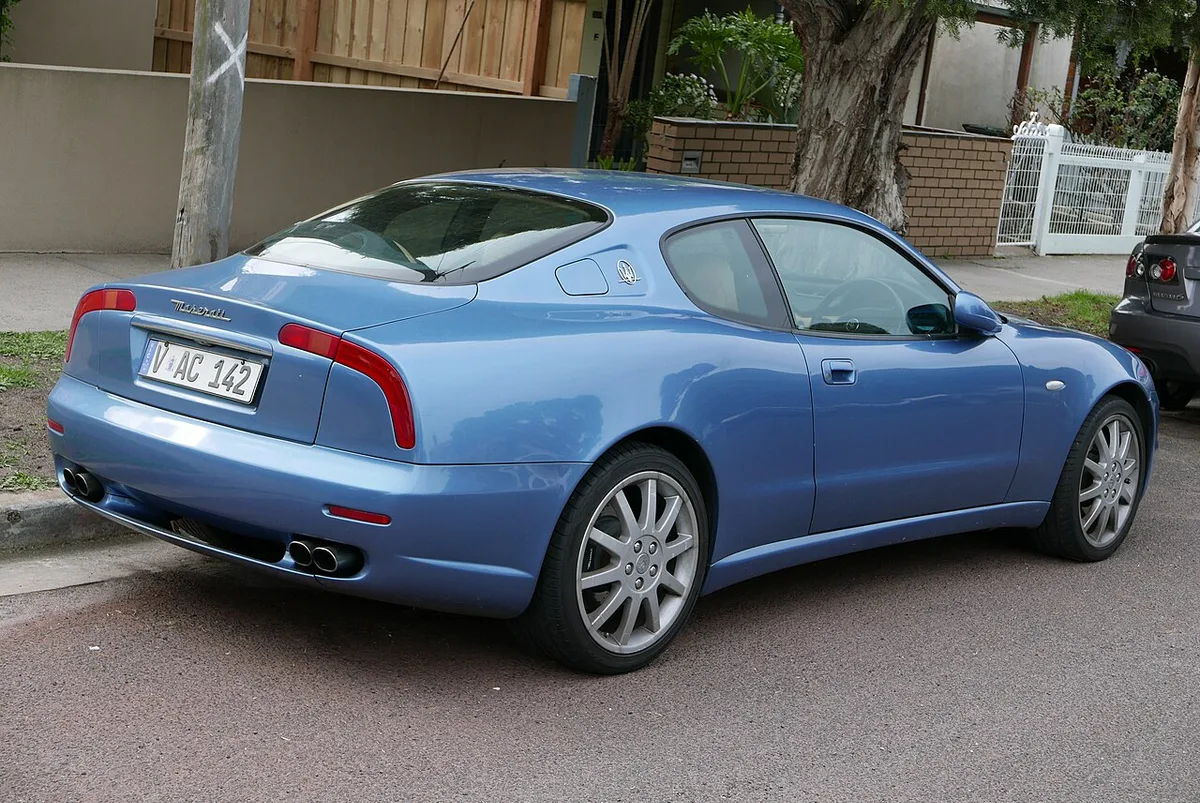
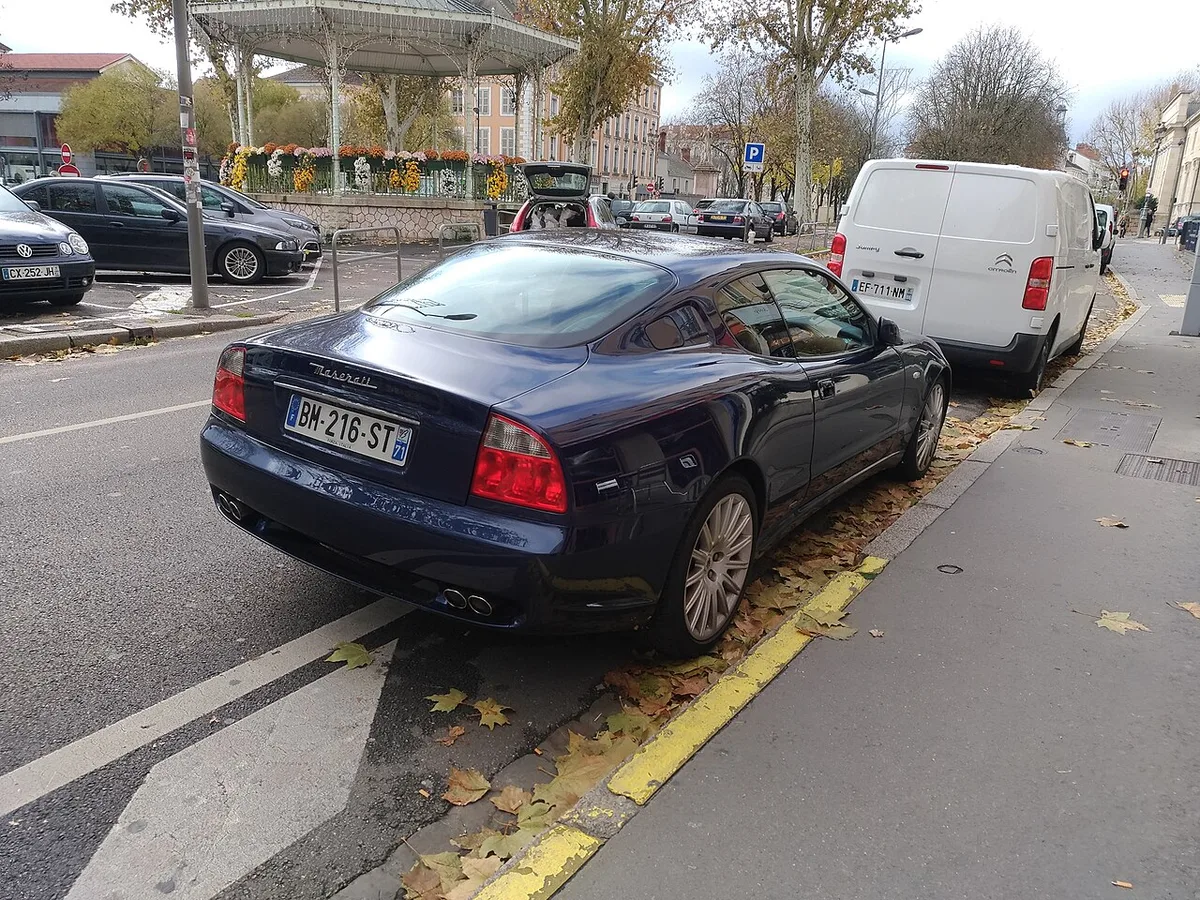
The Maserati 3200 GT is a good-looking coupe from any angle, but most people remember it from behind. Its taillights are shaped like boomerangs, and Maserati says they were the first taillights on a production car to use LEDs. Its replacement dropped them, and Maserati and the designer who made that call tell different stories about why.
The car
The 3200 GT debuted at the 1998 Paris Motor Show. It was styled by Giorgetto Giugiaro's design house, Italdesign, and Giugiaro has said where the shape came from: "In developing the 3200 GT, we were inspired by the classic Maseratis from the end of the 1960s."
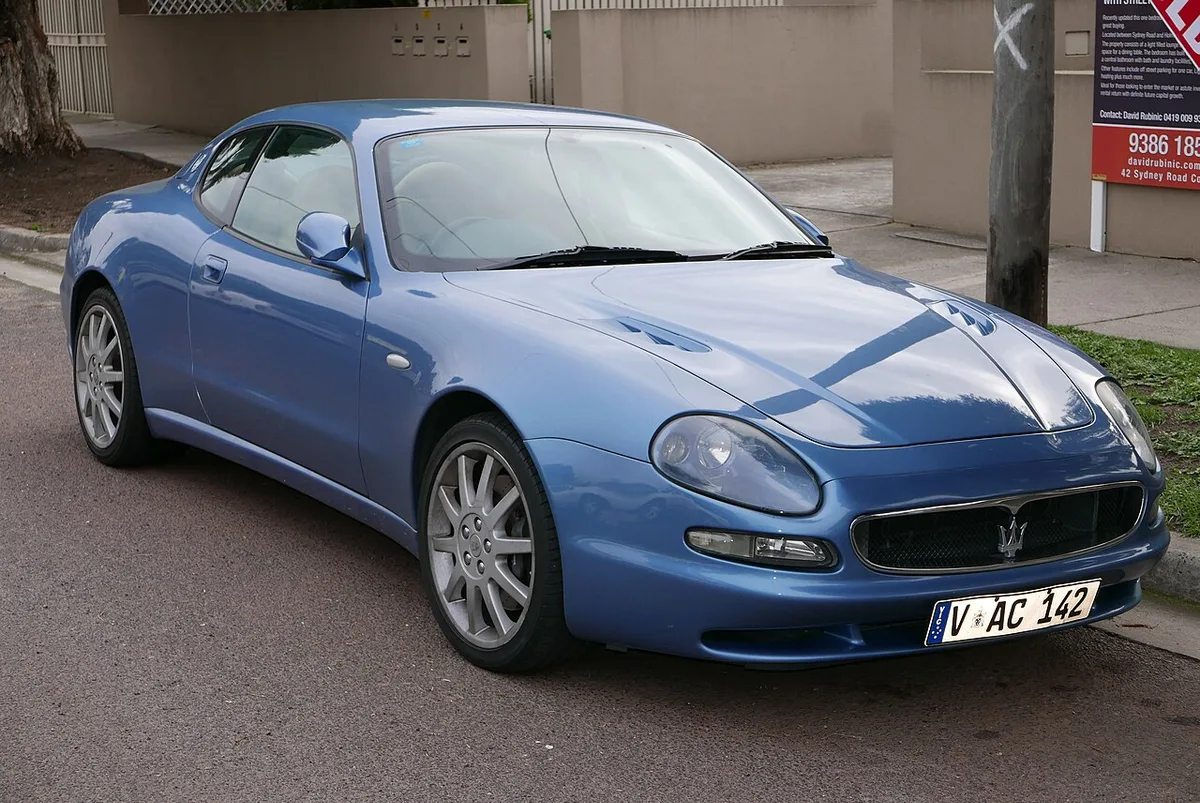
It had the engine to match. The 3,217 cc, or 3.2-liter, twin-turbo V8 came from the Shamal and the Quattroporte IV, heavily reworked, and made 370 hp. Buyers could pick a six-speed ZF manual or a four-speed automatic. Autocar quoted a top speed of 174 mph for the manual. Maserati built 4,795 of them between 1998 and 2002, including 259 of the Assetto Corsa version, according to Hagerty. None were officially sold in the US.
The lights
The boomerangs are what made the car. Each one wraps around a rear corner of the car, and the outer section holds the LEDs for the tail lamps, brake lamps, and turn signals, according to Car Design News.
The "first" claim comes with an asterisk. Maserati and Hagerty's UK arm both call them the first LED taillights on a production car. Car Design News is more careful, calling them "one of the first major uses of LED technology" and noting that Mercedes-Benz had already tried LEDs, usually hidden behind a normal-looking taillight.
Why the boomerangs went away
The 3200 GT was replaced by the Maserati Coupé, better known as the 4200 GT, which was shown at the Detroit auto show in January 2002. It kept the basic shape, got a bigger 4.2-liter V8, and came to America. It also got plain, conventional taillights.
Maserati's own history gives a tidy reason: "The signature boomerang taillights from the 3200GT were dropped to meet American homologation requirements."
The designer who changed them says otherwise. Frank Stephenson, then design director for Ferrari and Maserati, told Hagerty, "It had nothing to do with US regulations, quality control, or the Japanese." Stephenson said the move was about authority. "I later found out Montezemolo wanted to establish my rule within the Ferrari group, and unless I made a big statement, it wasn't going to happen," Stephenson said, referring to then-chairman Luca di Montezemolo.
Either way, the boomerangs only ever appeared on the 3200 GT. Rate the 3200 GT on WhipJury, and if you like taillight stories, read about Ferrari's patent for taillights that double as aero.
Sources:
Years, engine, output, transmissions, and the LED claim: Maserati
Paris debut and Giugiaro's inspiration: Giorgetto and Fabrizio Giugiaro
Italdesign, production, and Assetto Corsa count: Hagerty UK
Top speed: Autocar
How the LED lamps work and the Mercedes comparison: Car Design News
The Coupé's debut and Maserati's explanation for the new lights: Maserati
Stephenson's account and US import status: Hagerty
Frequently Asked Questions

Jeffrey Wiley has spent more time than he'd like to admit thinking about what makes a car look right. He writes about automotive design, car culture, and the opinions people have strong feelings about. He lives in north Georgia.