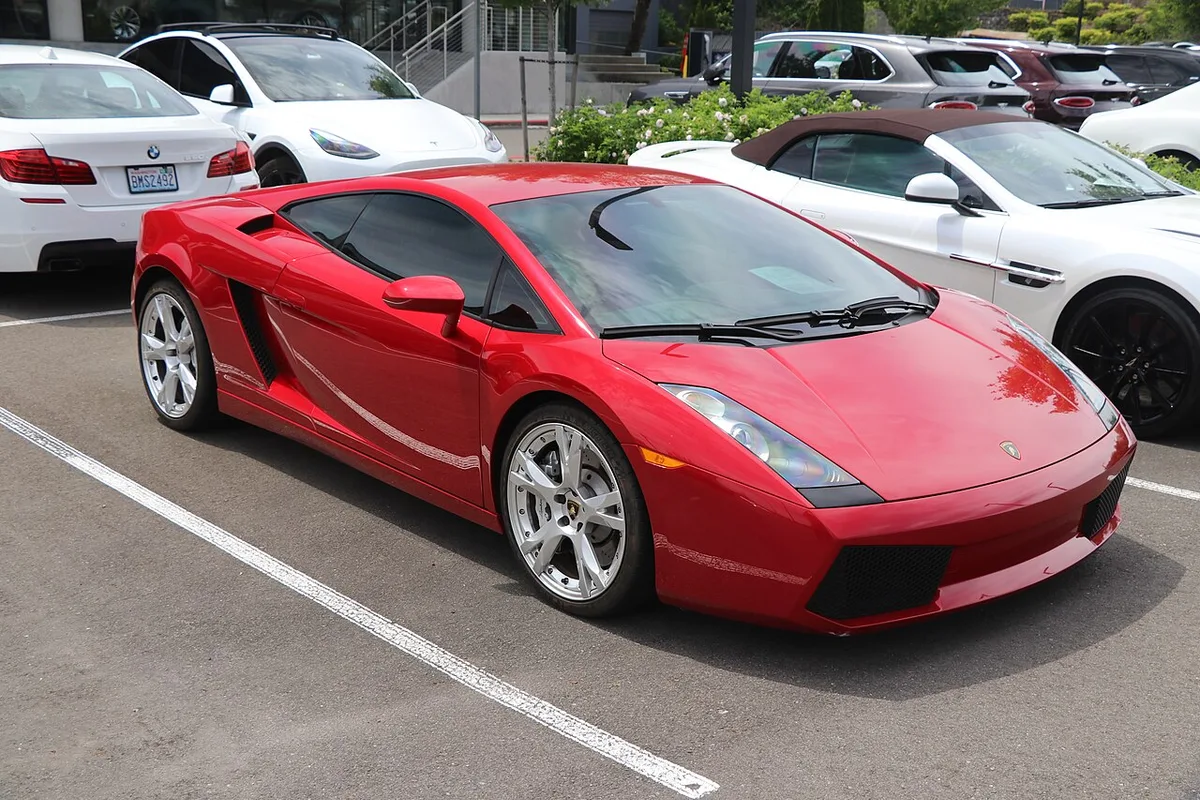
The Lamborghini Gallardo is a V10. Every Gallardo built from 2003 to 2013 had a 10-cylinder engine, and it was the first Lamborghini ever to use one. The V12 stayed in the flagship of the day, the Murciélago. Lamborghini calls the Gallardo the "baby Lambo." It debuted at the 2003 Geneva Motor Show. Over the next 10 years, the company built 14,022 of them and sold them in 45 countries.
Why Lamborghini built a smaller car
The plan dates to 1998, when Audi bought Lamborghini. According to Lamborghini, Audi saw the need for a second model range to keep the factory running and to support sales of the V12 cars. The goal was a car with the classic Lamborghini traits that was "smaller, more practical and easier to manage than a 12-cylinder super sports car." The Murciélago arrived in 2001 with a V12 and standard four-wheel drive. The Gallardo followed in 2003 as a compact two-seater with four-wheel drive of its own, and Lamborghini says its range doubled that year.
The 5.0-liter and the 5.2-liter
The first Gallardo used a 5.0-liter V10 with dual overhead cams and four valves per cylinder. Lamborghini's 2023 anniversary article puts its output at 500 hp, while the company's heritage page says 510 hp. The V10 sat lengthwise at the rear, with a 90-degree vee angle and a dry-sump oil system. Lamborghini says both choices lowered the center of gravity. Buyers could pick a six-speed manual or a sequential E-gear gearbox.
The 5.0-liter topped out in the Superleggera, which arrived in 2007. Motor1 says it made 530 PS, a metric horsepower figure.
The bigger engine came with the Gallardo LP 560-4, shown at the 2008 Geneva Motor Show. Top Gear reported that its 5.2-liter V10 added direct injection and made 552 bhp, about 32 bhp more than the old car. The name spells out the layout. LP stands for longitudinale posteriore, Italian for the lengthwise rear engine, 560 is the metric horsepower, and 4 means four-wheel drive.
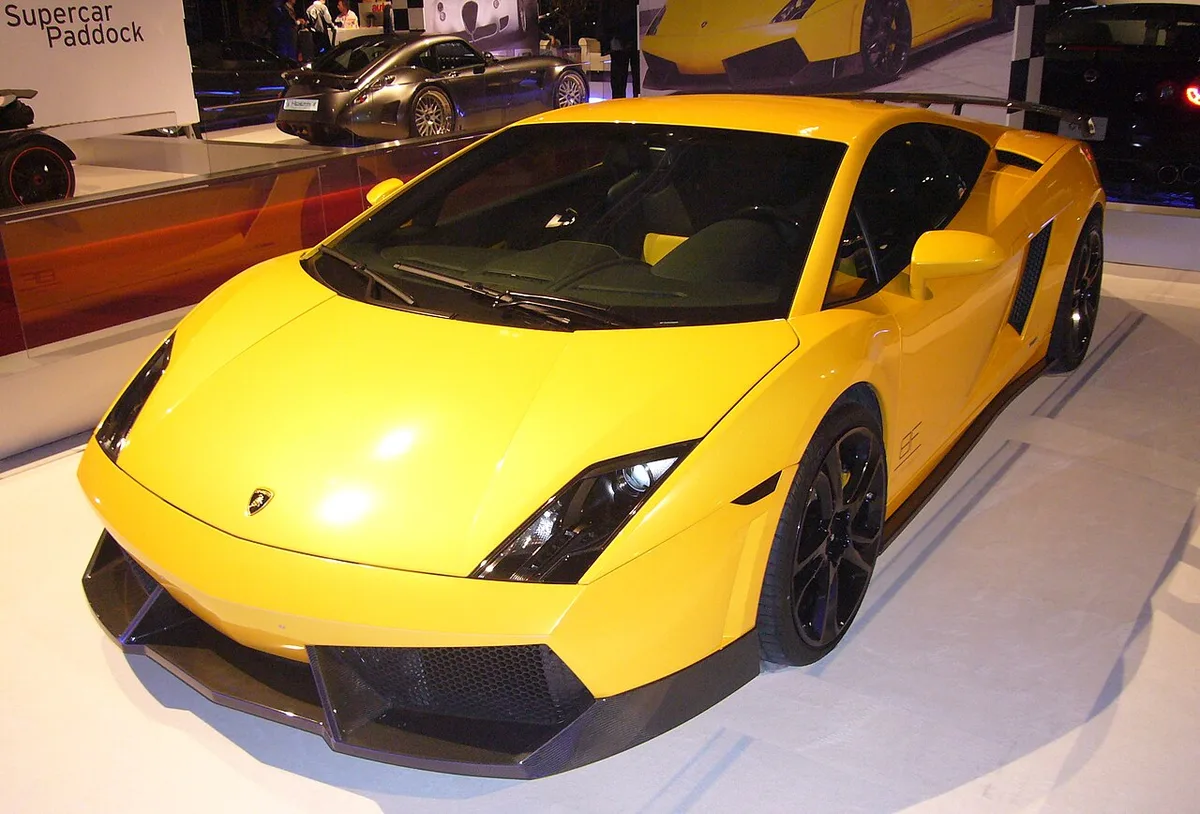
Lamborghini says output kept climbing until the 5.2-liter made 570 CV. The Gallardo launched with four-wheel drive, but rear-drive versions such as the LP 550-2 joined the lineup later.
What replaced the Gallardo
Gallardo production ended at the end of 2013. Lamborghini names the Huracán as its heir. It debuted in 2014 with a 610 CV V10, a seven-speed dual-clutch gearbox, and all-wheel drive. The Huracán built its 14,022nd car in October 2019, matching the Gallardo's 10-year total in five years. In 2024, the Temerario replaced the Huracán with a 920 CV hybrid twin-turbo V8.
Does the original Gallardo still look right next to a Huracán? Cast your vote on WhipJury.
Sources:
The "baby Lambo" name, the first engine, the 2003 to 2013 run, the 14,022 total, and the 45 countries: Lamborghini (archived)
Audi's plan, the 510 hp figure, the engine layout, the gearboxes, the Superleggera and LP 560-4 years, the rear-drive versions, 570 CV, and the end of production: Lamborghini
The Murciélago, the range doubling, the Huracán, and the Temerario: Lamborghini
The Huracán reaching 14,022 cars: Lamborghini (archived)
The 2003 Geneva debut and the Superleggera's 530 PS: Motor1
The LP 560-4 debut, its 5.2-liter engine, its output, and its name: Top Gear
Photos via Wikimedia Commons: Trans-nyan (CC BY-SA 4.0) and Rutger van der Maar (CC BY 2.0)
Frequently Asked Questions

Jeffrey Wiley has spent more time than he'd like to admit thinking about what makes a car look right. He writes about automotive design, car culture, and the opinions people have strong feelings about. He lives in north Georgia.