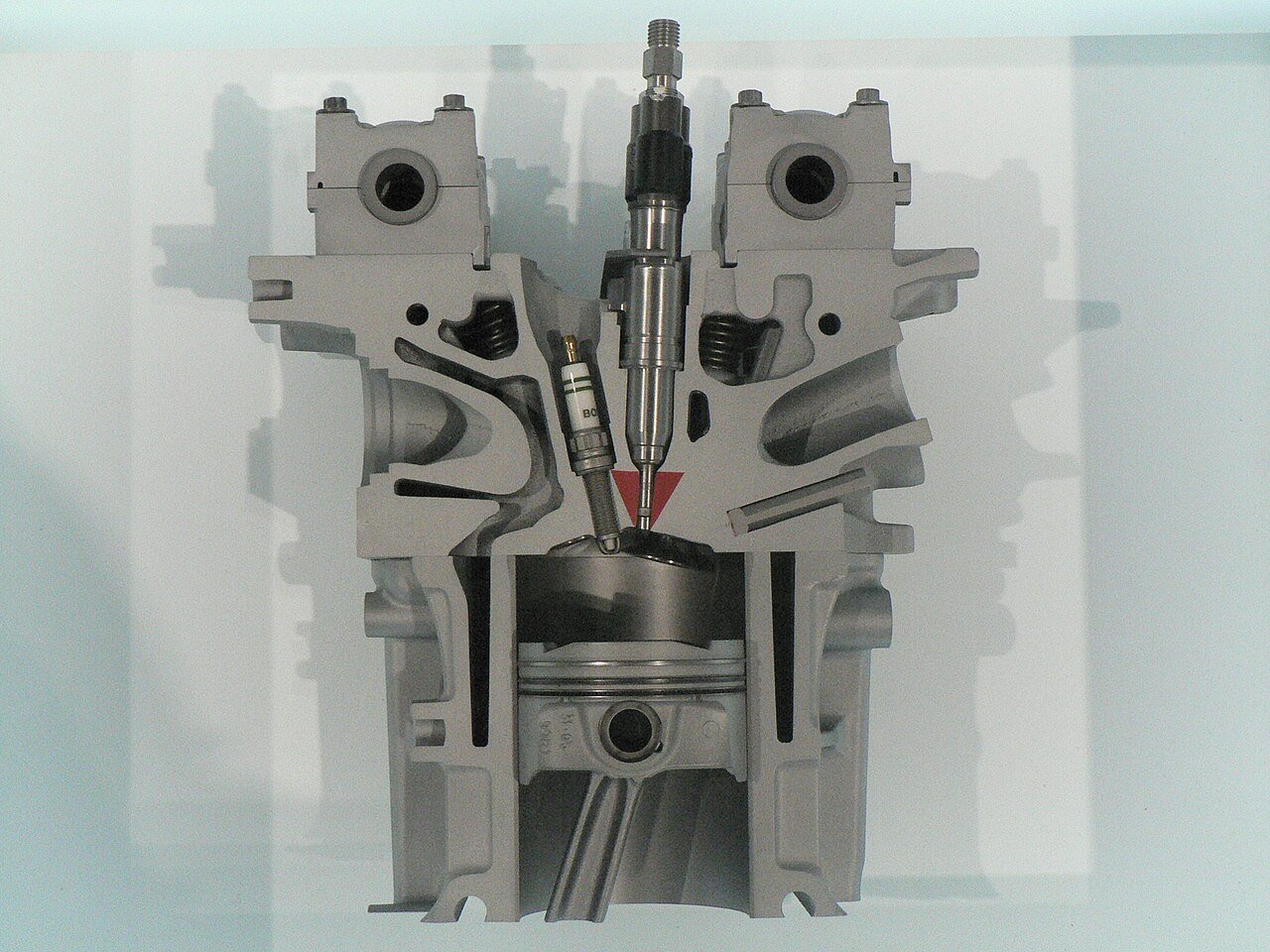
What is Direct Injection?
A fuel delivery method that injects gasoline directly into the combustion chamber rather than the intake port, enabling higher compression ratios, better fuel economy, and more power per liter.
Direct injection (also called GDI, Gasoline Direct Injection, or DISI, Direct Injection Spark Ignition) delivers fuel directly into the combustion chamber under high pressure, rather than into the intake port before the valve. The high-pressure injection allows very precise control over fuel quantity and timing, enabling more complete burning of the mixture under high load. The net results are higher compression ratios than would be possible with port injection (because direct injection cools the charge in the cylinder, reducing knock tendency), improved fuel economy, and more peak power per liter of displacement.
Direct injection became the dominant fuel delivery method for performance and efficiency-focused engines through the 2000s and 2010s. The Volkswagen FSI engine (2000 onward), BMW N54 and N55, Chevrolet LT1, and Ford EcoBoost engines all use direct injection. Most modern high-performance turbocharged engines use it because the charge cooling effect is especially valuable under boost.
A known downside of direct injection is intake valve carbon buildup. Because fuel is no longer sprayed into the intake port, there is nothing to wash the back of the intake valves, and carbon deposits accumulate from oil vapors recirculated through the PCV system. Many manufacturers have addressed this by adding port injection alongside direct injection (dual injection or combined injection systems) in newer engines.