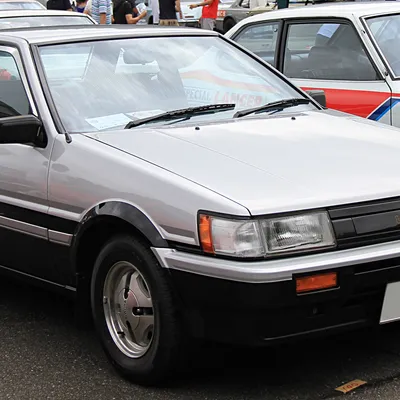
Toyota AE86
Toyota
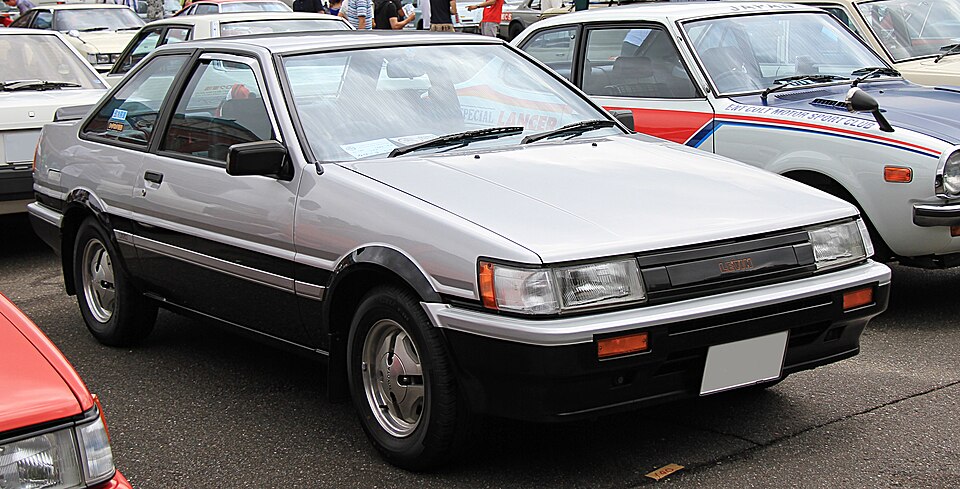
The Hachi-Roku. 1983-1987 Corolla GT-S (or Trueno/Levin in JDM). Initial D's protagonist car. Origin of modern drift culture.
The Toyota AE86 (also called Hachi-Roku, Trueno, or Levin depending on market and trim) is a rear-wheel drive coupe produced from 1983 to 1987 as the Corolla GT-S in North America and Trueno or Levin in Japan. The AE86 was Toyota last rear-wheel drive Corolla and the last lightweight RWD platform Toyota produced before the 1986 generation Corolla switched to front-wheel drive globally. The AE86 chassis weighed around 2,300 pounds. The 4A-GE engine made 128 horsepower naturally aspirated. The chassis used MacPherson struts in front and a live-axle rear (relatively simple but effective). A five-speed manual transmission was standard with a limited-slip differential available. The combination of light weight, RWD layout, and balanced chassis made the AE86 ideal for canyon driving and the foundational platform for what would become Japanese drift culture. The AE86 became globally famous through Initial D, the 1995+ manga and anime series following Takumi Fujiwara, a tofu delivery driver in a black-and-white panda AE86 Trueno. The series introduced a generation of viewers to the AE86 and to the broader Japanese drift culture that the chassis represents. Initial D made the AE86 a cultural touchstone far beyond its competitive racing significance. Modern AE86 prices have appreciated dramatically. Project cars (rusted, modified, or needing significant work) start around $5,000-$15,000. Driver-quality cars: $15,000-$30,000. Clean low-mile original examples: $30,000-$80,000+. JDM-spec Trueno and Levin examples in original condition can exceed $100,000 at auction. The Toyota 86 / GR86 / Subaru BRZ is the modern spiritual successor. On WhipJury, AE86 submissions are common, particularly modified builds with engine swaps (4A-GZE supercharged variants, K-series K20 swaps), drift-prep modifications, and OEM-plus restorations. The car has a dedicated owner community.
The AE86 chassis
The AE86 was the last RWD Toyota Corolla. Light weight (2,300 lbs), RWD, naturally aspirated 4A-GE engine making 128 horsepower (slightly more in JDM Corolla GT Apex). Five-speed manual transmission with limited-slip differential available. The chassis dynamics produce a balanced car that responds well to driver input, ideal for learning car control.
Initial D legacy
The AE86 became globally famous through Initial D (1995+ manga, subsequent anime). The series follows Takumi Fujiwara, a tofu delivery driver who becomes a touge racing legend in a black-and-white panda AE86 Trueno. The cultural impact has been enormous; Initial D introduced a generation of fans to JDM tuner culture, drift driving, and the AE86 specifically. The series is largely responsible for the AE86 modern collector status.
AE86 on WhipJury
Modified AE86 builds (with engine swaps, suspension upgrades, drift-prep modifications) are common. Original cars in restored condition reliably do well in voting. JDM Trueno and Levin imports appear regularly. The community recognizes the AE86 as one of the seminal JDM cars; voting consistently rewards thoughtful builds.