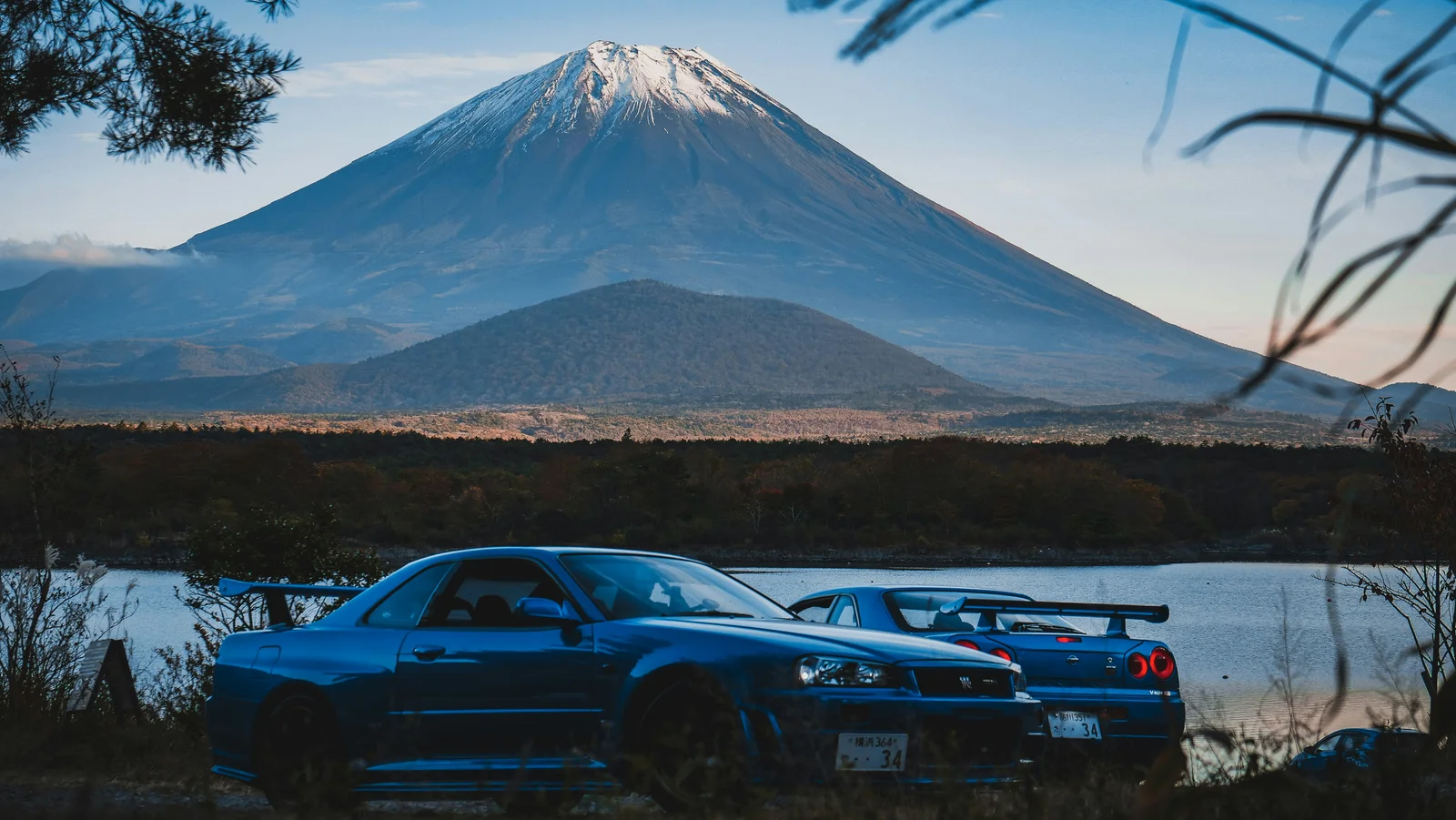
No car in the history of American automotive obsession has been wanted this badly by this many people who never had a legal way to get one. The Nissan Skyline GT-R spent twenty-five years as forbidden fruit, visible in every corner of car culture, unattainable on public roads, and somehow more desirable for being both of those things simultaneously. The story of why that happened, and what finally changed, is one of the stranger chapters in the relationship between American car enthusiasm and government regulation.
How a Generation Fell in Love With a Car They'd Never Seen in Person
The R34 Skyline GT-R was produced from 1999 to 2002 and never officially sold in the United States. Nissan didn't submit it for federal safety certification. It wasn't in showrooms. Most Americans had no practical way to encounter one on the road. And yet by the mid-2000s, an entire generation of car enthusiasts knew the R34's specifications, its RB26DETT twin-turbo inline-six, its ATTESA E-TS Pro all-wheel drive system, its multi-function display showing real-time turbo pressure and oil temps, in the kind of granular detail usually reserved for cars people actually owned.
Three things built that knowledge base without a single American ever driving one legally. Gran Turismo put the tuned Skyline GT-R in every PlayStation in the country and made it one of the fastest cars in the game, capable of beating Ferraris and Corvettes in the right build. The Fast and Furious franchise featured the car in its first two movies, giving it a visual identity that reached audiences who had never heard of Gran Turismo. And import magazines like Super Street and Sport Compact Car covered Japanese domestic market cars with the same attention that mainstream publications gave to cars people could actually buy.
The result was cultural saturation without physical availability. The R34 became the most discussed car in American enthusiast circles for a decade while sitting entirely out of reach. That combination of visibility and inaccessibility created a mythology that a normally available car could never have built.
Why It Was Illegal and What the 25-Year Rule Actually Is
American vehicle import regulations require that any car driven on public roads meet Federal Motor Vehicle Safety Standards. The Skyline GT-R was never submitted for certification, which means it was never legal to register and drive in the United States regardless of how it was acquired. Owning one wasn't necessarily illegal. Driving it on public roads was.
The 25-year exemption exists because vehicles older than 25 years are considered historic and are exempt from modern safety and emissions requirements. Cars more than 25 years from production are exempt from US safety and emissions rules, making import legal, which means a 1999 R34 GT-R became eligible for general import in 2024. The exemption doesn't make the car street legal everywhere automatically but it removes the federal barrier that previously made road registration impossible in most states.
The path to this point was not clean. A company called Motorex became a registered importer of the Skyline by relying on crash test data from the R33 and claiming that the R32 and R34 were substantially similar, effectively giving it a full decade of Skyline production to import. When this fraud was exposed in a government raid, it effectively ended legal Skyline imports to the United States starting in 2006. The scandal set back legitimate R34 imports by years and damaged the broader Japanese sports car import market in ways that took a decade to recover from.
Thanks to America's 25-year import rule, waves of R34 GT-Rs should be rolling in throughout the next few years, slowly making one of the greatest forbidden fruits in the history of American car enthusiasm more and more accessible. The wait is functionally over, which means the car that defined a generation of American enthusiasm is finally arriving at a moment when that generation can actually afford to buy one.
The Three Generations and Why the R34 Got All the Attention
The Skyline GT-R nameplate spans three generations that are worth separating. The R32, produced from 1989 to 1994, was the car that established the GT-R as a serious performance machine. It dominated Group A touring car racing so thoroughly that Australian touring car regulations were rewritten specifically to keep it out. The car became known as Godzilla in the Australian press after a particularly destructive debut season. The R32 became eligible for US import under the 25-year rule starting in 2015 and has been arriving steadily since.
The R33, produced from 1993 to 1998, is the generation that most enthusiasts consider the weakest of the three despite being objectively capable. It's slightly heavier than the R32 and its styling is more conservative, which in the Skyline conversation means it lacks the visual drama of its predecessor and successor. The R33's reputation has improved with time as the performance case for it has become clearer, but it remains the middle child of the GT-R Skyline family.
The R34 is the one everyone actually wants. The final GT-R to also wear a Skyline badge, the R34 arrived at precisely the right moment: late enough to benefit from two previous generations of development in the R32 and R33, but early enough to avoid the numbness and excess electrification sometimes lamented in modern performance cars. The R34 was brutally capable and loaded with tech, but also relatively compact, and its styling was decidedly more bold than its predecessors. The combination of the right performance, the right technology, and the right styling at the exact moment of maximum cultural exposure through Gran Turismo and Fast and Furious made the R34 the specific car that defined the era.
What It Actually Looks Like
The R34's design holds up better than most late-1990s Japanese sports cars. The front end is aggressive without being overwrought, with quad round headlights, a wide hood with functional vents, and a front fascia that looks planted and purposeful. The side profile is clean and functional with the characteristic Skyline haunches that become more pronounced in V-Spec trim with the wider rear arches. The rear end is the strongest angle, with the iconic round taillights, the large wing on GT-R variants, and a proportioned hatch-like fastback that gives the car visual mass without looking heavy.
In Midnight Purple II, which is a color that shifts between purple, green, and blue depending on the light, the R34 is one of the few cars from its era that could genuinely compete in a faceoff with anything from the same period and most things from later periods. The color is doing significant work, but the underlying design supports it. The R34 in silver or white is a competent-looking car. In Midnight Purple II it's something else entirely.
The V-Spec II Nur is the visual peak. The wider arches, the carbon fiber hood, the full aero package. This variant looks like the car was designed as a track weapon first and a road car second, which is exactly what the V-Spec program intended. It's also the rarest and most valuable configuration, which is a correlation that holds across almost every high-performance car. The visual and mechanical peak tends to be the same car.
The Price Reality in 2025
The mythology around the R34 has produced prices that reflect cultural status as much as mechanical reality. Clean, documented R34 GT-Rs are trading at six figures. V-Spec examples in desirable colors with low mileage are well above that. The R34 GT-R represents the final evolution of the legendary RB26-powered GT-R before the R35 took over and is one of the most sought-after Japanese performance cars in the world. That demand is real and the supply is genuinely limited. Production numbers were modest, attrition over twenty-five years of use in Japan has reduced the pool further, and the global demand from American buyers who waited decades for legal access has created price pressure from multiple directions simultaneously.
The practical reality of ownership is that the R34 is a twenty-five-year-old car with twenty-five-year-old technology that has been driven hard in many cases and neglected in others. The inspection process for an imported example requires specific knowledge of what to look for and the ability to distinguish documented provenance from documentation that was assembled for the sale. Buyers who don't know what they're looking at are paying supercar prices for cars that need significant mechanical attention before they're the experience the mythology promised.
This doesn't diminish what the R34 is. It contextualizes what buying one in 2025 actually involves, which is different from the Gran Turismo version that shaped most American enthusiasts' understanding of the car.
Why the Mythology Survived Availability
Most cars that become legendary while unavailable suffer when they become attainable. The reality of ownership doesn't match the dream and the dream deflates. The R34 has mostly avoided this because the car genuinely is as capable as its reputation suggested and because the visual presence in person exceeds what photos convey. People who finally drive an R34 after decades of wanting one tend to report that it delivered rather than disappointed, which is not the outcome the mythology usually produces.
The R34 also benefits from arriving in America at a moment when the people who grew up wanting it have careers and disposable income. An entire generation of enthusiasts first encountered the R34 through import magazines, Best Motoring videotapes, PlayStation, and the Fast and Furious movies. Then, starting in 2024, America's 25-year import rule made the R34 eligible to bring over and register for road use. The timing is nearly perfect. The generation that built the mythology around the car is now the generation with the financial means to buy it, and they're doing exactly that.
Where It Stands in a Faceoff
The R34 GT-R performs strongly in WhipJury faceoffs for the same reason it performs strongly in every automotive conversation: the design carries cultural weight that activates before the voter consciously assesses it. Anyone who grew up playing Gran Turismo or watching Fast and Furious brings that association into a faceoff whether they intend to or not.
Strip the association away with a voter who has genuinely no context for the car and it still holds up, which is the more meaningful result. The R34's design is specific enough and visually confident enough that it wins faceoffs on the design merits. The cultural bonus on top of that just makes it almost unbeatable with any voter who knows what they're looking at.
See how the Skyline GT-R holds up on WhipJury against everything that came after it. Twenty-five years of waiting built a very specific expectation. The faceoff results show whether the car earned it.
Frequently Asked Questions

Cam Walsh has been obsessing over cars since before he could drive one. Based out of Atlanta, Cam covers automotive design, car culture, and the eternal debate over which whips actually look the part.