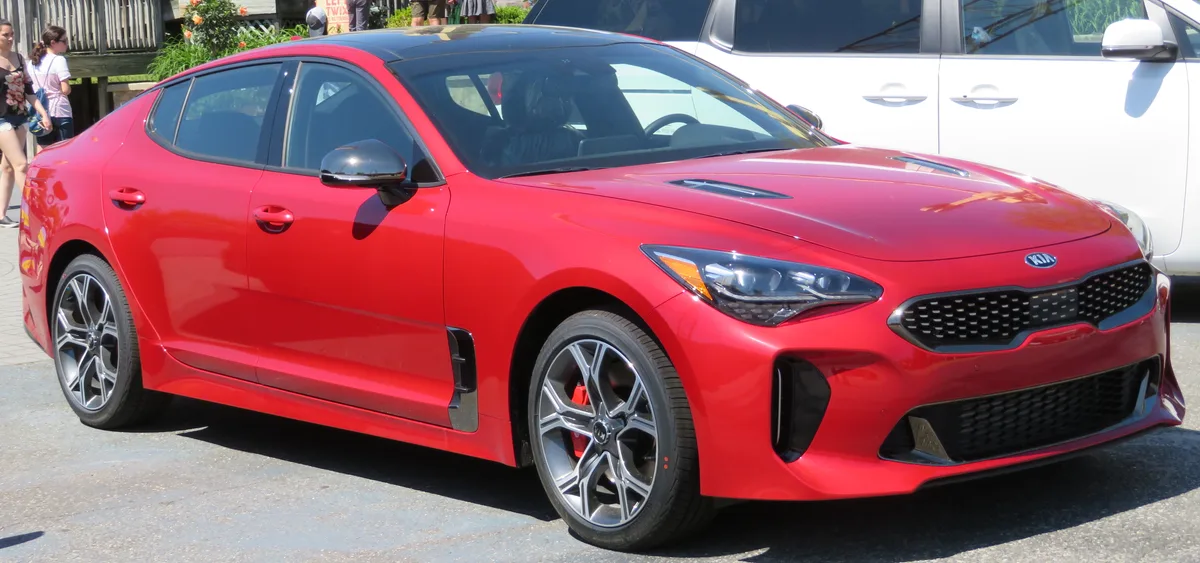
The Kia Stinger was built from 2017 to 2023, and production ended in the spring of 2023 with no direct replacement. In its final year it sold 5,452 cars in the United States. It was, by a wide margin, the best-looking car Kia has ever made, and that's exactly why people are still searching for it.
Here's what it was, why it died, and what it proved.
What Kia was trying to do
The Stinger was a rear-wheel-drive fastback grand tourer with a twin-turbo V6 in the GT, which is the recipe for an Audi A7 or a BMW 4 Series Gran Coupe, sold at a Kia price. It was the moment Kia stopped asking to be taken seriously and just built the car.
The design came from a studio run by Peter Schreyer, the German designer who drew the original Audi TT before Kia hired him to fix its image, with Gregory Guillaume leading the European team that shaped the car. The long hood, the short rear deck, the low roofline, and the liftback tail gave it proportions no Kia had ever had. Albert Biermann, who came from BMW's M division, tuned the chassis. This was a car built by people who'd spent their careers at the brands it was aimed at.
And it was good. Reviewers loved it, and it did something for Kia's reputation that no amount of advertising could have.
Why it died anyway
Sales fell nearly every year of its life. A rear-drive sport sedan is a dying category, and buyers who wanted one mostly still wanted a German badge. Buyers who wanted a Kia mostly wanted an SUV. The Stinger sat in the gap between those two groups and never found enough people in it.
Kia also changed direction. The EV6 GT arrived as the brand's new performance flagship, electric and much quicker, and Kia design chief Karim Habib said it fills a similar role in the lineup. There was no case for keeping a gas-powered halo car that lost money, however good it looked.
So the Stinger ended the way a lot of beloved cars do. It was the right car for the brand and the wrong car for the market.
What it proved
The Stinger's real job was never sales. It was permission. Before it, nobody would have believed Kia could build a car that looked expensive. After it, the K5, the Telluride, and the EV6 all carried that confidence, and Kia's design reputation went from punchline to benchmark in about a decade. The Sorento looks the way it does because the Stinger showed the company what it was allowed to do.
It's also going to age well. Clean fastback proportions, no fake vents, real rear-drive stance. In ten years a Stinger GT will look like a bargain classic, and the people who bought one when nobody else did will be smug about it.
Put a Stinger against the A7 it was chasing on WhipJury and see how many people can tell which one cost twice as much.
Sources:
Production end, declining sales, and the 5,452 final-year figure: SlashGear
April 2023 production end and Habib on the EV6 GT: Motor1
Frequently Asked Questions

Jeffrey Wiley has spent more time than he'd like to admit thinking about what makes a car look right. He writes about automotive design, car culture, and the opinions people have strong feelings about. He lives in north Georgia.