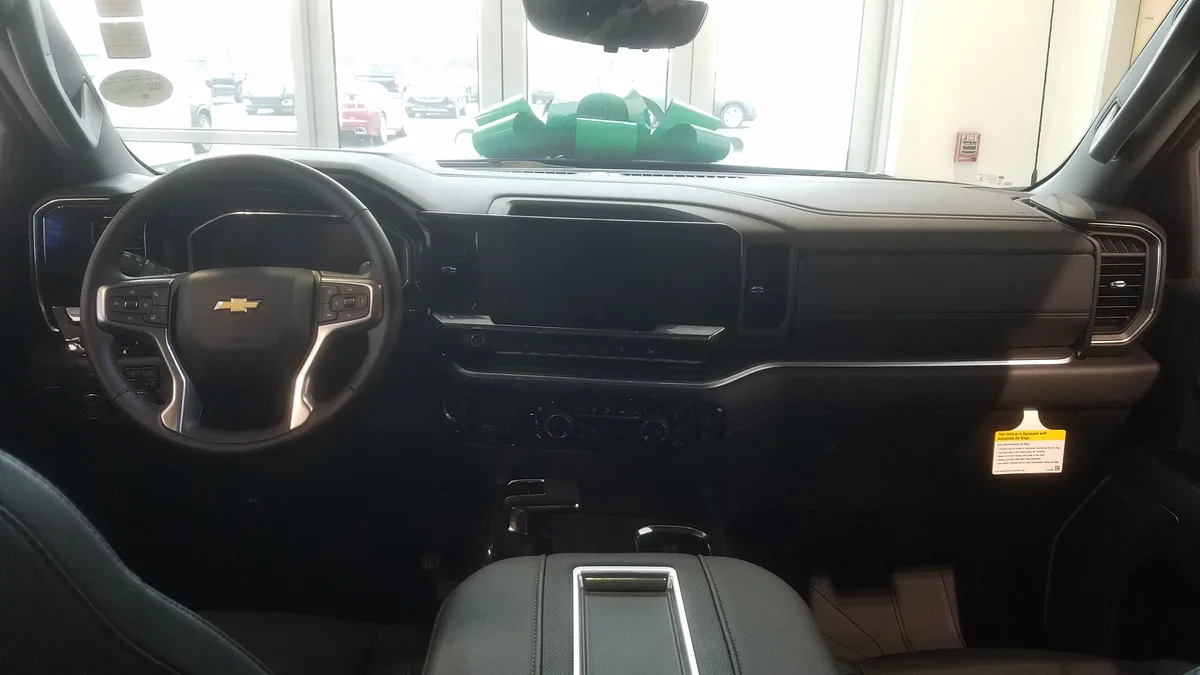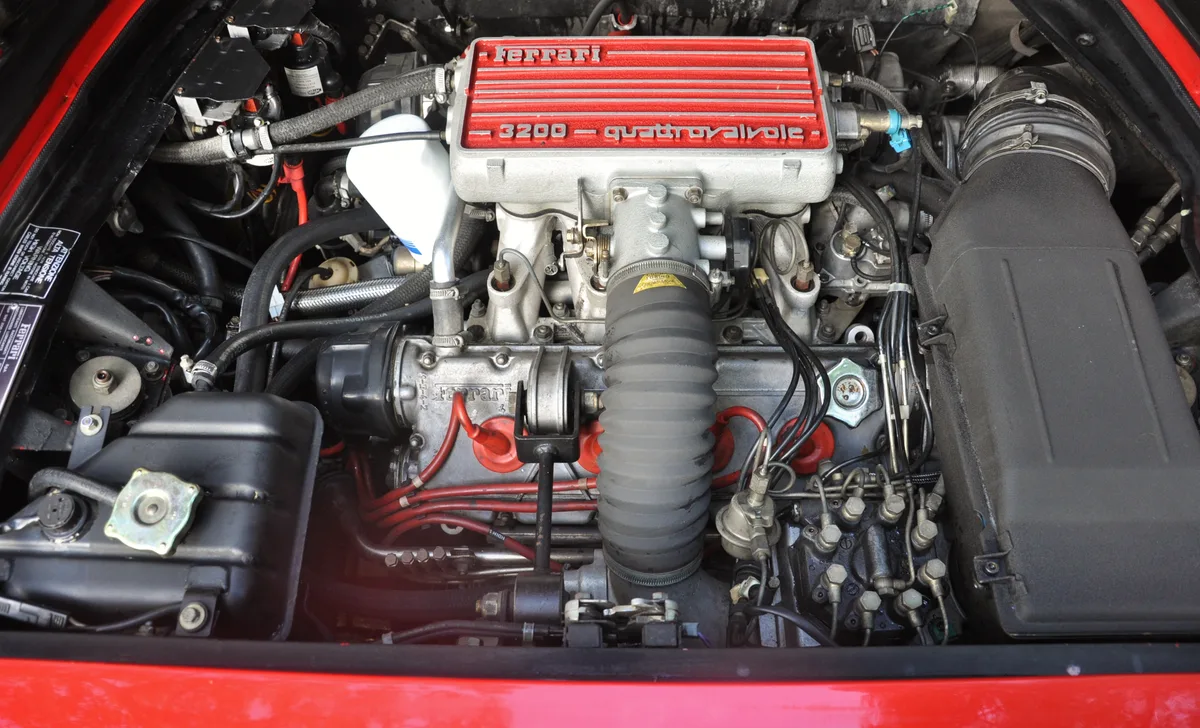
An American V8 burbles. A Ferrari V8 shrieks. Both are eight-cylinder engines, and the difference is one component: the crankshaft.
Engine sound isn't decoration added afterwards. It falls out of the order the cylinders fire in and how evenly those firings are spaced, and once you know the pattern you can identify most engines with your eyes shut.
Cross-plane against flat-plane
A traditional American V8 uses a cross-plane crankshaft, with the crank pins arranged at 90 degrees to each other. That produces a firing order that alternates unevenly between the two banks of cylinders, so one bank sometimes fires twice in a row. Two high-pressure exhaust pulses arrive in the same manifold back to back, the tone changes, and you get the lopey, uneven rumble that people mean when they say V8.
A flat-plane crank puts all four pins in one plane, so the engine fires left, right, left, right, perfectly alternating between banks. Even spacing means a clean, high, howling note instead of a rumble. Flat-plane cranks are also much lighter, so those engines rev far higher, which raises the pitch again. That's the Ferrari sound, and it's why a Ferrari and a Mustang can share a cylinder count and sound like different species.
The trade is real. Cross-plane cranks are heavier but make strong low-end torque, which is why trucks use them. Flat-plane engines rev to the moon and vibrate more doing it.
Why an inline-six sounds so smooth
The straight-six is the smoothest common engine layout, and that's a matter of geometry rather than tuning. As the first piston reaches the top of its stroke, the sixth reaches the bottom, and the forces cancel each other out. The power strokes are spaced evenly at 120 degrees, so the delivery is continuous with no gaps.
The usual firing order is 1-5-3-6-2-4, which deliberately avoids firing adjacent cylinders one after another and spreads the twisting load evenly along the crank. A V6 cannot achieve the same natural balance, which is a large part of why enthusiasts prize inline-sixes in the BMW M cars, the Supra, and the Skyline GT-R.
Other layouts have their own signatures for the same reason. A boxer engine's offset firing gives Subarus their warble, and a rotary has no pistons at all, which is why an RX-7 sounds like nothing else.
What this means for the cars you like
Sound is a big part of why people love particular engines, and it's almost entirely an accident of engineering. Nobody sat down to make the American V8 sound good. They chose a crank that balanced well and made torque, and the noise came along with it.
It's also the thing electric cars can't inherit. An electric motor has no firing order, so there's no character to fall out of the mechanicals, which is why some manufacturers pipe fake noise into the cabin and why others refuse to.
Line up two cars with the same power and different engine layouts on WhipJury and see how much the idea of the sound shifts the vote, even in photos.
Sources:
Cross-plane and flat-plane firing orders and their effect on tone: Curbside Classic
Inline-six balance and the 1-5-3-6-2-4 firing order: Wikipedia, Straight-six engine
Frequently Asked Questions

Cam Walsh has been obsessing over cars since before he could drive one. Based out of Atlanta, Cam covers automotive design, car culture, and the eternal debate over which whips actually look the part.