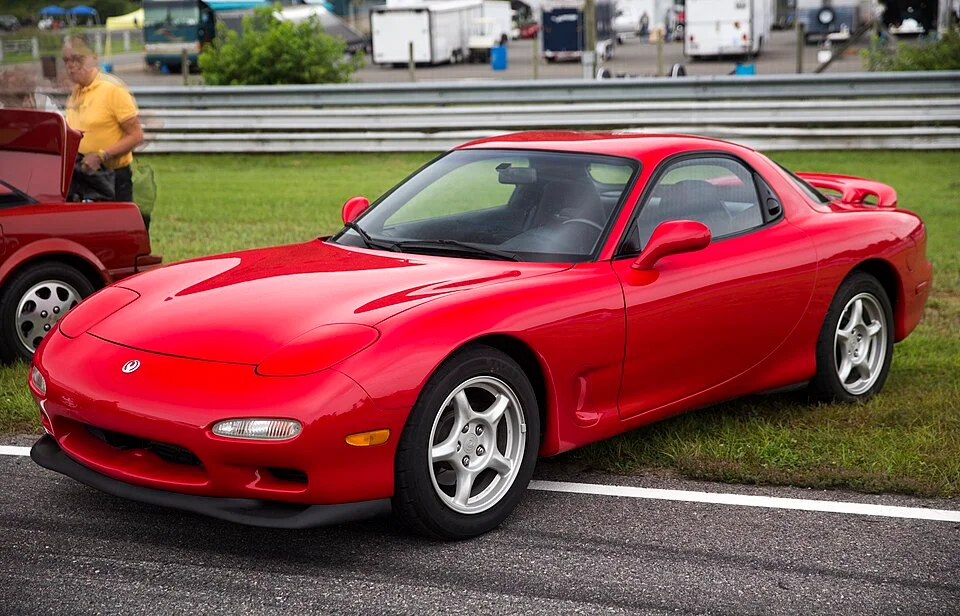
A rotary engine makes power in a completely different way from the engine in almost every other car. There are no pistons pumping up and down. Instead, a triangular rotor spins inside an oval housing, and that spinning motion turns the output shaft directly. It's one of the great what-if designs of the car world: brilliant in some ways, deeply flawed in others, and beloved out of all proportion to how many were ever built.
Here's how the rotary actually works, why enthusiasts are so attached to it, and why the Mazda RX-7 refuses to fade away.
How It Works
The design is named for its inventor, Felix Wankel. Picture a rounded triangle spinning inside a housing shaped a bit like a fat figure-eight. As the rotor turns, the space between each of its three faces and the housing wall grows and shrinks. That changing space does the same four jobs a piston engine does, intake, compression, combustion, and exhaust, except all three faces are handling different jobs at the same time as the rotor spins. One rotor fires once per rotation, and the whole thing turns that motion straight into rotation with far fewer moving parts than a piston engine.
That's the elegance: no valvetrain, no pistons stopping and reversing thousands of times a minute. Just a rotor going around.
Because nothing is stopping and reversing inside it, a rotary is extremely smooth and happy to rev to high rpm, often well past where a comparable piston engine runs out of breath. It's also small and light for its power, which lets designers mount it low and far back for good balance. The sound is distinctive, a high, buzzy scream that rotary fans can pick out instantly. It makes a car feel eager and alive in a way that's hard to fake.
Why It Never Took Over
For all that, the rotary has real problems. The seals at the tips of the rotor, called apex seals, ride against the housing and wear out far faster than the parts in a piston engine, especially if the engine is revved hard for long stretches. Rotaries also burn oil by design and are thirsty and dirty compared to modern piston engines, which made them harder to keep emissions-legal. That combination, thirst, emissions, and durability, is why almost every manufacturer that tried the rotary eventually gave up on it.
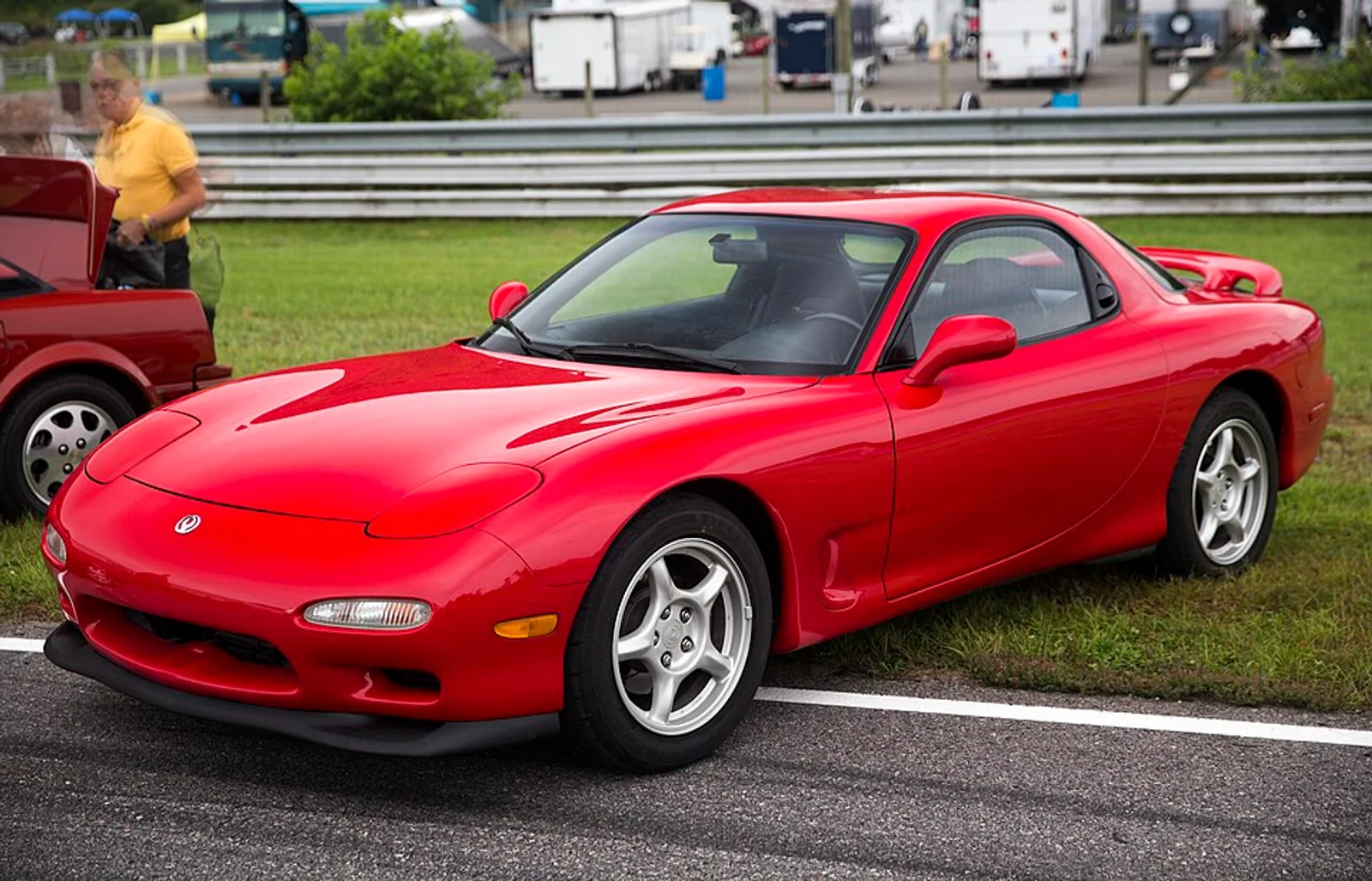
Mazda was the exception. It stuck with the rotary for decades and built its identity around it, most famously in the RX-7 and later the RX-8. The RX-7 in particular paired that revvy, smooth engine with a light, beautifully balanced chassis, and the result is a car people still talk about decades later. Rotary owners accept the fragility and the fuel bills because nothing else feels quite like it. That trade, character over sense, is exactly the kind of thing car enthusiasts fall hardest for, and it's why the rotary has a cult that piston engines with twice the sales never earned.
The Rotary in the Faceoff Arena
A rotary car carries a specific badge of credibility. It signals an owner who chose feel over convenience and knows exactly what they're dealing with. Voters who understand what's spinning under that hood tend to give a clean RX-7 or RX-8 real respect, because they know how much devotion it takes to run one.
Upload your rotary to WhipJury and let the crowd decide whether the looks live up to the legend under the hood.
Sources:
How the Wankel rotary works and its apex-seal design: Project JDM
The rotary mechanism, parts, and trade-offs: Firgelli
Frequently Asked Questions

Cam Walsh has been obsessing over cars since before he could drive one. Based out of Atlanta, Cam covers automotive design, car culture, and the eternal debate over which whips actually look the part.