DuelsLeaderboardGarageBlogCarsGlossaryBrowse

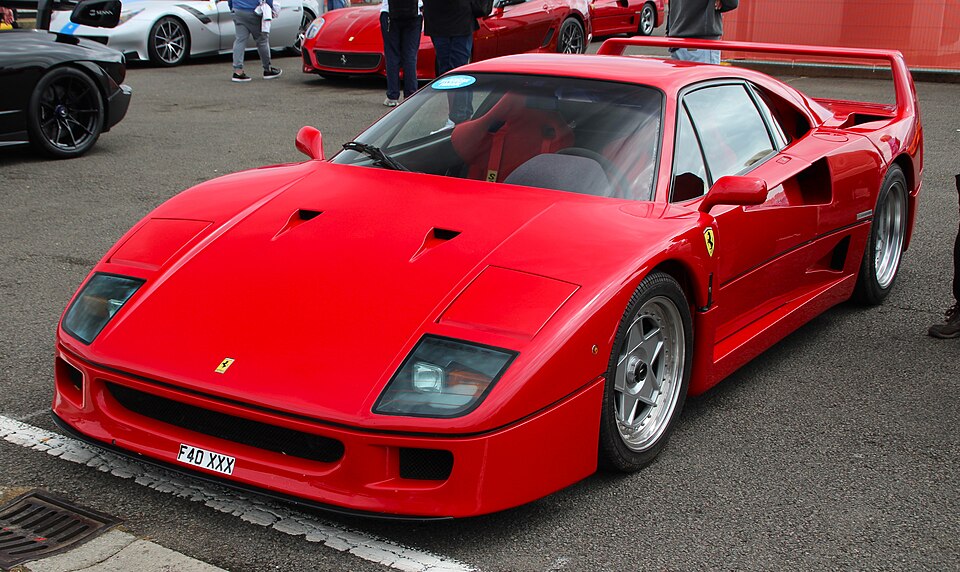
Ferrari F40

Ferrari

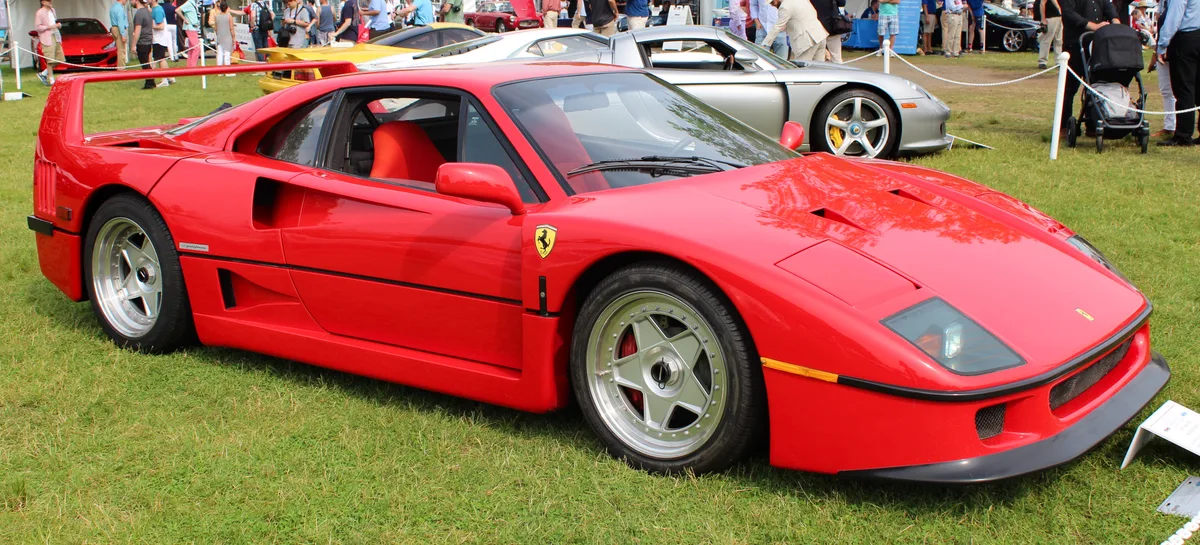
Ferrari F40: Ferrari's 40th anniversary halo. Twin-turbo V8 with 478 horsepower. Pure analog character. Enzo Ferrari's last
Photo: MrWalkr / Wikimedia Commons · CC BY-SA 4.0

Ferrari's 40th anniversary halo. Twin-turbo V8 with 478 horsepower. Pure analog character. Enzo Ferrari's last car.

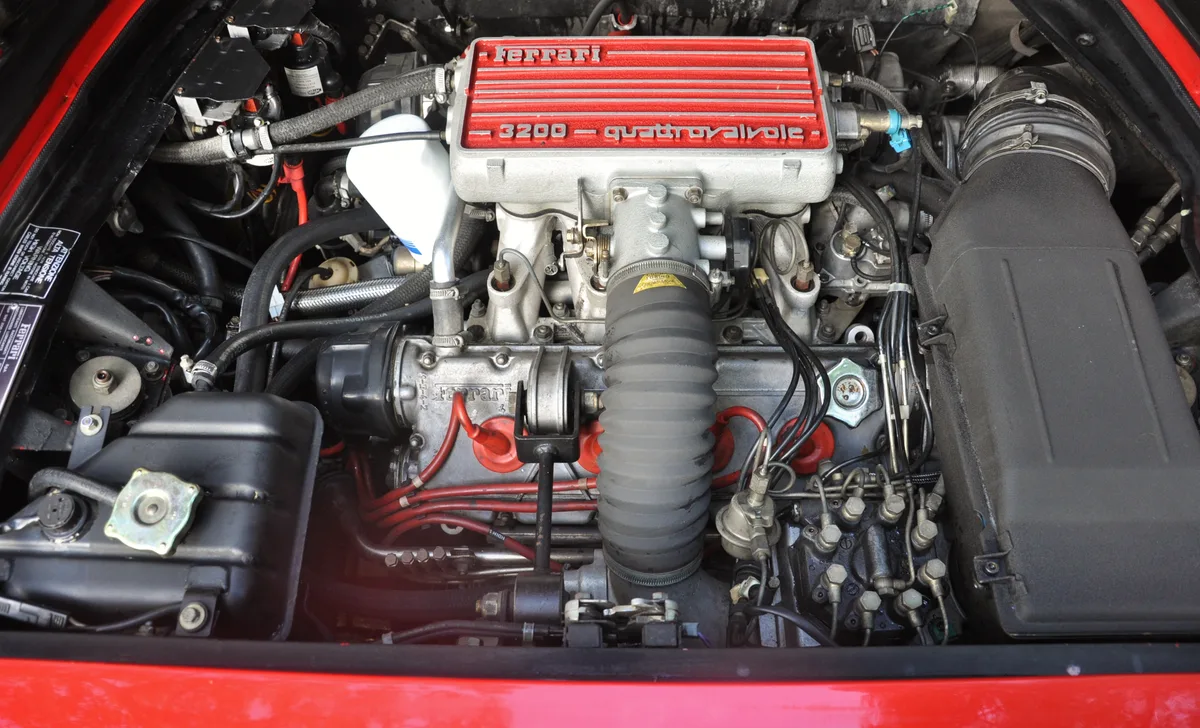
The Ferrari F40 is a mid-engine supercar produced from 1987 to 1992 to commemorate Ferrari 40th anniversary. The F40 was Enzo Ferrari last car; he died in 1988, the year after the F40 launched. The car was designed as a pure-bred performance machine with no driver aids: no ABS, no power steering, no adjustable dampers, no traction control. The driver was the only safety system. The F40 used the F120A 2.9-liter twin-turbocharged V8 making 478 horsepower. The chassis was tube frame with carbon fiber and Kevlar bodywork. Five-speed manual transmission. The car weighed around 2,425 pounds, providing exceptional power-to-weight ratio. Top speed was 201 mph (verified), making the F40 the first production car to break 200 mph. The F40 was produced in 1,311 examples (significantly more than originally planned, due to high demand). The car has been continuously celebrated as one of the great Ferraris ever produced. The combination of analog character, naturally aspirated power, and pure-bred performance has made the F40 one of the most desirable Ferraris ever made. Modern F40 prices have appreciated dramatically. Clean examples sell for $1.5 million to $3 million+ at auction. The car has been cited by many car magazines as the greatest Ferrari ever made. On WhipJury, F40 submissions are extremely rare but always memorable. The cultural significance and pricing make F40 appearances rare; when they appear, they reliably top voting on history alone.

F40 specifications

F120A 2.9-liter twin-turbocharged V8 engine, 478 horsepower factory rating (likely more in actual). Tube frame chassis with carbon fiber and Kevlar bodywork. Five-speed manual transmission. Curb weight around 2,425 pounds. Top speed 201 mph (verified). Production: 1,311 cars total.

F40 on WhipJury

F40 submissions are extremely rare. When they appear, they reliably top voting on cultural significance alone. The F40 is widely cited as the greatest Ferrari ever made.
Frequently asked questions about Ferrari F40

Why is the F40 so legendary?
Multiple factors. Enzo Ferrari's last car (he approved it before his 1988 death). First production car to break 200 mph (verified at 201 mph). Analog character with no driver aids. Manual transmission. Carbon fiber and Kevlar bodywork. Twin-turbocharged V8. Limited production (1,311 cars). The combination has made the F40 one of the most legendary Ferraris ever produced.
How much does an F40 cost?
Significant. Clean F40s now sell for $1.5 million to $3 million+ at auction. Some unique provenance examples have sold for higher. The F40 is a recognized blue-chip collector car; pricing has been climbing for decades and is expected to continue.
Are F40s street-legal?
Yes, with caveats. F40s are street-legal in their original specification. Modern emissions and safety regulations would make a new F40 difficult to certify, but originals retain their original certification. Owners can drive them on streets within applicable jurisdictions; many F40 owners reserve them for special drives and events.
Are F40s reliable?
Generally yes when maintained. The twin-turbo V8 is durable. Common issues are typical for high-performance cars of the era: occasional turbocharger wear, transmission components at high mileage, and various age-related items on cars now 35+ years old. Specialty F40 mechanics globally support continued ownership.
How fast does the F40 actually go?
201 mph verified at the Volkswagen test track in 1988. The F40 was the first production car to break 200 mph in verified testing. Real-world top speeds depend on conditions; the 201 mph figure was achieved at optimal conditions. Subsequent supercars like the Bugatti Veyron (2005) and McLaren F1 (1992) have far exceeded the F40 top speed, but the F40 broke the 200 mph barrier first.

More on the Ferrari F40

Why a V8 rumbles and a Ferrari screams

An American V8 rumbles and a Ferrari V8 screams because of the crankshaft. Cross-plane cranks fire unevenly between banks and produce the lopey rumble; flat-plane cranks alternate perfectly and rev higher for that howl. Here's also why an inline-six is the smoothest engine you can buy.

Lewis Hamilton sold every car he owned, then bought a barn-find Ferrari F40

Lewis Hamilton sold his entire car collection in 2025 and said he would only buy another if it was a Ferrari F40. He has now found one that sat in a garage for over 30 years and had Ferrari restore it at Maranello. Here is why the F40 is the car a seven-time champion picked over everything.

Why Did Pop-Up Headlights Disappear?

Pop-up headlights disappeared because European pedestrian-safety regulations made protruding front-end hardware effectively impossible to certify, and because fixed headlight technology got good enough that the mechanical complexity stopped earning its keep. The last two production cars to carry them ended production in 2004.

White Is the Hardest Color to Pull Off. Most Cars Fail.

White is the best-selling car color in the world. Has been for over a decade. Buyers choose it because it's safe, resells well, hides dust reasonably, and looks clean on a configurator screen. None of those are design reasons. And design is exactly what white tests, mercilessly, every time a car wears it...

Other Ferrari models

250 GTO275 GTB288 GTO296308328348355360430458488
More Ferrari models