DuelsLeaderboardGarageBlogCarsGlossaryBrowse

Boxer Engine

Car culture term

Boxer Engine
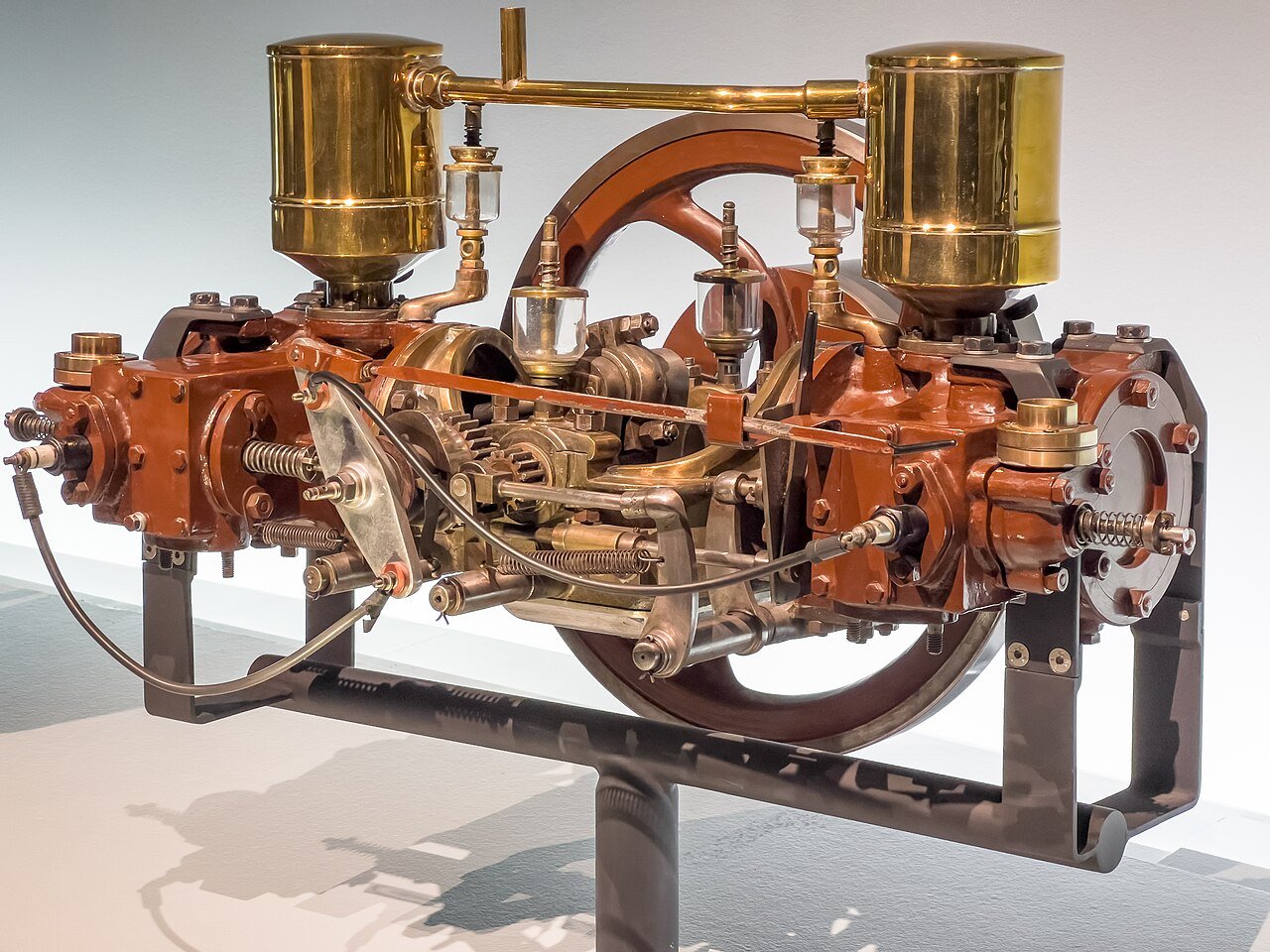
Photo: Johannes Maximilian / Wikimedia Commons · CC BY-SA 4.0

What is Boxer Engine?

A boxer engine places its cylinders in two flat, horizontally opposed banks that punch outward like a boxer's fists, rather than in a V or inline layout.

A boxer engine, also called a horizontally opposed engine, arranges its pistons in two banks that lie flat and fire outward from a central crankshaft, with pistons on opposite sides moving inward and outward in mirrored pairs. This design cancels out much of the primary vibration that inline and V-configuration engines produce, since opposing pistons reach top and bottom dead center at the same time and their momentum offsets. The name comes from the visual resemblance to two boxers trading punches, cylinder banks striking outward in unison.

The flat, wide shape of a boxer engine sits lower in the chassis than an inline or V engine of comparable displacement, which lowers the vehicle's center of gravity and can improve handling balance, particularly in corners. Subaru has built its brand identity around boxer engines across nearly its entire lineup, including the WRX and STI, while Porsche uses flat-six boxer engines in the 911, Boxster, and Cayman. Both manufacturers cite the low center of gravity and the engine's distinctive exhaust burble, caused by the uneven firing pulses reaching the exhaust manifold, as signature traits.

Boxer engines also present engineering tradeoffs. Their wide shape complicates engine bay packaging and can make certain routine services, such as spark plug or valve cover access, more labor intensive than on an inline engine. Head gasket failures have historically been a known weak point on some Subaru boxer engines, particularly earlier EJ-series units, due to the long, thin head gasket surface required by the flat layout. Despite these drawbacks, the boxer layout remains prized in performance and rally applications for its low, wide mass distribution.
Related terms

AWDSTIRallyWRCNaturally aspirated

Frequently asked questions

Why is it called a boxer engine?
The name refers to the way opposing pistons move outward and inward in unison, resembling two boxers punching toward each other. The layout is also called horizontally opposed for the same reason.
What cars use a boxer engine?
Subaru uses boxer engines across nearly its entire lineup, including the Impreza, WRX, STI, Outback, and Forester. Porsche uses flat-six boxer engines in the 911, Boxster, and Cayman.
Is a boxer engine the same as a flat engine?
Flat engine is a broader term for any engine with cylinders arranged in a horizontal plane. A true boxer engine is a specific type of flat engine where opposing pistons move independently and fire in a way that cancels vibration; some flat engines instead share crank pins between opposing cylinders and are not technically boxers.
Why do boxer engines have a distinctive exhaust sound?
The uneven spacing of firing pulses as exhaust gases from opposite banks merge in the exhaust system creates the burbling, uneven note associated with Subaru boxer engines, most noticeable at idle and low RPM.
Are boxer engines more reliable than inline engines?
Not inherently. Boxer engines have a strong reputation for smooth balance and a low center of gravity, but the long horizontal head gasket surface has been a documented weak point on some Subaru EJ-series engines, requiring careful maintenance and cooling system upkeep.

Boxer Engine on the blog

Why a V8 rumbles and a Ferrari screams

An American V8 rumbles and a Ferrari V8 screams because of the crankshaft. Cross-plane cranks fire unevenly between banks and produce the lopey rumble; flat-plane cranks alternate perfectly and rev higher for that howl. Here's also why an inline-six is the smoothest engine you can buy.

Back to Glossary