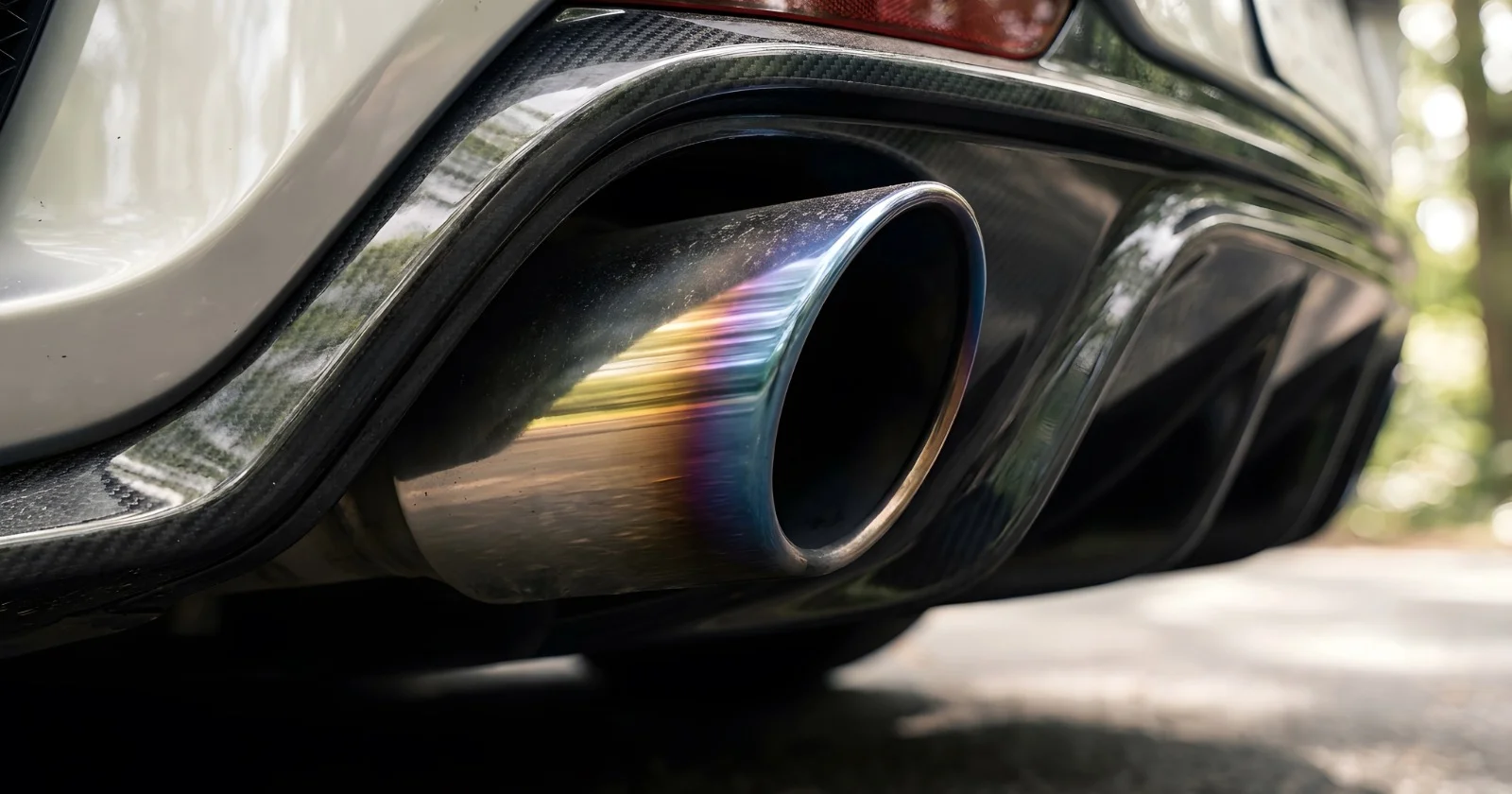
New cars have fake exhaust tips because designers want the look of a performance exhaust without the cost, packaging, and emissions headaches of actually routing one there. The real pipe usually exits lower down, often pointed at the ground behind the bumper, while a chrome or gloss-black trim piece sits in the bumper doing nothing. Sometimes the fake tip is connected to the real pipe by a short stub. Sometimes it is pure decoration with daylight visible behind it.
Once you notice them you cannot stop noticing them, and they have spread from budget crossovers all the way up to luxury sedans. Here is why automakers keep doing it and why it bothers people as much as it does.
How to Spot One
Crouch behind almost any new car and look at where the bright trim meets the bumper. If the shiny rectangle is molded into the plastic and the actual pipe hangs separately underneath, you found one. The giveaways are a tip with no soot, no heat discoloration, and no visible connection to anything. On some cars the "exhaust" is a completely sealed panel. The same trick shows up on the sides and front of cars as fake vents and fake intakes, plastic inserts shaped like functional aero that lead nowhere.
The Engineering Reasons
The defensible reasons are real. Exhaust gas leaves the engine at several hundred degrees, and the pipe routing has to keep that heat away from bumper plastic, sensors, and anything a person might touch. Pointing the outlet down and tucking it behind the bumper is the cheapest safe solution. It also keeps soot off the bodywork. A genuine through-the-bumper exhaust finisher needs heat shielding, tighter tolerances, and its own tooling, and every variant of a bumper adds cost across a model range.
Emissions hardware matters too. Modern engines, especially small turbocharged ones, carry particulate filters and extra catalysts that leave the exhaust quieter and cooler than it used to be, and the plumbing that satisfies the regulations rarely ends where a stylist wants it to. Rather than redesign the rear of the car around the pipe, manufacturers split the job: engineers route the real exhaust wherever works best, and designers place a cosmetic tip wherever looks best.
The Honest Reason
All of that explains why the real pipe hides. It does not explain why a fake one has to appear. That part is pure marketing. Buyers associate visible exhaust tips, ideally two of them, with performance, so even a base-engine family crossover gets a pair of chrome rectangles to signal sportiness it does not have. The fake vent on the fender exists for the same reason: it borrows the visual language of race cars and applies it to a car that will spend its life in a school pickup line.
This is where the practice turns from packaging compromise into design dishonesty, and it is why enthusiasts react so badly. A car with no visible exhaust is making a neutral choice. A car wearing a fake one is claiming credit for hardware it does not carry. Plenty of expensive cars do it too, which somehow makes it worse. Spending luxury money and getting a plastic exhaust costume is the kind of detail that sours an entire design.
Cars That Get It Right
The fix is not complicated, because some automakers already do it. A Porsche 911 routes real pipes through real openings. The Civic Type R puts its triple outlet in the middle of the bumper and every one of them works. A proper cat-back exhaust on an enthusiast car earns the visual it presents. And on the other end, plenty of EVs simply have clean rear bumpers with no exhaust theater at all, which is the honest version of the same design freedom.
The middle path, a downturned hidden pipe and an unadorned bumper, costs nothing and lies about nothing. Mazda does it on most trims and nobody has ever walked away from a Mazda3 thinking it looked unfinished.
What It Does in a Faceoff
Fake exhaust tips are exactly the kind of detail that decides close votes on WhipJury. From ten feet away in a photo, a fake tip can pass. But faceoff voters zoom in, and a chrome rectangle with a dusty plastic panel behind it reads instantly as cheap. It is the rear-end equivalent of fake stitching on a dashboard.
If your car has them, you have two honest options: fit the real exhaust the design was pretending to have, or remove the trim and let the bumper be clean. Either one photographs better than the costume.
Sources:
Fake exhaust tips and emissions packaging: Jalopnik
Why automakers use cosmetic tips: CarBuzz
Frequently Asked Questions

Jeffrey Wiley has spent more time than he'd like to admit thinking about what makes a car look right. He writes about automotive design, car culture, and the opinions people have strong feelings about. He lives in north Georgia.