The Honda Civic Type R comes in five colors and the answer to which one is best is more settled than almost any other car color debate. It's Championship White. It has been Championship White since the Type R nameplate existed. And while there's a real case for Boost Blue Pearl, choosing anything else on a Type R means actively walking away from one of the strongest car-and-color pairings in modern performance car history.
Here's the full breakdown of all five colors, why Championship White wins, and the one situation where you should pick something else.
The Five Colors
The current Civic Type R is available in Championship White, Boost Blue Pearl, Rallye Red, Crystal Black Pearl, and Sonic Gray Pearl. Championship White is the only no-cost heritage color that carries decades of meaning. The other four are strong colors in their own right, but they're competing against a color that's effectively part of the car's identity rather than just an option on the order sheet.
Why Championship White Wins
Championship White is not just a color on the Type R. It's the color. Honda has used Championship White as the signature shade for its Type R performance models going back to the NSX-R and the early Integra Type R and Civic Type R models. When you see a white Type R, you're seeing the car the way Honda's performance division intended it to be seen. Every other color is a deviation from the reference.
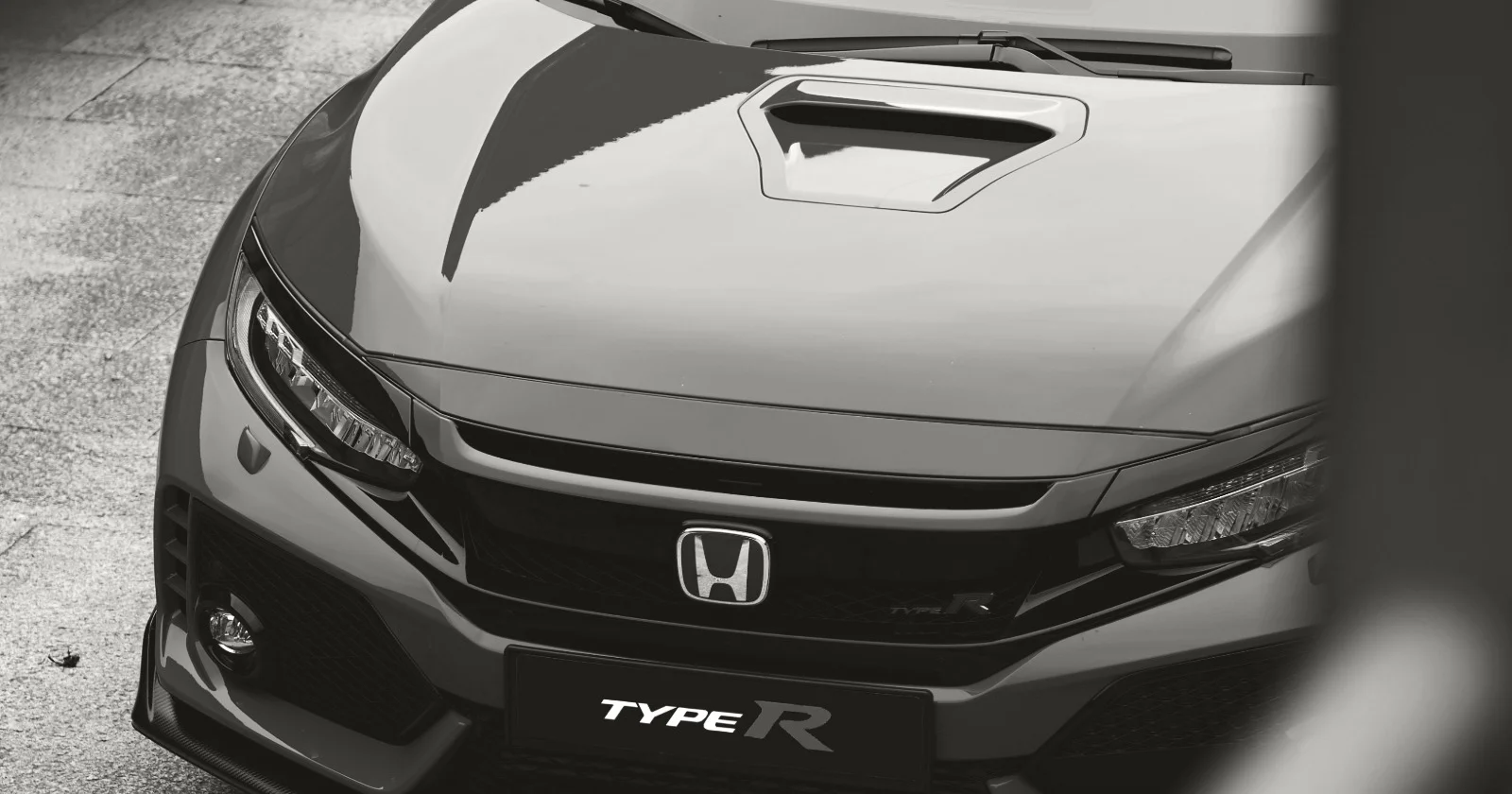
The functional design reason Championship White works so well on the current Type R is specific. The current generation tones down the boy-racer excess of the previous FK8 generation but it still has aggressive functional aero: the large rear wing, the front splitter, the side sills, the triple exhaust outlets. White reveals all of these elements with maximum clarity. The shadows cast by the aero components read sharply against the white body. The red Honda badge and the red accents pop against the neutral base. The car looks like a track weapon that happens to be street legal, which is exactly what it is.
White also photographs the surface sculpting of the current Type R better than any darker color. The hood vents, the fender flares, the complex lower body work. These read clearly in white and partially disappear in black or dark gray. As covered in the broader discussion of why white is a demanding color, white only works on cars with enough surface design to reward the exposure. The Type R has that surface design in abundance, which is why it's one of the cars that genuinely earns white rather than being exposed by it.
The Real Competition: Boost Blue Pearl
Boost Blue Pearl is the only color that has a legitimate case against Championship White, and it's a strong one. Boost Blue is a vibrant, energetic blue that makes a bolder statement than white and reflects the car's performance character in a more immediate way. It's the color Honda chose to show the car in much of its current marketing, which says something about how Honda sees the car's contemporary identity.
Boost Blue works because it's saturated enough to carry the Type R's aggression without overwhelming the design. It's not a subtle blue. It's a statement blue. On a car this aggressive, the statement and the design align rather than fighting each other. If you want your Type R to look contemporary rather than heritage, Boost Blue is the correct choice and it's the one color where picking it over Championship White is defensible rather than just a preference.
The tiebreaker between the two comes down to what you want the car to say. Championship White says this is a Type R in the truest sense, connected to every Type R that came before it. Boost Blue says this is the current Type R, of its moment, making its own statement. Both are right. Neither is wrong.
The Other Three
Rallye Red is a fan favorite and it's a genuinely good color on the Type R. The deep vibrant red matches the car's aggressive lines and sporty attitude. The problem is that red is a slightly obvious choice on a performance car. It does exactly what you expect a red performance car to do, which is fine but not distinctive. Red is the safe exciting color. It works. It just doesn't have the specific meaning of Championship White or the contemporary boldness of Boost Blue.
Crystal Black Pearl gives the Type R a sleek, understated look that downplays the aggression. This is the color for buyers who want the Type R's performance without the Type R's visual volume. It's the most mature-looking option and it's the worst at showing off the aero and surface work that makes the car visually interesting. Black on a Type R is choosing to hide the design. Some buyers want exactly that, but it's working against what the car is.
Sonic Gray Pearl is the modern, refined option that blends subtle elegance with the aggressive styling. It's the color for buyers who find both white and blue too loud. Gray on a Type R is a sophisticated choice that splits the difference between revealing the design and keeping a low profile. It's the best of the understated options but it's still an understated choice on a car that was built to be seen.
The Verdict
Championship White for the heritage and the maximum design clarity. Boost Blue Pearl if you want contemporary boldness over heritage. Everything else is a step down from those two, not because the other colors are bad but because the Type R has two colors that mean something specific and three that are just colors.
In a WhipJury faceoff, the Championship White Type R consistently outperforms the same car in other colors because the white maximizes the visual impact of the aggressive design. The car that was built to be looked at looks best in the color that hides nothing.
Rate the Civic Type R in different colors on WhipJury and see whether the crowd agrees that Championship White is the only real answer.
Sources:
Honda official Civic Type R color list and specs: automobiles.honda.com/civic-type-r
2026 Civic Type R colors: carsdirect.com
Color descriptions and character notes: greatfallshonda.com

Jeffrey Wiley has spent more time than he'd like to admit thinking about what makes a car look right. He writes about automotive design, car culture, and the opinions people have strong feelings about. He lives in north Georgia.