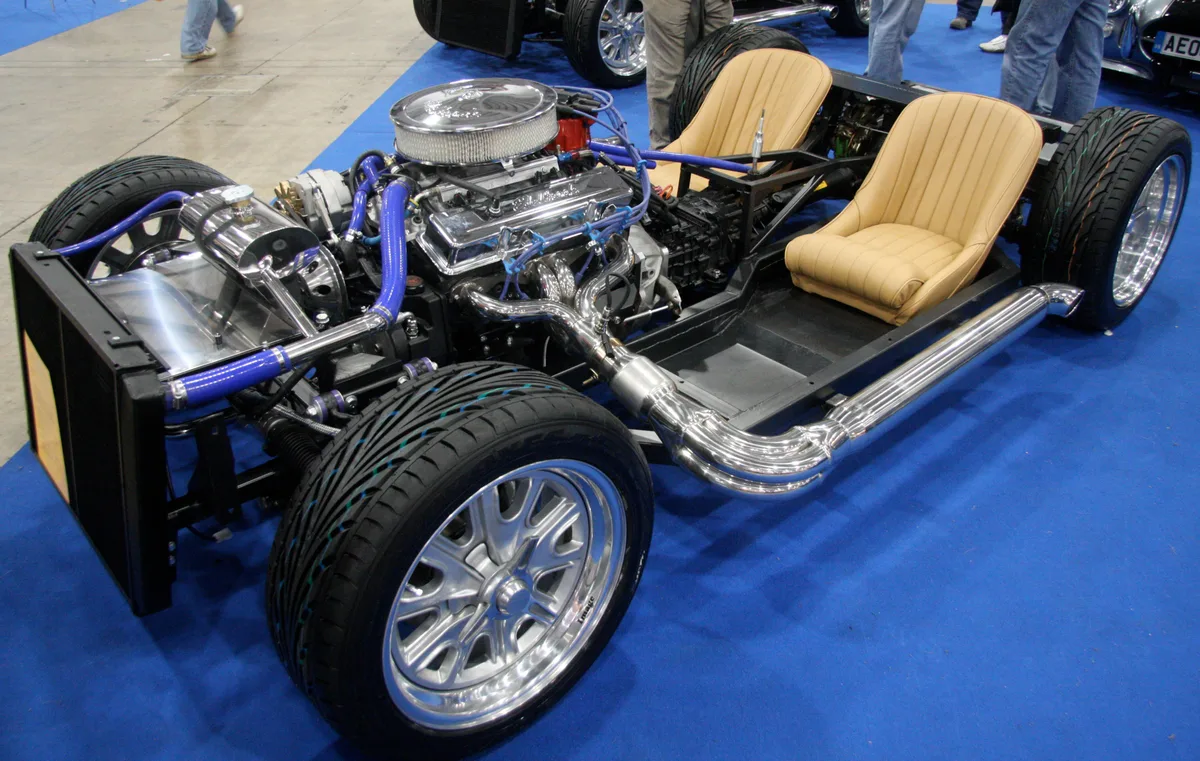
A subframe is a bolt-in metal structure that carries the engine, the transmission, and the suspension, then attaches as one unit to the car's body. It is sometimes called an engine cradle. If you have seen that as a quiz question with options like engine, transmission, or suspension, the answer is all of them.
Why cars have one
Almost every modern car uses unibody construction, where the body itself is the structure. That is light and rigid, but it has a problem: an engine shaking and suspension being hammered by potholes would transmit everything straight into the shell. The subframe solves that by gathering those parts onto a separate piece, which then bolts to the body through rubber or hydraulic mounts. Those mounts absorb noise and vibration before it reaches you, which is a large part of why a modern car feels calm at speed. It also spreads load. The forces from acceleration, braking, and cornering arrive in concentrated spots, and the subframe distributes them across a wider area of the body instead of letting them punch into a few points.
What it means in practice
Assembly is the other reason. A subframe can be built up complete, with engine, transmission, steering rack, and suspension arms all mounted, then lifted into the car in one motion. That is faster on a production line, and it is why engine-out work on some cars means dropping the whole subframe.
For owners, subframes matter in two situations. Rust is the first, since a corroded subframe is a structural problem rather than a cosmetic one, and on some older cars it is what ends them. Impact is the second, because a subframe can bend in a crash and a bent one throws off the suspension geometry. Subframe bushings also wear out. When they do, you get vague steering and clunks over bumps, and people often chase the wrong parts before finding it.
Why enthusiasts care
Because the subframe holds the suspension, it sets the alignment points, so anything that changes it changes how the car drives. Stiffer subframe bushings sharpen turn-in at the cost of more noise, which is a trade people make deliberately on track cars.
It is also the reason platform sharing works. Two cars that look nothing alike can use the same subframe, mounting the same suspension and drivetrain under completely different bodywork, which is a quieter cousin of badge engineering.
Sources:
Definition and the components a subframe carries: Wikipedia, Subframe
Engine cradles and how they mount to the body: Aluminum Extruders Council
Frequently Asked Questions

Cam Walsh has been obsessing over cars since before he could drive one. Based out of Atlanta, Cam covers automotive design, car culture, and the eternal debate over which whips actually look the part.