A shooting brake is a car that pairs a coupe's low, sporty front with a wagon's long roof and rear hatch. The name is older than the car. Collins English Dictionary dates the term to 1910 to 1915 and says it earlier described a light horse-drawn wagonette. The "shooting" part points to the hunt. Top Gear explains that a brake was a type of 19th-century carriage, and the shooting version had a body adapted for hunting parties. In Britain, the phrase was once just another name for an estate car. Collins lists it as "a former name for estate car," and Merriam-Webster defines it simply as the British term for a station wagon. Neither dictionary says anything about doors.
Car fans now use a stricter rule. Hagerty says a shooting brake is based on a coupe and "only has two doors … or three, if you count the hatch." The older cars below all meet that test. Mercedes-Benz, which sells the best-known cars wearing the name today, builds them with four side doors.
The two-door originals
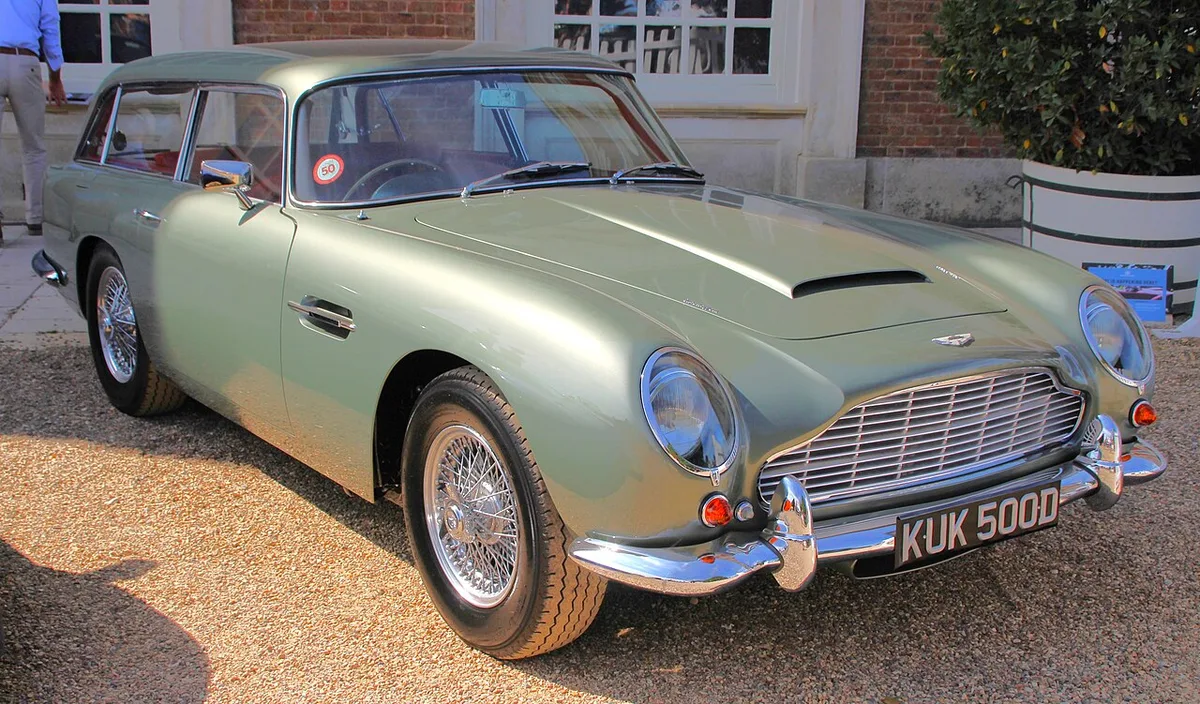
Aston Martin's version started with a dog. Chairman David Brown found the DB5 impractical for polo gear and a hunting dog, according to RM Sotheby's. Hagerty UK says Brown had the factory turn a DB5 into a shooting brake, then sent friends who wanted one to coachbuilder Harold Radford.
Radford rebuilt each car from the windscreen back, extending the roof with steel and adding a one-piece rear hatch. With the rear seats folded, there was more than 40 cubic feet of space, and Radford still claimed 150 mph. Only 12 were built, eight of them right-hand drive. One sold for £848,750 at RM Sotheby's Woodcote Park sale in 2026.
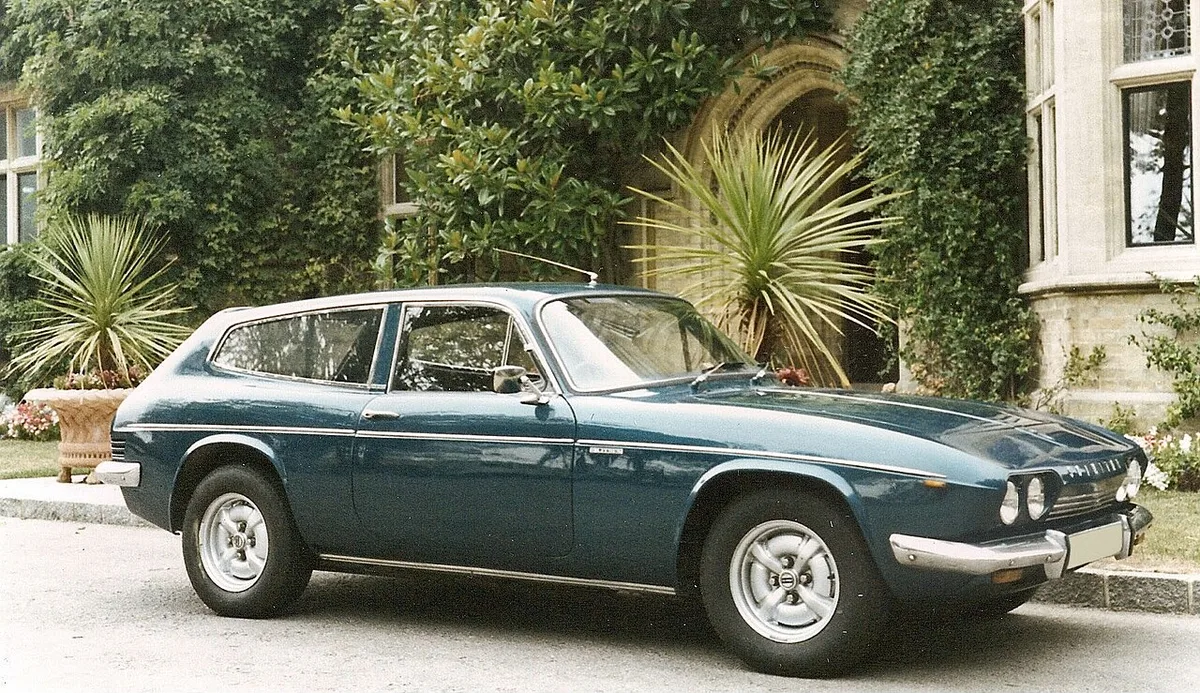
Reliant took the idea to the mainstream. Autocar says Reliant launched the Scimitar GTE in 1968 with design help from Tom Karen of Ogle, giving it four individual seats, a large cargo area, and a 3.0-liter V6. Hagerty UK calls it the first mass-produced sports estate. Princess Anne was an early and devoted owner, Autocar notes.
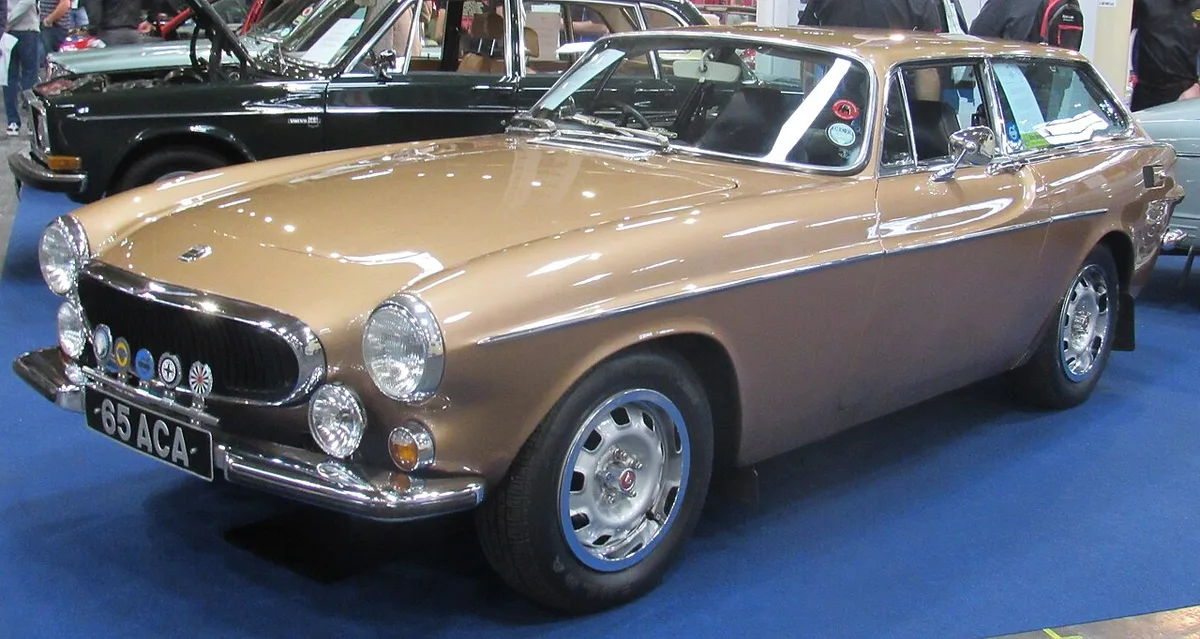
Volvo did the same with the P1800. Volvo says the 1800ES arrived in the fall of 1971, kept the coupe's two doors, and added a longer, flatter roof with a frameless glass tailgate. Volvo brought that tailgate back on the C30 in 2006. RM Sotheby's says in-house designer Jan Wilsgaard drew the ES after prototypes from Sergio Coggiola and Pietro Frua were judged too futuristic.
The run was short. Volvo built 8,077 of them and stopped in 1973, because redesigning the car for tougher safety rules, mainly in the US, would have cost too much.
Does a shooting brake need two doors?
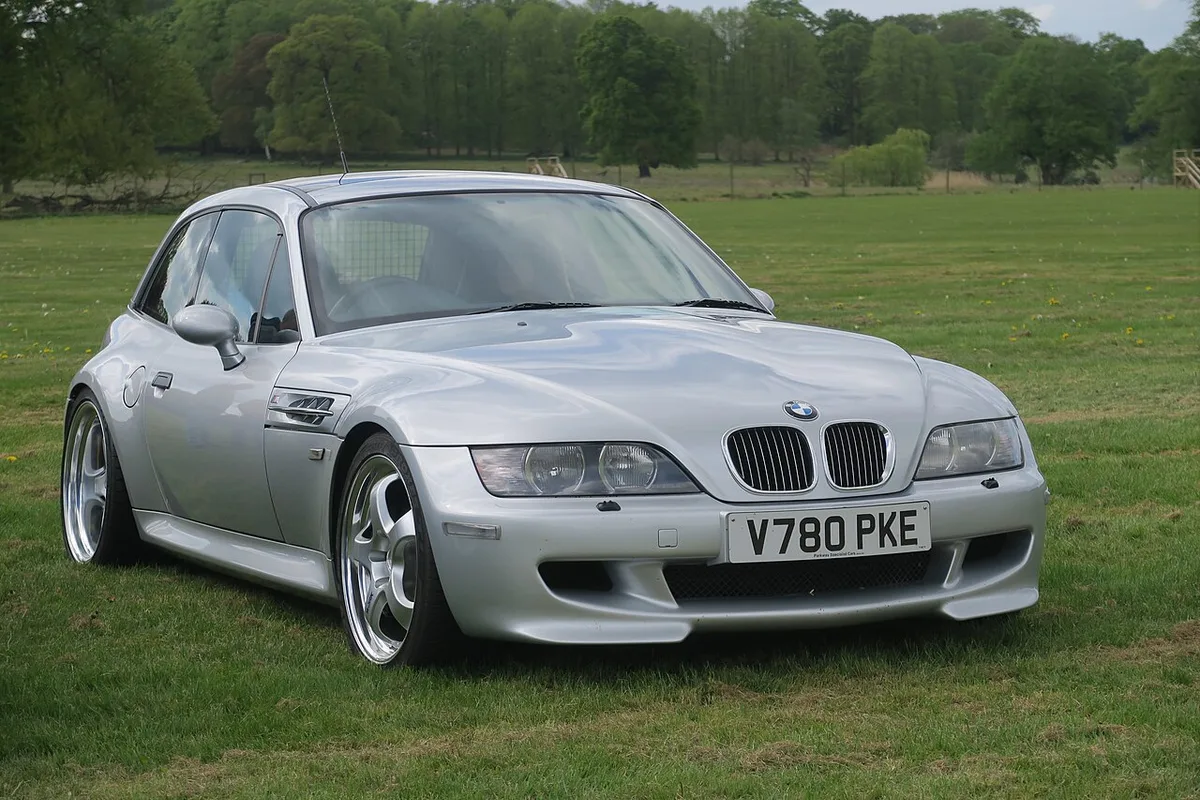
Even two doors don't settle it. BMW's M Coupe, built from the Z3 roadster, is often listed as a shooting brake, and Autocar says a small group inside BMW developed it in secret. Germans nicknamed it the "turnschuh," or running shoe, and Americans call it the "clown shoe," says Hagerty writer Rob Siegel, who owns one. Siegel still doubts the label, writing that its vertical hatch ends up "invoking a shooting brake without actually being one." Hagerty counts 2,180 S52-engined cars and 678 S54-engined cars built for the US market.
Ferrari gave the shape a V12 with the FF in 2011. Autocar calls its body shooting brake styling and lists 651 bhp, four-wheel drive, seats for four, and 450 liters of luggage space, at an original British list price of £226,000. Top Gear calls its 2016 rework, the GTC4Lusso, a "genuine shooting brake" with a coupe front and an estate rear. Its 6.3-liter V12 makes 681 bhp.
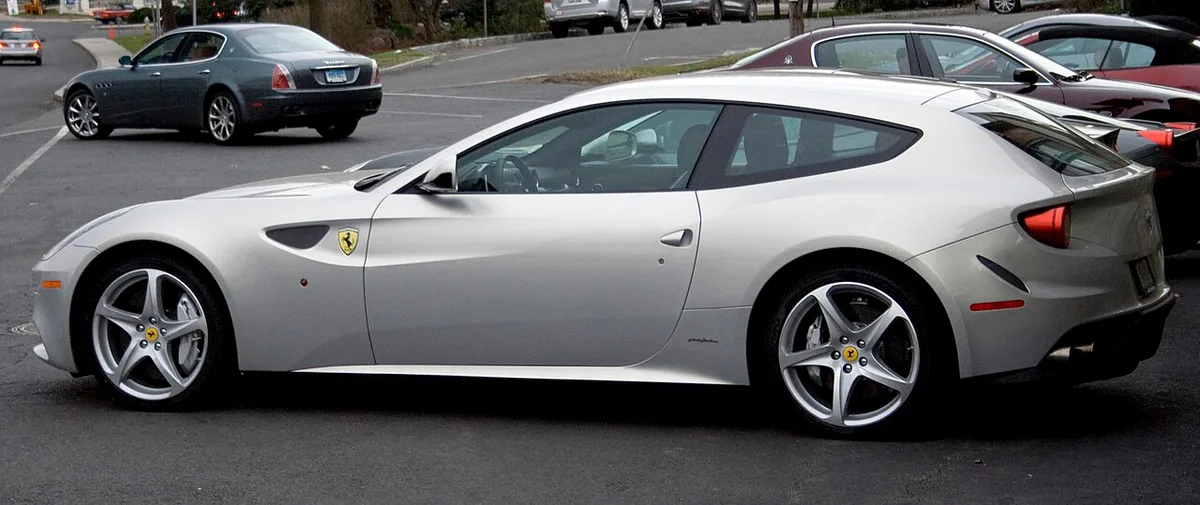
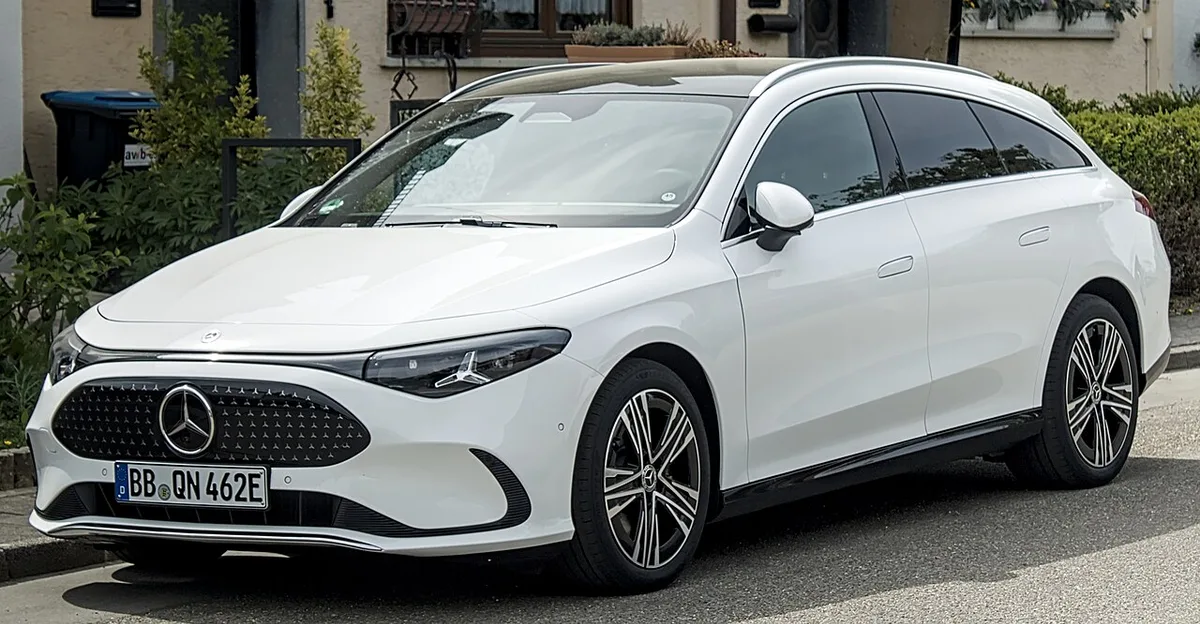
Mercedes stretched the name furthest. Top Gear reported in November 2010 that Mercedes would build the CLS Shooting Brake concept first shown in Beijing, and called it a five-door coupe-estate. At the June 2012 reveal, Mercedes described it as a "sports car with five seats and a tailgate." Mercedes now calls the formula, a four-door coupe with more cargo room and a large tailgate, its own "conceptual invention," and it added the first CLA Shooting Brake in 2015.
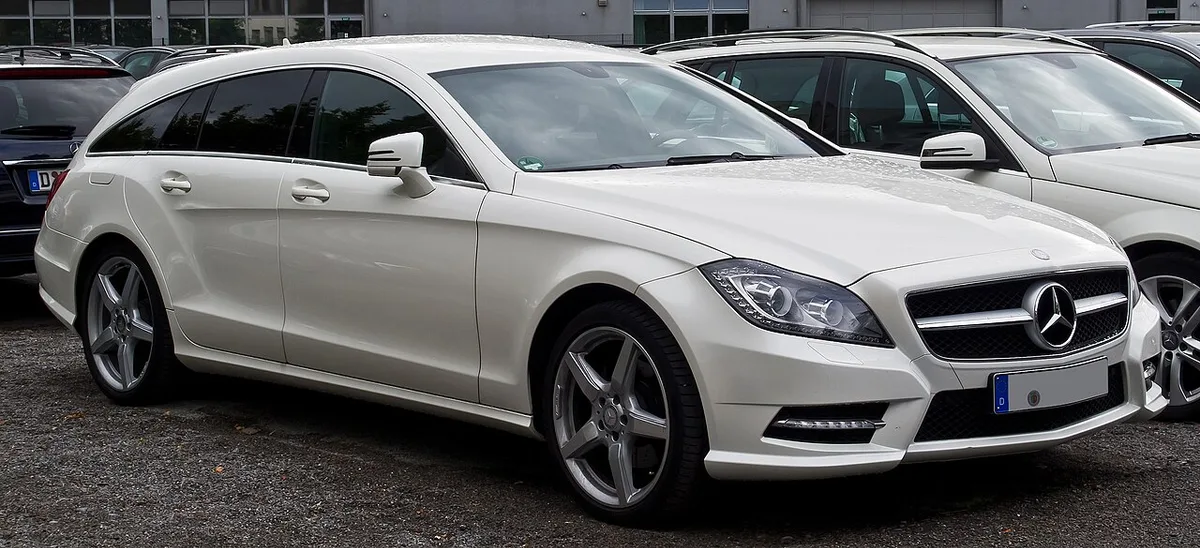
The newest CLA Shooting Brake, revealed in Copenhagen on July 15, 2025, is electric. It matches the CLA sedan up to the B-pillar, then runs a longer roof to the tail. The cargo area holds 455 to 1,290 liters, plus a 101-liter front trunk, and European sales were set to start in March 2026. The same press release calls it "the first electric Mercedes-Benz available as an estate," so Mercedes uses both words for one car.
Autocar says much of the difference between an estate and a shooting brake has been lost to time and marketing, though it argues a shooting brake still needs some sass in its styling.
Pick your favorite long roof, from the DB5 to the CLA, and rate it on WhipJury.
Sources:
The term's dates, the horse-drawn wagonette, and the old British meaning: Collins English Dictionary
Shooting brake as British for station wagon: Merriam-Webster
The brake as a 19th-century carriage for hunting parties: Top Gear
The two-door definition: Hagerty
Brown's DB5, the Radford conversion, production split, and the 2026 sale: RM Sotheby's
Brown's factory car, Radford's role, and the Scimitar GTE as the first mass-produced sports estate: Hagerty UK
The Scimitar GTE, the 1800ES count, the M Coupe's secret development, the FF, and the estate versus shooting brake view: Autocar
The 1800ES launch, doors, tailgate, C30 link, and end of production: Volvo Cars
The 1800ES designer and prototypes: RM Sotheby's
The M Coupe nicknames, the shooting brake doubts, and US production: Hagerty
The GTC4Lusso: Top Gear
The CLS Shooting Brake production decision: Top Gear
The CLS Shooting Brake reveal: Top Gear
The conceptual invention claim, the 2015 CLA, and the 2025 CLA Shooting Brake: Mercedes-Benz
Photos via Wikimedia Commons: Alexander Migl, MrWalkr, Vauxford, and Charles01 (CC BY-SA 4.0); Ray Crosthwaite and Mr.choppers (CC BY-SA 3.0); M 93 (CC BY-SA 3.0 DE)
Frequently Asked Questions

Cam Walsh has been obsessing over cars since before he could drive one. Based out of Atlanta, Cam covers automotive design, car culture, and the eternal debate over which whips actually look the part.