What is Coachbuilder?
A company or craftsman that builds custom bodies for vehicles. The trade began with horse-drawn carriages and peaked when luxury cars were sold as a bare chassis for a coachbuilder to finish.
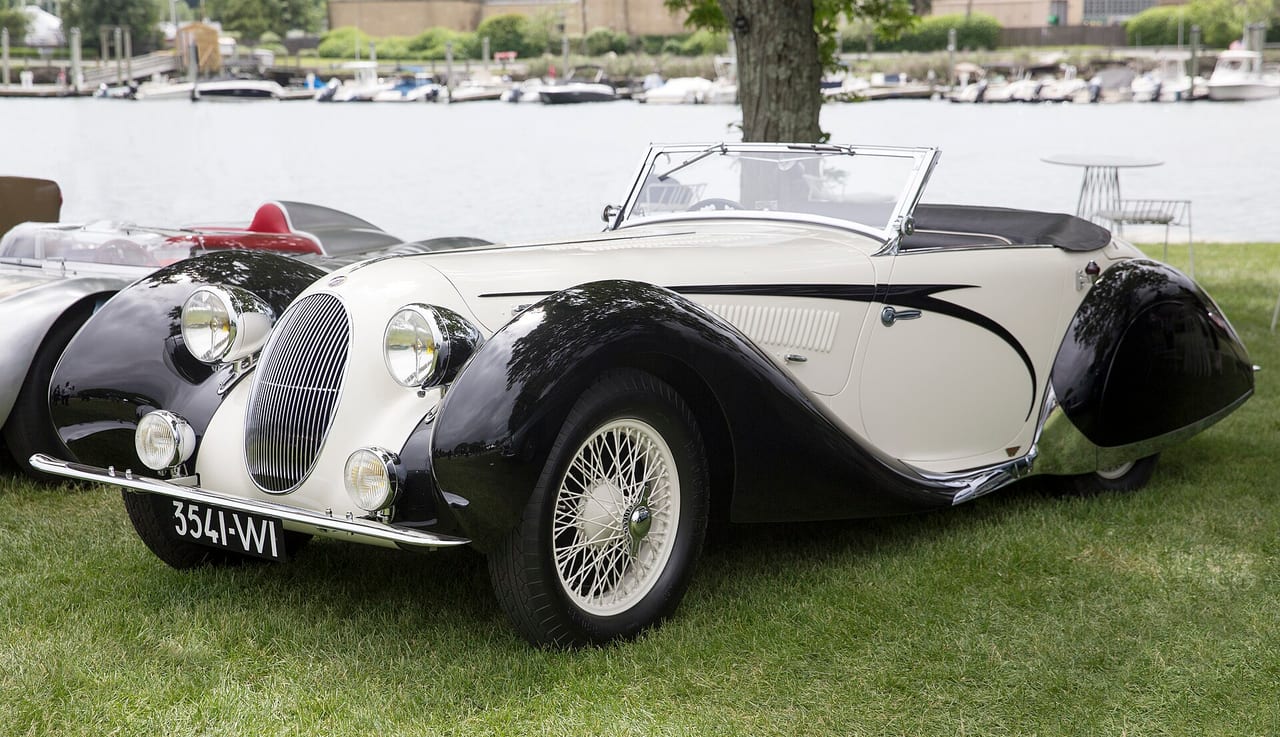
A coachbuilder builds the bodies of passenger vehicles, a trade that started with horse-drawn carriages and moved to cars as they replaced them. The word "coach" comes from Kocs, a town in Hungary, and "coachbuilder" first appeared in 1794. Britain's Barker was founded in 1710, and Brewster, formed in 1810, is called the oldest in the US. The British call the result a "coachbuilt body" and Americans a "custom body," while the Italian word is carrozzeria and the French is carrosserie. A French coachbuilder called itself a carrossier, and Figoni et Falaschi put that word on the body plates it fixed to its cars.
In the early days of the car, a luxury maker usually sold a rolling chassis with the engine, brakes, suspension, steering, and radiator, and the buyer or a dealer had a coachbuilder make the body, often from hand-shaped aluminum over a wooden frame. Wikipedia says every luxury car before World War II was available as a chassis only, including every Rolls-Royce. The Duesenberg Model J was sold as a chassis for $8,500, and its bodies came from Murphy, Rollston, Derham, LeBaron, Walker, and others. Famous names from that era include Figoni et Falaschi, one of whose teardrop Talbot-Lago coupes sold for $4,620,000 in 2010, Touring of Milan, which patented its light superleggera construction in 1936, plus Pininfarina, Zagato, Ghia, Mulliner, and Park Ward.
Coachbuilding faded once carmakers switched to unibody and monocoque construction, where the body is the structure. That made cars lighter, stiffer, and cheaper to build, but it left little room for outside body makers, and stamping dies are expensive, with a single door die costing as much as $40,000. Rolls-Royce's first unibody car, the Silver Shadow, arrived in 1965. Many coachbuilders closed or became design studios. The idea survives at the top of the market, though. Rolls-Royce has a Coachbuild division that made three Boat Tails, each with 1,813 bespoke parts, Ferrari has run a Special Projects program for one-off cars since 2008, and Bentley's personal commissioning arm still carries the Mulliner name.
Related terms
Frequently asked questions
Coachbuilder on the blog
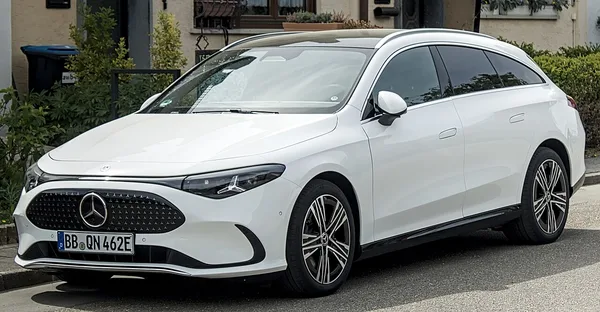
A shooting brake pairs a coupe's sporty front with a wagon's long roof. The name comes from carriages adapted for hunting parties. Here's how the Aston Martin DB5, Volvo 1800ES, and BMW M Coupe set the look, and why Mercedes' four-door versions split purists.
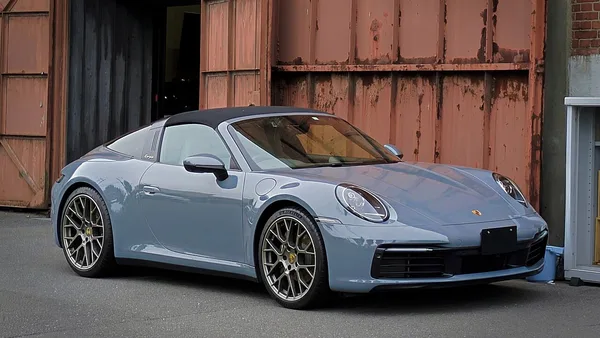
A targa top is a roof panel over the front seats that comes off while a fixed roll bar and the rear window stay put. Porsche launched it on the 911 in 1965 to answer US safety worries, named it after a Sicilian race, and still holds the trademark.
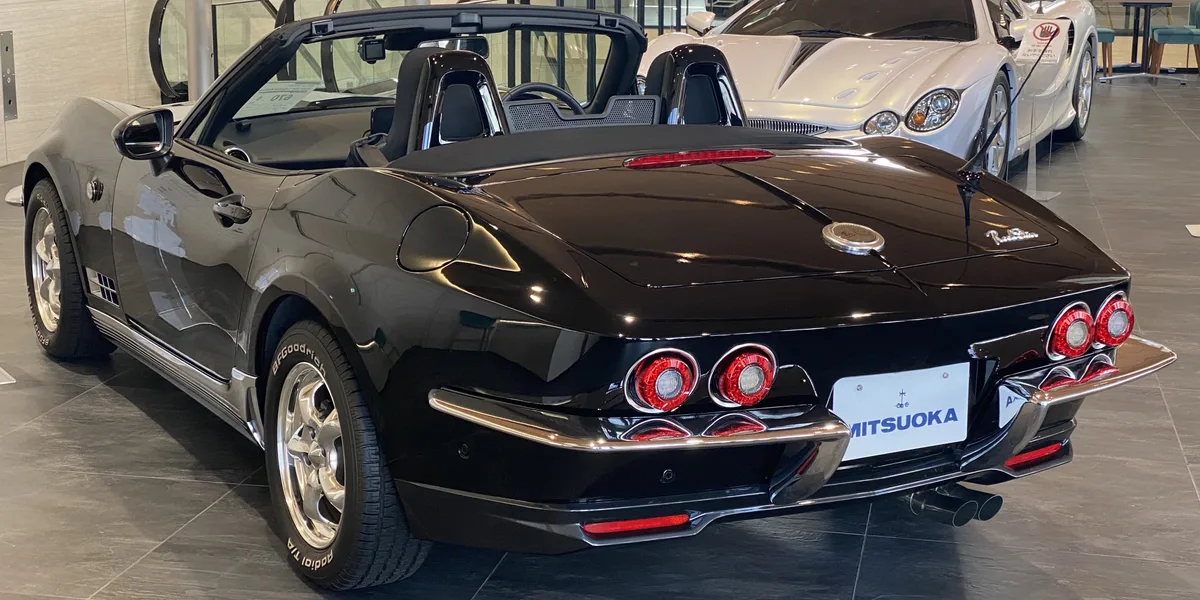
Mitsuoka's new LA1 puts 1950s C1 Corvette bodywork on a current Mazda MX-5, with quad headlights, a chrome bumper, side gills, and taillights moved to the quarter panels. It debuts November 26 as a limited Japanese-market car. The same designer did the 2018 Rock Star, which copied the C2 instead.