Porsche built its first SUV because its boss wanted the company to be more than a sports car maker. Wendelin Wiedeking, CEO at the time, pushed for the Cayenne, which was developed as a joint project with Volkswagen and Audi alongside the VW Touareg. It arrived in 2002 along with a new factory in Leipzig, Germany. Two decades later the SUVs are most of what Porsche builds. Of the 302,750 cars Porsche built in 2024, 93,864 were Cayennes and 84,330 were Macans, about 59% of the total, and the two have traded places with each other as Porsche's top seller. As of March 2025, the US base price was $63,100 for a Macan and $79,200 for a Cayenne.
The Cayenne brought a string of firsts. It was Porsche's first V8 since the 928 ended in 1995, its first off-road vehicle since its farm tractors of the 1950s, and its first production car with four doors. It got a mixed reception, but its performance and handling won people over. It shares its platform, body structure, doors, and electronics with the Touareg and Audi Q7, and to a lesser extent with the Lamborghini Urus and Bentley Bentayga. Porsche built 276,652 first-generation Cayennes, including the first modern Porsche to wear a GTS badge.
The current third-generation gas and plug-in Cayenne was revealed on August 29, 2017, and is built in Bratislava, Slovakia, where Porsche moved final assembly that year. Its 2023 refresh for the 2024 model year gave the base 3.0-liter V6 349 hp and put a V8 back in the Cayenne S, now with 469 hp. Every engine is turbocharged and there's no diesel. The plug-in E-Hybrid makes 464 hp, the S E-Hybrid 512 hp, and the Turbo E-Hybrid 729 hp, while the Turbo GT, with 650 hp, lapped the Nürburgring Nordschleife in 7:38.925 in June 2021. There's also a Cayenne Coupe, launched in 2019, with a roof 0.8 inches lower, a standard fixed glass roof, and an optional carbon one. Porsche delivered 102,889 Cayennes in 2024, up 18%.
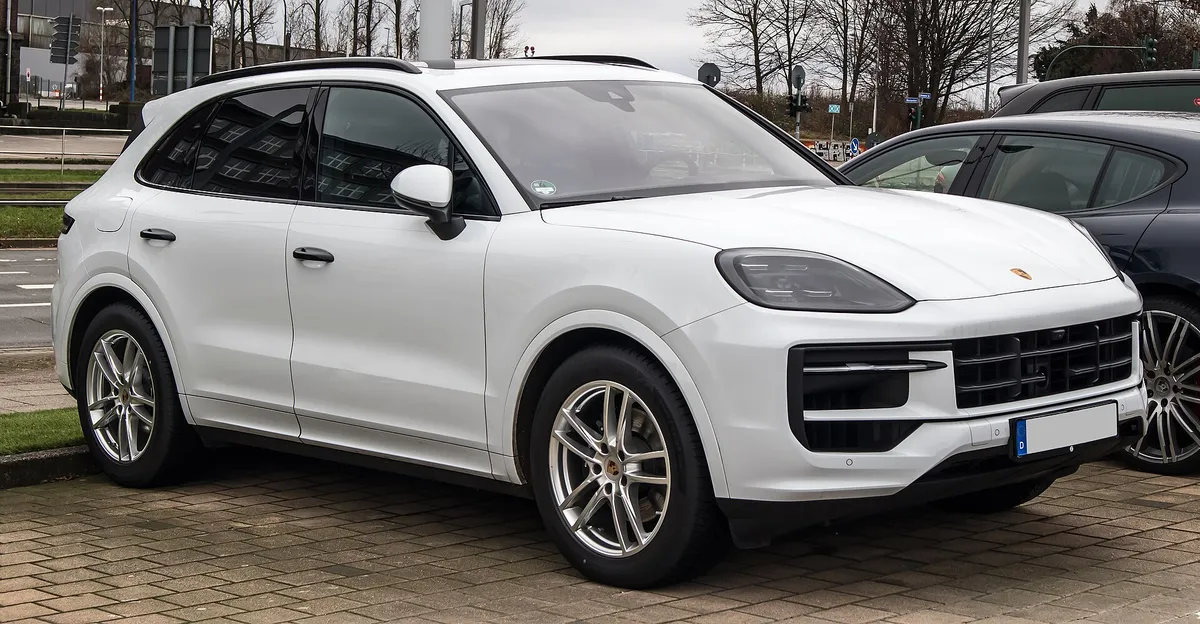
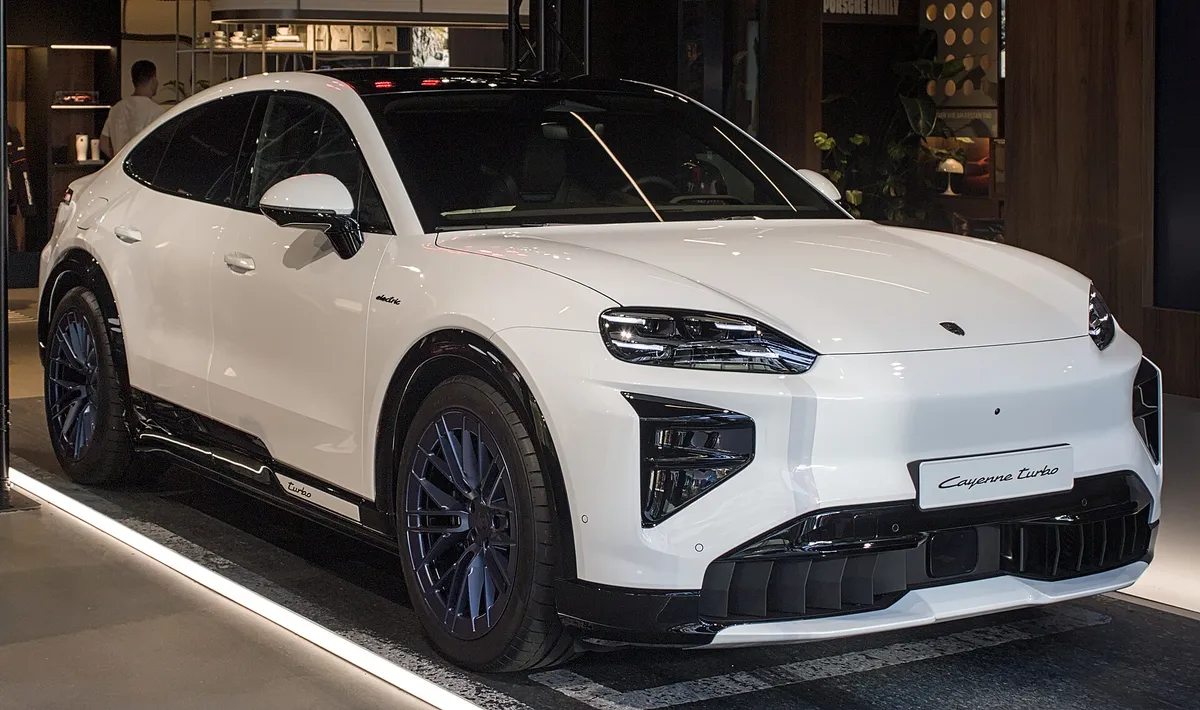
The fourth-generation Cayenne, unveiled on November 19, 2025, went into production in February 2026 as the electric-only Cayenne Electric, built in Bratislava next to the gas and hybrid versions, which carry on. It has a 113 kWh battery (108 kWh usable) that charges at up to 400 kW, going from 10% to 80% in as little as 16 minutes. The dual-motor Turbo makes more power than any other regular-production Porsche: more than 804 hp normally, over 938 hp with a 10-second boost, and 1,072 hp in launch control. A Cayenne Coupe Electric followed on April 24, 2026.
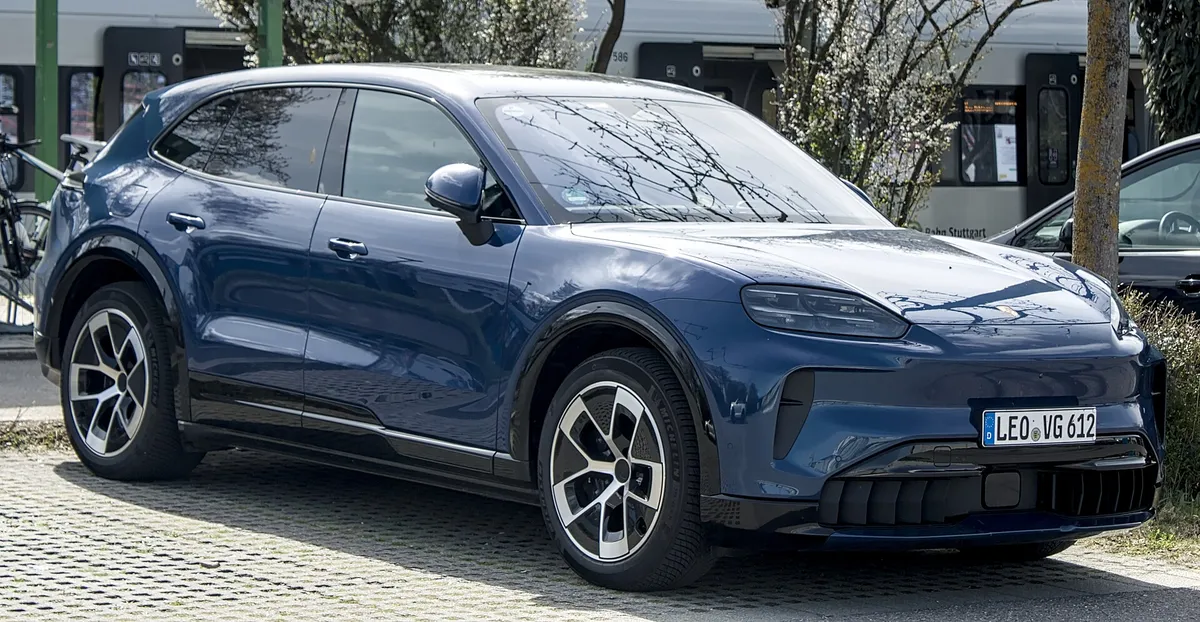
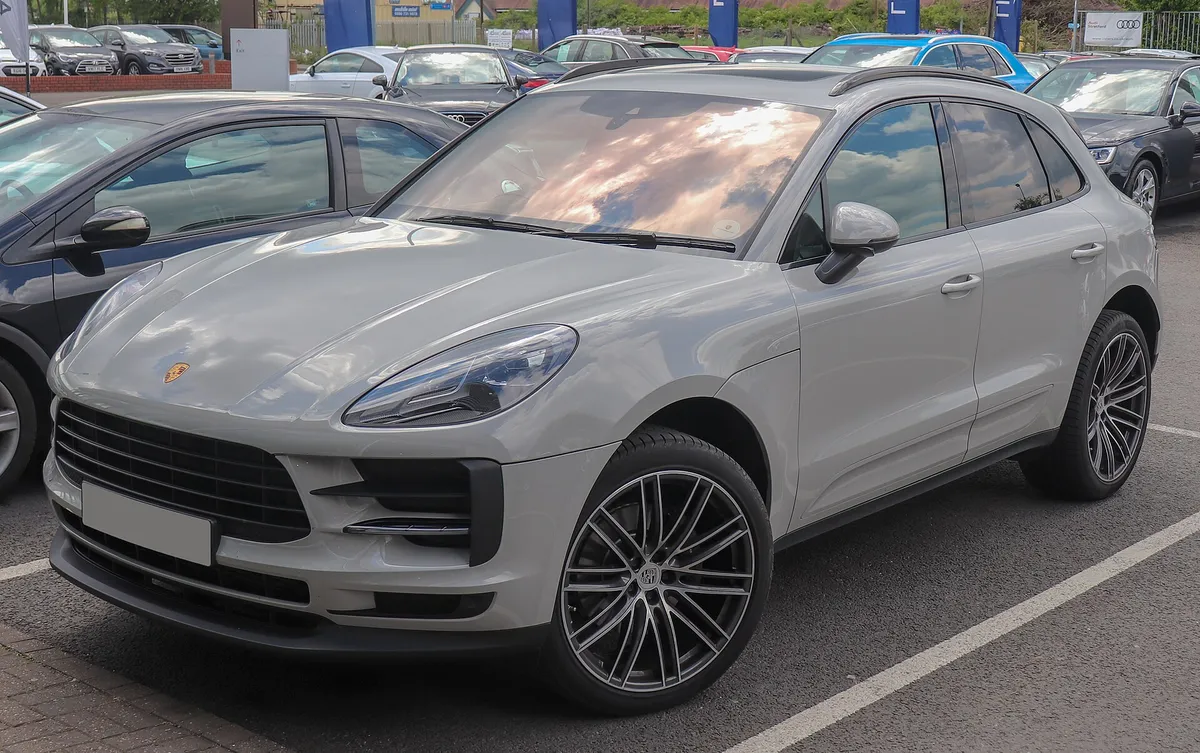
The Macan is the smaller one. Its code name was Cajun, short for Cayenne Junior, and the Macan name, chosen in 2012, comes from the Indonesian word for tiger. It debuted at the 2013 Los Angeles and Tokyo auto shows and reached US dealers in spring 2014 as a 2015 model. Porsche built it on the platform of the first-generation Audi Q5 and set it up to be sportier than the Cayenne, with a quicker-shifting seven-speed dual-clutch gearbox instead of the Cayenne's eight-speed automatic. At launch, the Macan S made 335 hp and the Turbo 395 hp, and a later four-cylinder Macan was the first four-cylinder Porsche since the 968. By July 2018 Porsche had delivered more than 350,000, over 100,000 of them in China, and the Macan made Car and Driver's 10Best list for 2017 through 2021 and again for 2023 through 2026.
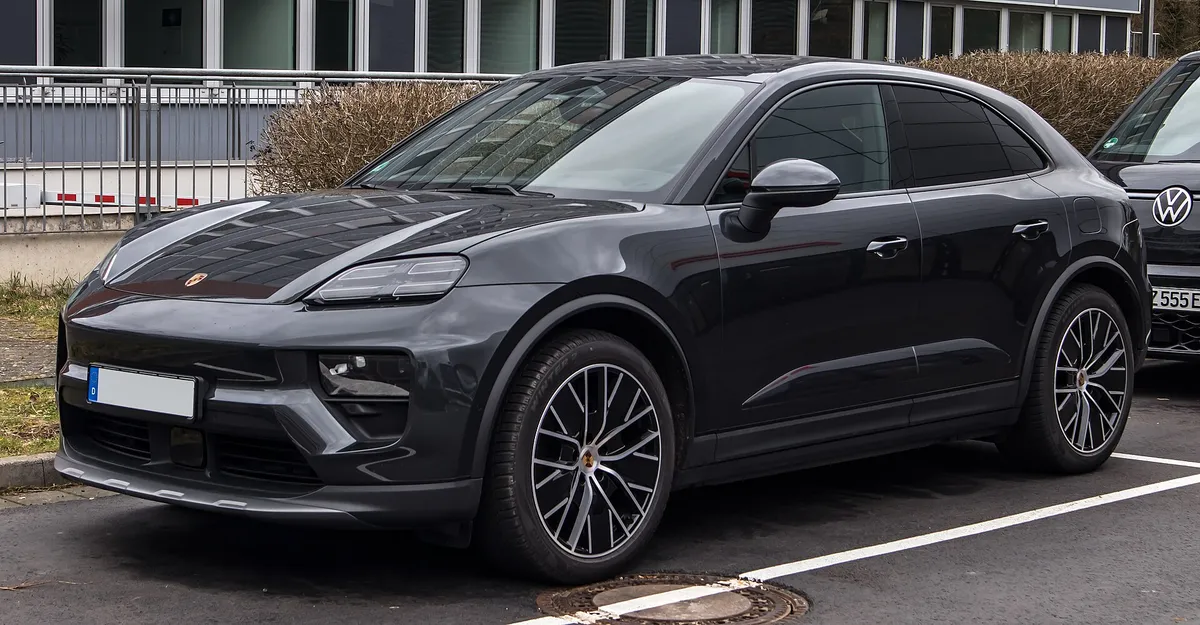
The second-generation Macan, revealed on January 25, 2024, is electric only. Production started in Leipzig that May, alongside the gas Macan, and Porsche has sold the two side by side. It rides on the same electric platform as the Audi Q6 e-tron and the Cayenne Electric, with a 95 kWh battery and charging at up to 270 kW. The base Macan Electric has one motor at the rear, while the Macan Turbo Electric makes up to 630 hp and reaches 62 mph in 3.3 seconds. MotorWeek named it Best EV in its 2025 Drivers' Choice Awards.
Got a Porsche SUV that deserves a crowd? Put it up on WhipJury.
Sources:
Why Porsche built the Cayenne and its link to the Touareg: Wikipedia: Volkswagen Touareg
Leipzig, 2024 production, US base prices, and Bratislava: Wikipedia: Porsche
The Cayenne's firsts, generations, engines, Coupe, lap time, and Cayenne Electric: Wikipedia: Porsche Cayenne
The Macan's name, debut, platform, engines, sales, awards, and electric version: Wikipedia: Porsche Macan
The shared electric platform: Wikipedia: Volkswagen Group Premium Platform Electric
Photos via Wikimedia Commons: Alexander Migl and Vauxford (CC BY-SA 4.0), © M 93 (CC BY-SA 3.0 de)
Frequently Asked Questions

Cam Walsh has been obsessing over cars since before he could drive one. Based out of Atlanta, Cam covers automotive design, car culture, and the eternal debate over which whips actually look the part.