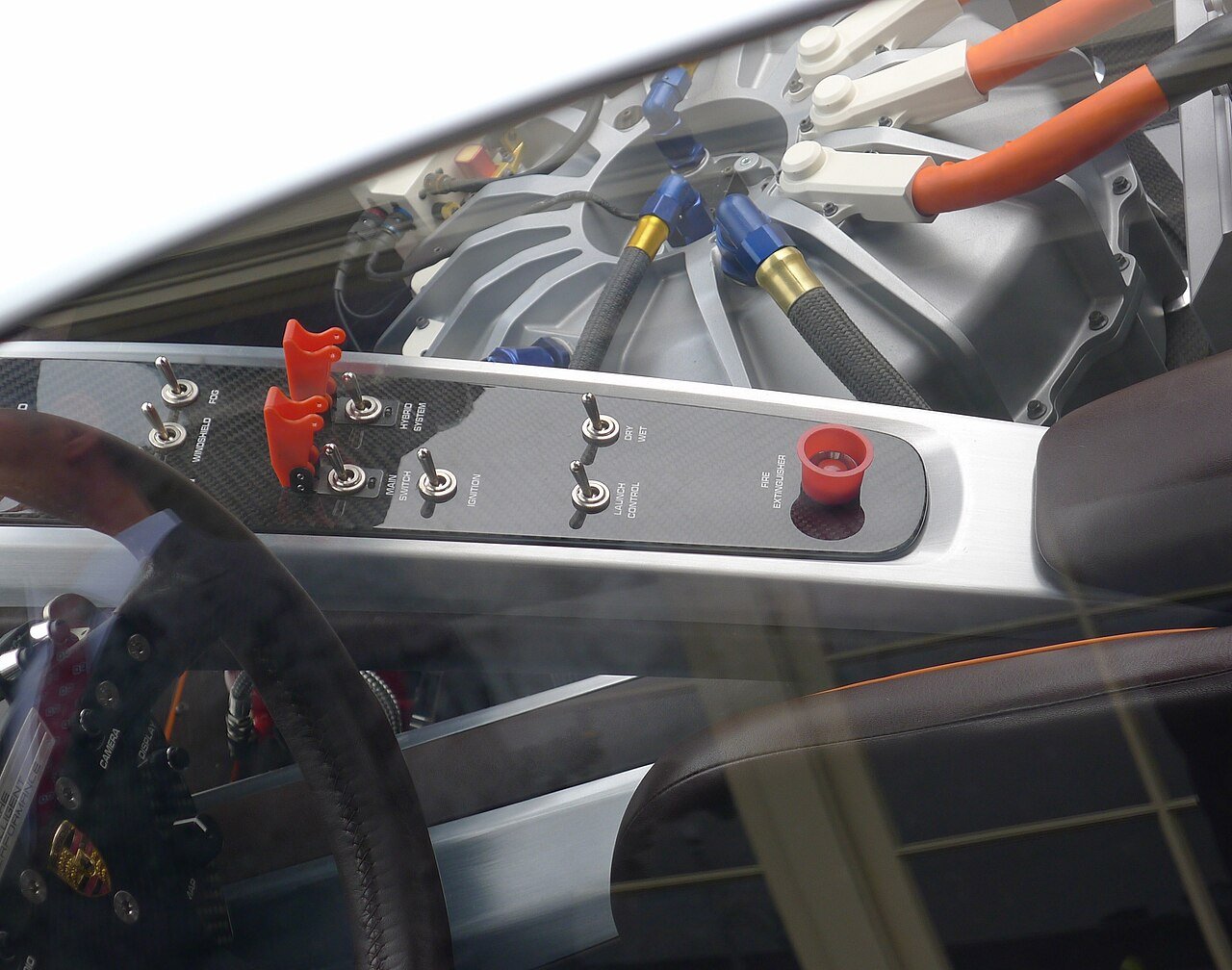
What is Launch control?
An electronic system that holds engine RPM at an optimal level for the fastest possible standing start, then releases for maximum acceleration.
Launch control is an electronic system that manages engine RPM and clutch engagement (in manual transmissions) or torque delivery (in automatic transmissions) for the fastest possible standing start. Modern launch control systems hold the engine at a calibrated RPM (typically 4,000-5,000 in turbocharged cars, lower in naturally aspirated) until the brake is released, then deliver maximum torque to the wheels with optimal traction control.
The benefit varies by car and use. AWD performance cars (Nissan GT-R, Audi RS3, Lamborghini Huracan) benefit most because launch control optimizes torque distribution between front and rear axles. Turbocharged cars benefit because launch control holds RPM at the boost threshold, eliminating turbo lag at launch. Manual transmission cars benefit but with more driver involvement still required.
Launch control is increasingly common in performance cars as standard or selectable equipment. The Tesla Model S Plaid, Lamborghini Aventador, Porsche 911 Turbo, BMW M cars, and Mercedes-AMG cars all have launch control. Some manufacturers limit launch control activation count (the launch control system may only be available 1-3 times per drive cycle to protect the drivetrain from repeated abuse).