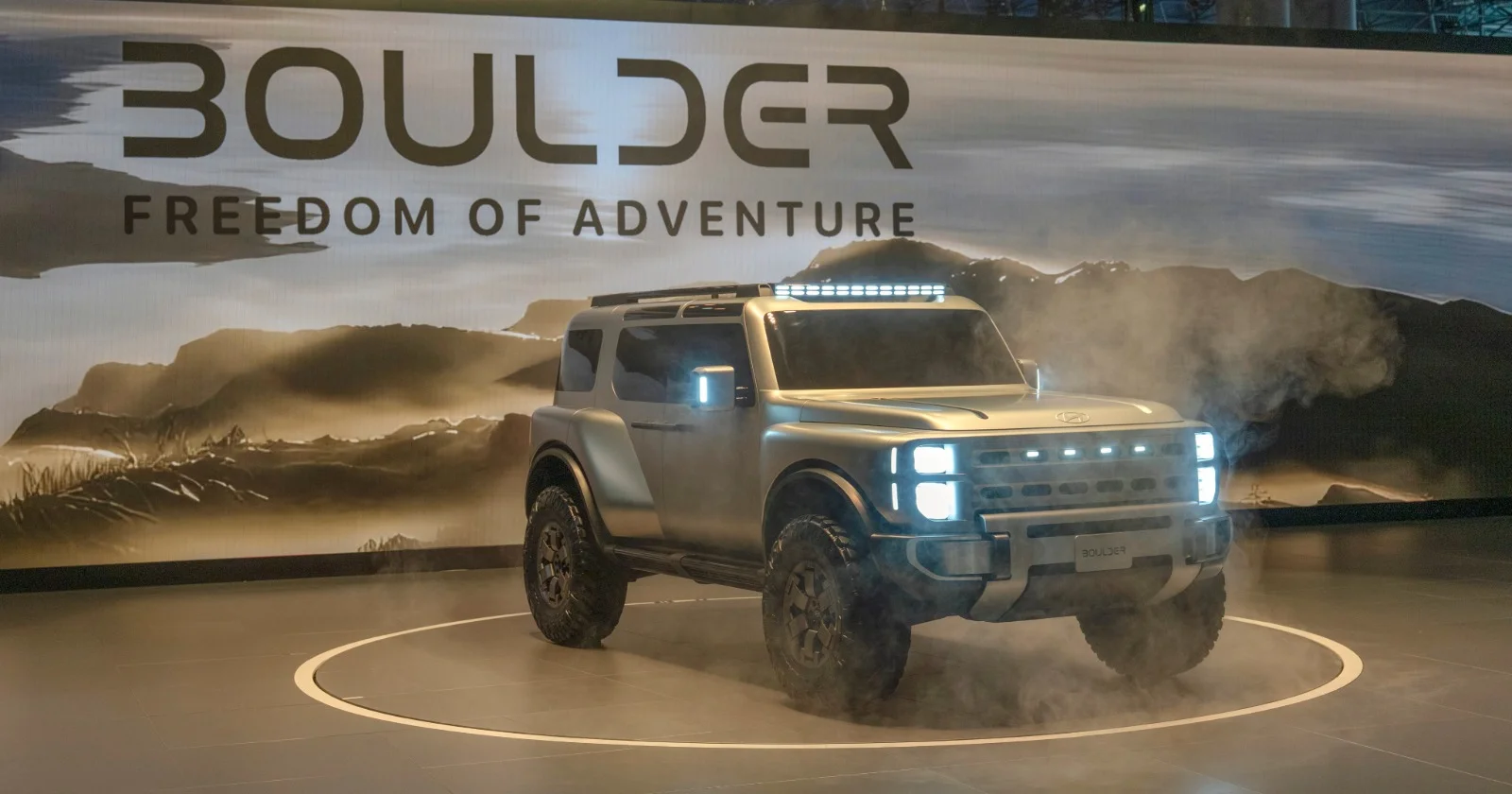
Hyundai plans to move into body-on-frame trucks and rugged SUVs, build them in the United States, and export them to markets outside North America, chief executive Jose Munoz said at the company's CEO Investor Day in Seoul on August 26.
Munoz called the export plan a significant driver of a growth target that runs through 2030. Hyundai is aiming for 5.55 million vehicles sold globally by then, which the company puts at roughly 6 percent of the world market, alongside an operating profit margin above 9 percent.
Getting there means building more vehicles in more places. Hyundai said it will add about 1.27 million units of annual capacity by 2030, with 500,000 of that in North America, followed by 320,000 in India, 250,000 at assembly sites and 200,000 in Korea.
The body-on-frame program covers a midsize pickup and light commercial vehicles, segments Hyundai described as white spaces that account for close to 29 percent of automotive sales. It is a departure for a company that built its reputation on unibody crossovers and passenger cars, and it extends past the Boulder and Crater concepts the automaker has already shown publicly.
Hyundai also intends to lean harder on its American plants generally. The company said it will raise local parts sourcing in North America to 80 percent, up from 60 percent, and 58 of the more than 100 model launches and refreshes it has planned by 2030 are earmarked for the region. It expects to offer more than 10 hybrid models by 2030 and wants hybrids to make up half its sales mix. Other products in the plan include a Santa Fe with an extended-range electric powertrain and a Genesis GV80 hybrid.
The shift is that Hyundai is now treating its U.S. factories as a source of global supply rather than production aimed only at American buyers.
Other automakers are moving the same direction. Toyota and Honda are weighing additional American capacity, driven by growth plans and capacity limits rather than tariffs alone. Jaguar Land Rover is pursuing U.S. production with Stellantis to avoid tariffs and currency penalties, chief financial officer Richard Molyneux said, noting the company imports all of its North American models. Volkswagen is reworking its U.S. strategy around a planned pickup, with Ford seen as a possible partner given an existing agreement between the two.
That leaves Hyundai entering a segment defined by high volumes, thin margins and entrenched nameplates, and betting it can build trucks in the United States at a cost and quality that survive the trip to other markets.
Hyundai did not say which models would be exported, which markets would receive them, or when shipments would start. Separately, the automaker reached a wage agreement with its union to end a strike, and agreed to discuss artificial intelligence, robotics and job security as it scales up production.
Sources:
Hyundai weighing exports of U.S.-built trucks: AutoGuide
Sales target, capacity, localization and launch figures: Hyundai Motor Group
Munoz on U.S. localization and the growth strategy: Automotive News
Frequently Asked Questions

Jeffrey Wiley has spent more time than he'd like to admit thinking about what makes a car look right. He writes about automotive design, car culture, and the opinions people have strong feelings about. He lives in north Georgia.