The 24 Hours of Le Mans is an endurance race held every June near the town of Le Mans, in northwest France. The rules are almost stupidly simple: three drivers share one car, take turns at the wheel, and whoever covers the most distance in 24 straight hours wins. That is the entire premise. Everything that makes the race famous comes from how brutally hard it is to do that one thing well.
It is the oldest event of its kind still running, first held in 1923, and it belongs in a different category from a normal Grand Prix. A Formula 1 race is a sprint. Le Mans is a survival test that happens to be run at racing speed for a full day and a full night.
The Basic Format
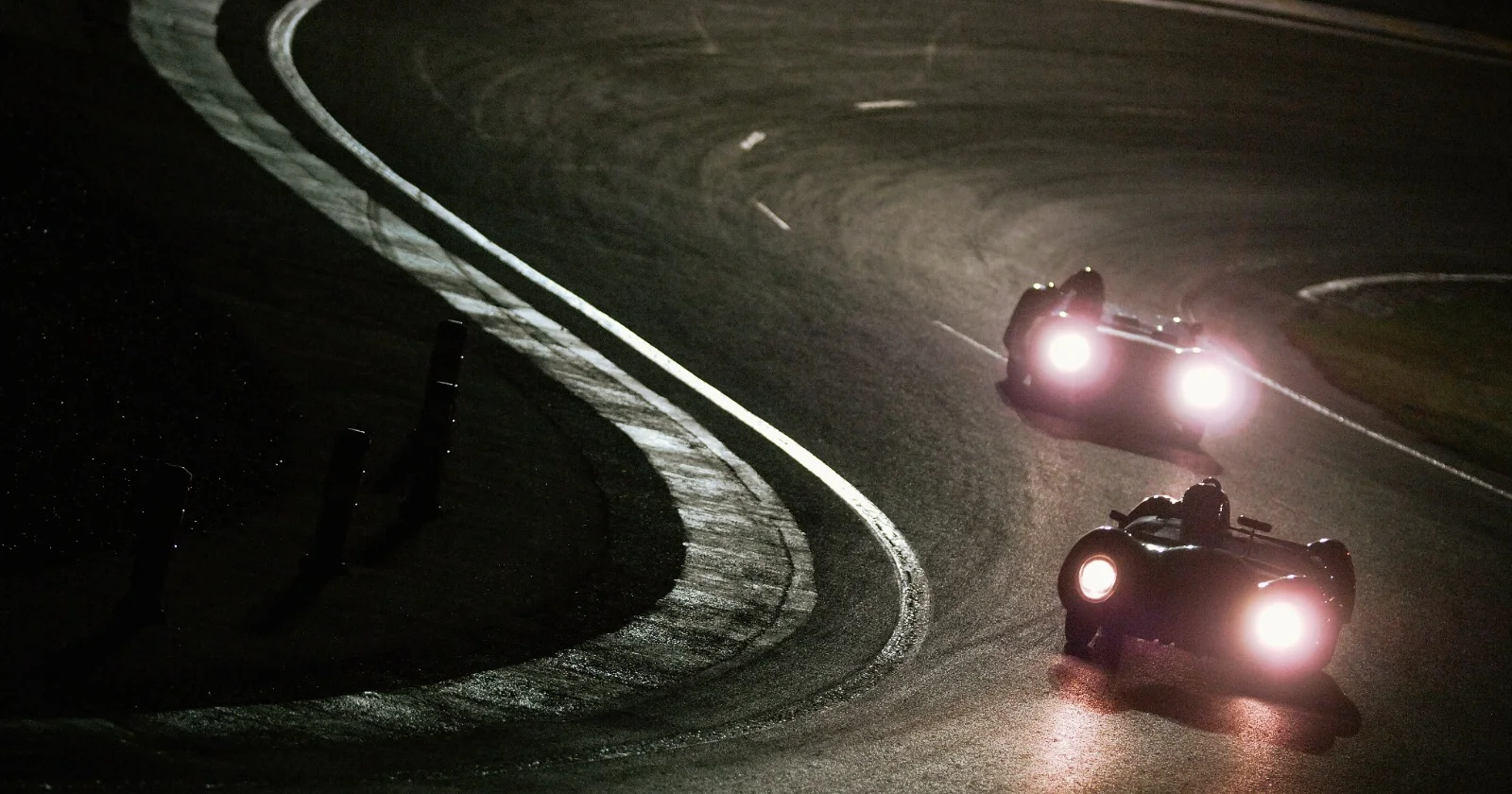
The race runs on the Circuit de la Sarthe, a 13.626-kilometer (8.5-mile) lap that mixes a permanent racetrack with stretches of public road closed off for the event. Cars run through the afternoon, all through the night, and into the next day, which means teams deal with heat, darkness, fatigue, dew, and whatever the French weather decides to do.
Several classes race at the same time on the same track. The fastest are the prototypes built specifically for this kind of racing, and they share the circuit with slower production-based GT cars. A big part of the skill is the quick cars threading through traffic for 24 hours without throwing it all away on a backmarker at 200 mph in the dark.
Why It Is About Distance, Not Lap Time
Nobody wins Le Mans with one heroic lap. You win it by being fast and not breaking, for a thousand miles longer than everyone else. The winning car typically covers more than 5,000 kilometers over the 24 hours. The all-time distance record is 5,410 km, set by an Audi diesel prototype in 2010, which works out to just under 400 laps of that enormous circuit.
This is why endurance racing rewards different engineering than sprint racing. Fuel efficiency, brake wear, tire life, and the time a car spends sitting in the pits all matter as much as outright pace. A team can lead for twenty hours and lose to a gearbox that lets go at 4 a.m.
Why a Win Means So Much
Le Mans is one of the few races where winning actually sells cars. Surviving 24 hours flat out is the most public proof a manufacturer can offer that its engineering works, and brands have spent enormous money chasing that proof for a century. Porsche has won it more than anyone, 19 times, and built much of its road-car reputation on the back of those results.
The most famous chapter is probably Ford going to Le Mans in the 1960s specifically to beat Ferrari, which it finally did with the GT40 in 1966. That grudge match is how most people now know the race at all. Le Mans is also one leg of the unofficial Triple Crown of Motorsport, alongside the Monaco Grand Prix and the Indianapolis 500, a trio almost no driver has ever completed.
The Race Moves in Eras
Part of what makes Le Mans interesting is that the cars keep changing shape. The early decades belonged to elegant front-engine machines. Then came the wild Group C cars of the 1980s, the Audi diesel domination of the 2000s, a long Toyota run, and most recently a new top class that pulled the big manufacturers flooding back. Ferrari returned to the top tier and won three years straight, in 2023, 2024, and 2025, the first of those on the race's 100th anniversary.
So when an older car person goes quiet about Le Mans, it is usually because one specific era meant something to them. The race is old enough that everyone has their own version of it.
Le Mans in the Faceoff Arena
Le Mans winners and the road cars they inspired carry weight that is hard to argue with in a faceoff. A car with real endurance-racing pedigree carries a kind of credibility that styling alone cannot fake, and voters feel that even when they cannot name the exact race it won. A GT40 or a Le Mans-bred Porsche brings decades of that into every comparison.
Put a race-bred car up against something that only looks the part on WhipJury and watch how fast the crowd sorts out which one actually earned it.
Sources:
Circuit length, distance record, and 2025 result: Wikipedia
2025 race facts and figures: FIA WEC
Ferrari's 2025 win and recent results: Michelin Motorsport
Frequently Asked Questions

Cam Walsh has been obsessing over cars since before he could drive one. Based out of Atlanta, Cam covers automotive design, car culture, and the eternal debate over which whips actually look the part.