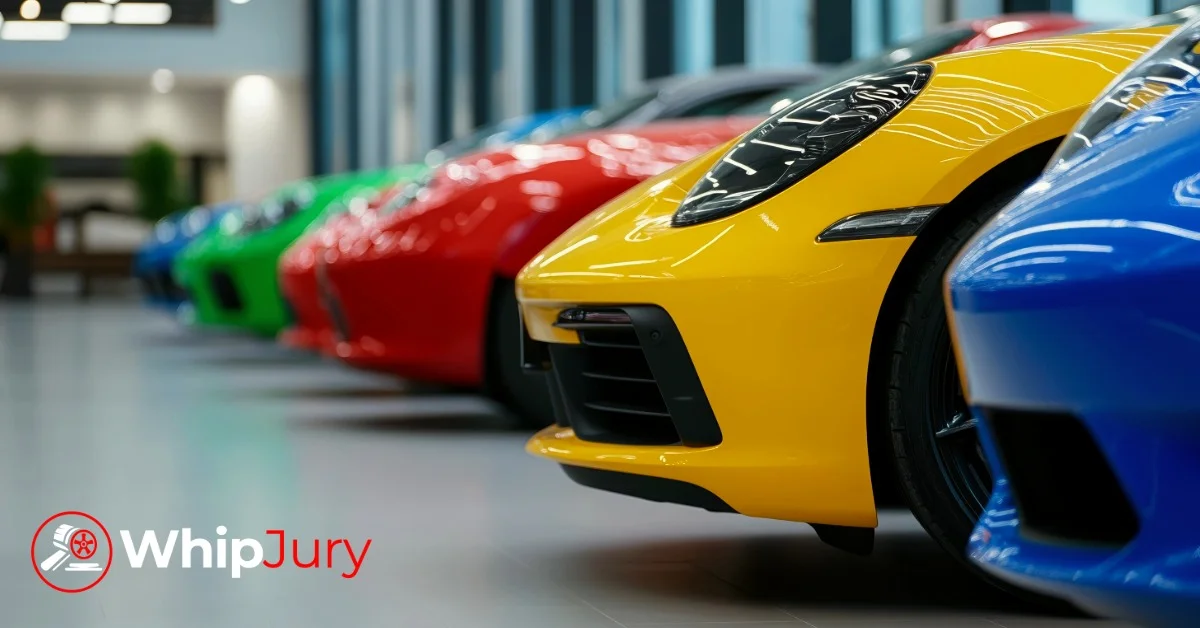
Car color is not just a design decision. It is a cultural document. The colors that dominated each decade tell you more about what was happening in the world than almost anything else on four wheels. Paint responds to war, prosperity, economic anxiety, pop culture, and technology in ways that body styles and engines do not. Here is the full story, decade by decade, with a verdict on which era actually got it right.
1940s: Coming Out of the Dark
The early 1940s were grim by necessity. Manufacturing resources went to the war effort and the cars that did get built wore somber grays, blacks, and muted greens that matched the mood of the decade. Color was not a priority when the world was rationing everything else.
Post-war, something shifted fast. By the late 1940s manufacturers were experimenting with color again as a signal of recovery and optimism. The palette was still conservative by later standards but the intent was clear. People wanted brightness back.
Best color of the decade: Two-tone black and cream. Serious enough for the times, elegant enough to age well.
1950s: The Greatest Decade for Car Color. Period.
No decade before or since has produced automotive color palettes this good and this committed. Post-war prosperity and genuine cultural euphoria translated directly into paint. Seafoam green, coral pink, sky blue, buttercream yellow, turquoise, mint. These were not timid suggestions. They were full commitments made on cars that wore them without apology.
Two-tone combinations made it even better. Cream over turquoise. White over coral. Black over mint. The contrast between a light body and a contrasting roof was perfectly suited to the era's long, low, chrome-laden shapes. A 1957 Chevrolet Bel Air in Tropical Turquoise and India Ivory is still one of the most visually accomplished color decisions ever applied to a production car.
The 1950s understood something that every subsequent decade forgot: color is not a risk. It is a reward.
Best color of the decade: Tropical Turquoise two-tone on the '57 Bel Air. Nothing else is close.
1960s: Bold, Saturated, and Proud of It
The pastels of the 1950s gave way to something harder and more saturated as the 1960s found its voice. Candy apple red, electric blue, lime green, grabber orange. The muscle car era demanded colors that matched the aggression of what was under the hood. A Dodge Charger in Plum Crazy or a Ford Mustang in Grabber Blue was making the same statement as the engine. Loud, intentional, and not asking permission.
The Pop Art movement filtered into automotive color theory in ways that were entirely appropriate. These were cars that understood themselves as cultural objects as much as transportation, and the colors announced that understanding from a block away.
Best color of the decade: Plum Crazy Purple on the 1970 Dodge Challenger. Technically a 1970 but born entirely from 1960s muscle car thinking.
1970s: Earth Tones and Honest Mistakes
The oil crisis, economic anxiety, and the hangover from the 1960s cultural peak produced the most honest decade of automotive color history. Burnt orange, avocado green, harvest gold, saddle tan, and various shades of brown that had no business being on a car but ended up everywhere. These colors were not chosen to look good. They were chosen to look practical, natural, and unflashy at a time when showing off felt inappropriate.
Some of it aged badly. Medium brown on a boxy sedan is a difficult combination in any era. But the 1970s earth tones have developed a genuine cult following among collectors and designers who appreciate their honesty. They are ugly in the way that the decade itself was ugly, which is to say authentically and without pretense.
Best color of the decade: Burnt orange on a 1970s muscle car holdover. Wrong era but the right car for it.
1980s: Metallics Arrive and Change Everything
Paint technology advanced significantly in the 1980s and the industry used it. Metallic finishes with real depth and flake content became accessible across all price points. The flat solid colors of previous decades gave way to paint that moved in the light, that looked different at different angles, that rewarded looking at a car from across a parking lot.
The best 1980s colors used this technology well. Gunmetal gray metallics, deep burgundy with gold flake, electric blue metallics on Japanese sports cars. The worst used it to produce colors that looked like they were trying to be something they were not, silver that read as cheap rather than modern, white that had no depth or warmth.
Red remained one of the decade's standout choices, particularly on European and Japanese sports cars where the combination of new metallic technology and a classic color produced something genuinely special.
Best color of the decade: Guards Red on the Porsche 911. Simple, fully committed, perfect for the car.
1990s: The Decade Color Gave Up
The 1990s are where the long retreat from color began in earnest. Black, white, and gray collectively went from representing about a quarter of all cars sold to more than half by the end of the decade. Gray specifically made a dramatic jump, going from a niche choice to the dominant default in under ten years.
The interesting exception was the brief 1990s experiment with teal, purple, and iridescent finishes on compact and sporty cars. These colors aged terribly and are now mostly remembered as cautionary tales, but they represent the decade's only genuine attempt at creative risk. The teal Dodge Neon and the purple Honda Civic of the mid-1990s were ugly. They were also trying something, which puts them ahead of the endless parade of silver Camrys that defined the decade.
Best color of the decade: Laguna Seca Blue on the BMW E46 M3. One of the best factory colors of any era on one of the best driver's cars ever built.
2000s: Silver Takes Over
Silver became the dominant car color of the 2000s for reasons that made complete sense at the time. It hid dirt. It photographed well. It read as modern and technological at a moment when technology was the decade's defining cultural value. By the mid-2000s roughly a third of all cars sold in North America were some shade of silver.
The problem is that most of that silver was flat, low-metallic, and completely generic. The same silver appeared on a base Corolla and a top-spec Lexus LS and they looked indistinguishable from a distance. Color had become fully detached from any expressive intent and attached entirely to practical and resale considerations.
Best color of the decade: Nürburgring Blue on the BMW E60 M5. Deep, complex, metallic blue that used the decade's best paint technology on a car that deserved it.
2010s: Matte Arrives, Gray Dominates
The 2010s produced two things simultaneously. The mass market went almost entirely grayscale, with black, white, and gray accounting for over 80 percent of all vehicles sold. And a small but vocal enthusiast segment went in the opposite direction with matte finishes, vinyl wraps, and two-tone configurations that would have looked impossible in any previous decade.
Matte gray and matte black in particular developed a genuine design language on performance and luxury cars. Stripped of gloss, these colors made body lines read completely differently. The surface complexity that gloss amplifies disappears, leaving only the shape. On cars with great shapes it was a revelation. On cars with ordinary shapes it was a way to look expensive while avoiding the question of whether the design justified the attention.
Best color of the decade: Matte gray on the Porsche 918 Spyder. The right finish on a car whose shape earned every bit of it.
2020s: The Slow Return of Color
Something is starting to shift. Manufacturers are cautiously reintroducing color as a differentiator, partly because the sea of gray and white has become so undifferentiated that color is one of the few ways to make a car memorable at the point of sale. Hyundai's Sunset Yellow on the Ioniq 5. Genesis's Uyuni White and Inje Blue. Porsche's expanding Paint to Sample program. Kia's Aurora Black Pearl.
It is not the 1950s. It will not be the 1950s again. But there is a genuine appetite for color re-emerging, particularly among buyers who want their car to be identifiable from a distance as something chosen rather than defaulted to.
Best color of the decade so far: Uyuni White on the Genesis GV80. Pearl white with real depth at a price point where that quality was previously unavailable.
The Verdict
The 1950s win without a serious challenger. Two-tone pastels on cars designed to wear them, manufactured at a moment when culture was demanding joy and color delivered it. Every other decade is a footnote or a retreat from that peak.
The 1990s and 2000s are the low point, two decades in which color became a function of resale calculations rather than design intent. The current decade is the first sign of recovery in thirty years.
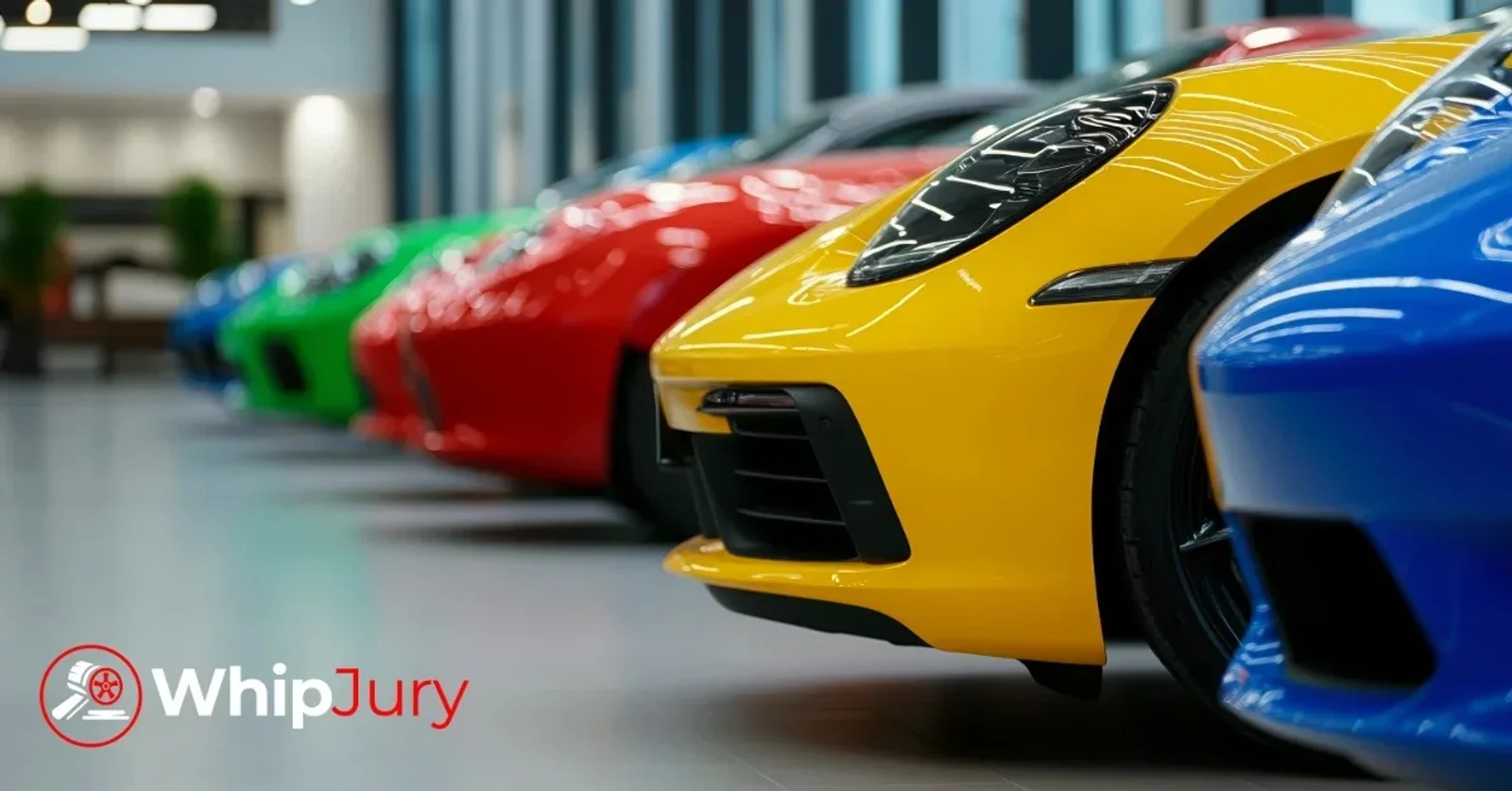
Rate cars in your favorite colors on WhipJury and find out whether the decade you grew up in trained your eye or limited it.
Frequently Asked Questions

Cam Walsh has been obsessing over cars since before he could drive one. Based out of Atlanta, Cam covers automotive design, car culture, and the eternal debate over which whips actually look the part.