DuelsLeaderboardGarageBlogCarsGlossaryBrowse

Toyota Supra

Toyota

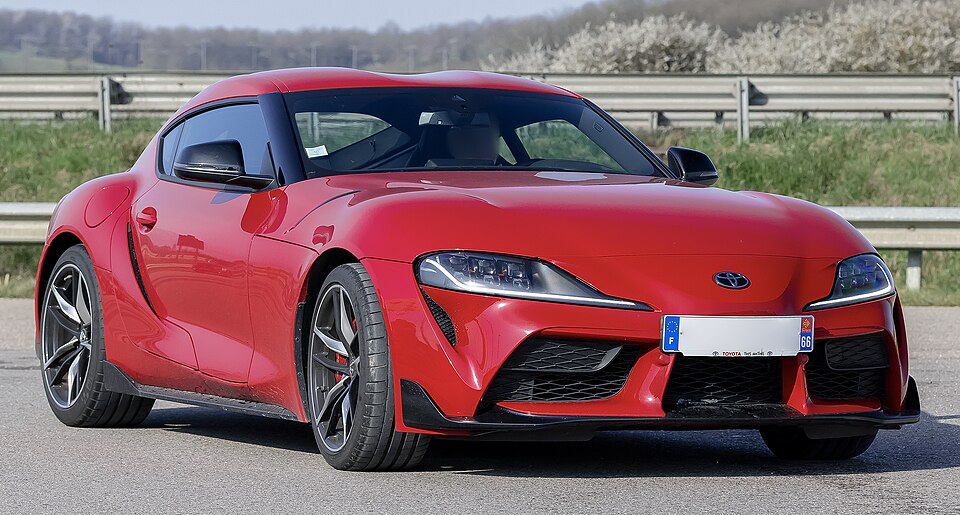
Toyota Supra: From the Celica Supra of 1978 to the modern A90, the Supra name has anchored Toyota's sport coupe lineup for o
Photo: Alexandre Prevot from Nancy, France / Wikimedia Commons · CC BY-SA 2.0

From the Celica Supra of 1978 to the modern A90, the Supra name has anchored Toyota's sport coupe lineup for over four decades.

The Toyota Supra is a sport coupe that has been produced across five generations from 1978 to the present (with hiatus from 2002-2018). The Supra began as a more powerful variant of the Celica, then split off as a separate model with the A60 (1981-1986). The MK3 (A70, 1986-1992), MK4 (A80, 1993-2002), and MK5 (A90, 2019+) generations defined the Supra as a serious performance car. The MK4 (A80) Supra is the most legendary variant. Twin-turbocharged 2JZ-GTE inline six (in turbo trim), 320 horsepower factory rating but a famously over-engineered block capable of 800+ horsepower on stock internals. The Toyota A80 Supra Turbo is one of the most modified Japanese cars in history, becoming a foundational platform for tuner culture and drag racing. The car's role in the Fast and Furious franchise (the original 1994 Supra Turbo) added cultural significance. The MK5 (A90) Supra is the modern variant. Built on a BMW Z4 platform with BMW B58 inline-six, the A90 Supra represents Toyota return to the sport coupe segment after a 17-year hiatus. The car has been polarizing among purists who prefer the original A80 Supra heritage, but reviews praise the chassis dynamics and the engine character. On WhipJury, Supra submissions are particularly active. A80 Supra Turbo cars (especially clean factory examples) reliably top voting. A90 Supra cars are growing in presence as the model ages. Generational comparisons (A80 vs A90 vs MK3) are common in the community.

Top Toyota Supra examples on WhipJury
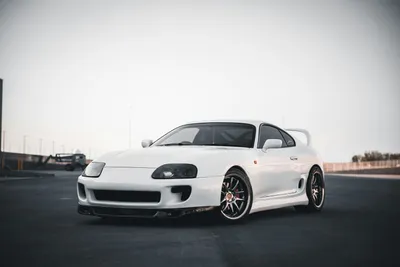
Supra
Supra#1
Whip Score: 1212

Generations

A40/A50 (1978-1981). Originally Celica Supra. Available with various inline-six engines.

A60 (1981-1986). Separate Supra model. 5M-GE inline-six. Classic styling.

A70 / MK3 (1986-1992). Major redesign. 7M-GE and 7M-GTE engines. Better handling than predecessors.

A80 / MK4 (1993-2002). The legendary generation. 2JZ-GE (naturally aspirated) or 2JZ-GTE (twin-turbo) engines. Cultural icon.

A90 / MK5 (2019+). Modern Supra. BMW Z4 platform shared. BMW B58 inline-six (3.0 liter, around 382 horsepower in current trim).

The 2JZ-GTE legacy

The MK4 Supra Turbo's 2JZ-GTE is the source of much of the model's cultural cachet. The engine handles 600+ horsepower on stock internals with proper supporting modifications, has been swapped into countless other chassis (Lexus IS300, Nissan 240SX, BMW E36, even pickup trucks), and has produced over 1,500 horsepower in extreme drag racing applications. The 2JZ-GTE alone made the A80 Supra a cult classic.

Supra on WhipJury

Both A80 and A90 generations are well-represented. A80 Turbo examples (especially clean stock cars) command attention. A90 Supras are increasingly common as the model ages into the used market. MK3 and MK4 generation comparisons are popular in community discussions.
Frequently asked questions about Toyota Supra

What is the most legendary Supra?
The A80 (MK4) Supra Turbo, by general consensus. The 2JZ-GTE engine, the chassis dynamics, the Fast and Furious cultural reference, and the pricing have all combined to make the A80 the most legendary Supra. Production spanned 1993-2002 with the strongest enthusiast attention concentrated on 1993-1998 examples.
Is the A90 Supra a real Toyota?
The A90 Supra shares its platform, engine, and most major components with the BMW Z4. The chassis tuning, exterior design, and interior are different. Whether it counts as a true Toyota is an active debate. The community here generally treats it as a Toyota with strong BMW DNA.
How much does an A80 Supra cost?
Significantly. Used pricing has appreciated dramatically. Naturally aspirated A80 Supras: $30,000-$80,000. Turbo A80 Supras (with 2JZ-GTE): $80,000-$200,000+. Clean low-mile turbo examples can exceed $300,000+. The A80 Supra is now firmly a collector car at any tier.
Is a 2JZ swap into a non-Supra a good idea?
Yes, with caveats. The 2JZ-GTE handles huge power on stock internals and is durable when properly tuned. The swap requires engine mounts, axles, transmission considerations, and proper engine management. Common 2JZ swap targets include Lexus IS300, Nissan 240SX, BMW E36, and various other RWD chassis. The cost is significant ($15,000-$30,000+ for a complete swap), but the engine character justifies the investment for many builders.
What is the difference between MK3 and MK4 Supra?
Major redesign. The MK3 (A70, 1986-1992) used 7M-GE or 7M-GTE engines and was a more conventional sport coupe. The MK4 (A80, 1993-2002) used the 2JZ family with twin-turbo option, was better-handling, more refined, and significantly more powerful. The MK4 is the cultural icon; the MK3 is a respected predecessor.

More on the Toyota Supra

Why a V8 rumbles and a Ferrari screams

An American V8 rumbles and a Ferrari V8 screams because of the crankshaft. Cross-plane cranks fire unevenly between banks and produce the lopey rumble; flat-plane cranks alternate perfectly and rev higher for that howl. Here's also why an inline-six is the smoothest engine you can buy.

1JZ vs 2JZ: What's the Difference and Which One Should You Swap?

The 1JZ and 2JZ are both Toyota inline-six engines from the same family, and people use the names like they are interchangeable. They are not. The 1JZ is a 2.5-liter that loves to rev. The 2JZ is a 3.0-liter that became famous for surviving four-figure horsepower on stock parts. Which one you want depends entirely on what you are building.

What Does JDM Actually Mean?

JDM stands for Japanese Domestic Market: vehicles and parts built for sale in Japan, to Japanese specifications, for Japanese buyers. A car is JDM because of where it was sold, not where it was made, which means the term gets misused constantly. The Civic your neighbor bought at an American Honda dealer is a Japanese car, but it is not a JDM car.

Other Toyota models

2000GT4Runner86AE86AltezzaAvalonbZ4XCamryCelicaCelica GT-FourCenturyChaser
More Toyota models