DuelsLeaderboardGarageBlogCarsGlossaryBrowse

Drag racing

Car culture term

Drag racing
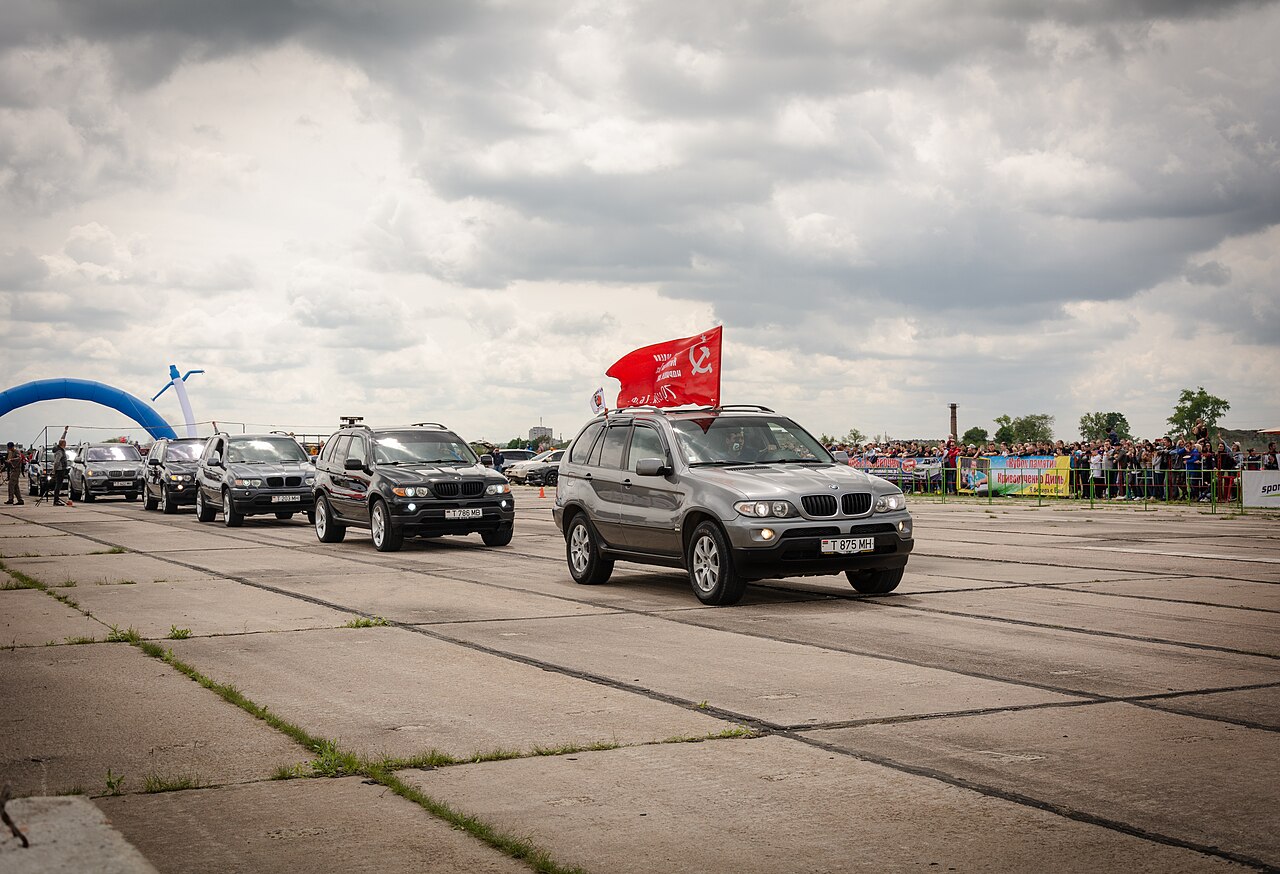
Photo: Natalia Bazilenco / Wikimedia Commons · CC BY-SA 4.0

What is Drag racing?

A motorsport where two cars accelerate from a standing start over a quarter-mile or eighth-mile straight course. The fastest car wins.

Drag racing is a motorsport where two cars accelerate side-by-side from a standing start over a measured straight course. The standard distance in the United States is one quarter mile (1,320 feet); some events use the eighth mile (660 feet). The car that crosses the finish line first wins. Times are typically reported as elapsed time (ET) and trap speed (the speed at the finish line).

Drag racing has multiple categories. Top Fuel and Funny Car are the most extreme professional classes, using nitromethane-burning supercharged engines making 11,000+ horsepower in cars that complete a quarter mile in 3.7-3.8 seconds at over 330 mph. Pro Modified, Pro Stock, and various sportsman classes cover progressively more accessible vehicles. Bracket racing (where racers predict their elapsed time and the closest prediction wins) is the most accessible amateur format.

Drag racing is the original American grassroots motorsport, dating to the 1940s and 1950s when young drivers raced on dry lakebeds and abandoned military airstrips. Modern professional drag racing centers on the National Hot Rod Association (NHRA) series. Major venues include the U.S. Nationals at Indianapolis, the Winternationals at Pomona, and the Gatornationals at Gainesville.
Related terms

Muscle carSuperchargerTurbo

Frequently asked questions

What is the fastest drag car?
Top Fuel dragsters are the fastest drag cars. They run quarter mile in around 3.7 seconds at top speeds of 330+ mph. The cars use nitromethane-burning supercharged Hemi V8 engines making over 11,000 horsepower. They accelerate from 0-300 mph in about 3 seconds.
What is bracket racing?
Bracket racing is an amateur drag racing format where each racer predicts their elapsed time before each run. The racer whose prediction is closest to (without going faster than) their actual elapsed time wins. The format equalizes faster and slower cars; a slow car can beat a fast car if the faster car driver runs faster than predicted. Most amateur drag racing is bracket racing.
Can I drag race a stock car?
Yes, at most drag strips. Most tracks have street car or test-and-tune nights where drivers can run their daily-driven cars on the strip. Safety requirements vary by track and elapsed time bracket. Generally, stock cars running 13-second or slower passes need only a helmet. Faster cars require additional safety equipment.
What is the difference between elapsed time and trap speed?
Elapsed time (ET) is the total time from staging to crossing the finish line. Trap speed is the velocity recorded at the finish line. ET indicates total acceleration capability; trap speed indicates engine output and aerodynamics. Both are used to evaluate car performance.
Is drag racing dying?
Professional drag racing has declined slightly from peak attendance years but maintains a substantial following. Amateur drag racing remains widely accessible. Electric drag racing (EV cars and dedicated electric dragsters) is growing as the category. The sport continues to evolve.

Drag racing on the blog

What Is Rev Matching? (And the Heel-Toe Move Behind It)

Rev matching is a manual-transmission technique: you blip the throttle during a downshift so the engine's rpm matches the lower gear before you let the clutch out. Done right, the shift is seamless and your drivetrain takes less abuse. Heel-and-toe is the same idea done while braking into a corner.

How Much Does It Cost to Attend Import Face-Off?

Import Face-Off is one of the longest-running and most accessible car events in the United States, and the pricing reflects that. IFO originated in 2001 and has grown into the largest continually running national import show and race series in the country, with 40+ events annually. It is not a corporate production or a high-ticket motorsport event. It started as a grassroots show in South Louisiana and it has kept its pricing in line with that identity for over two decades...

Back to Glossary