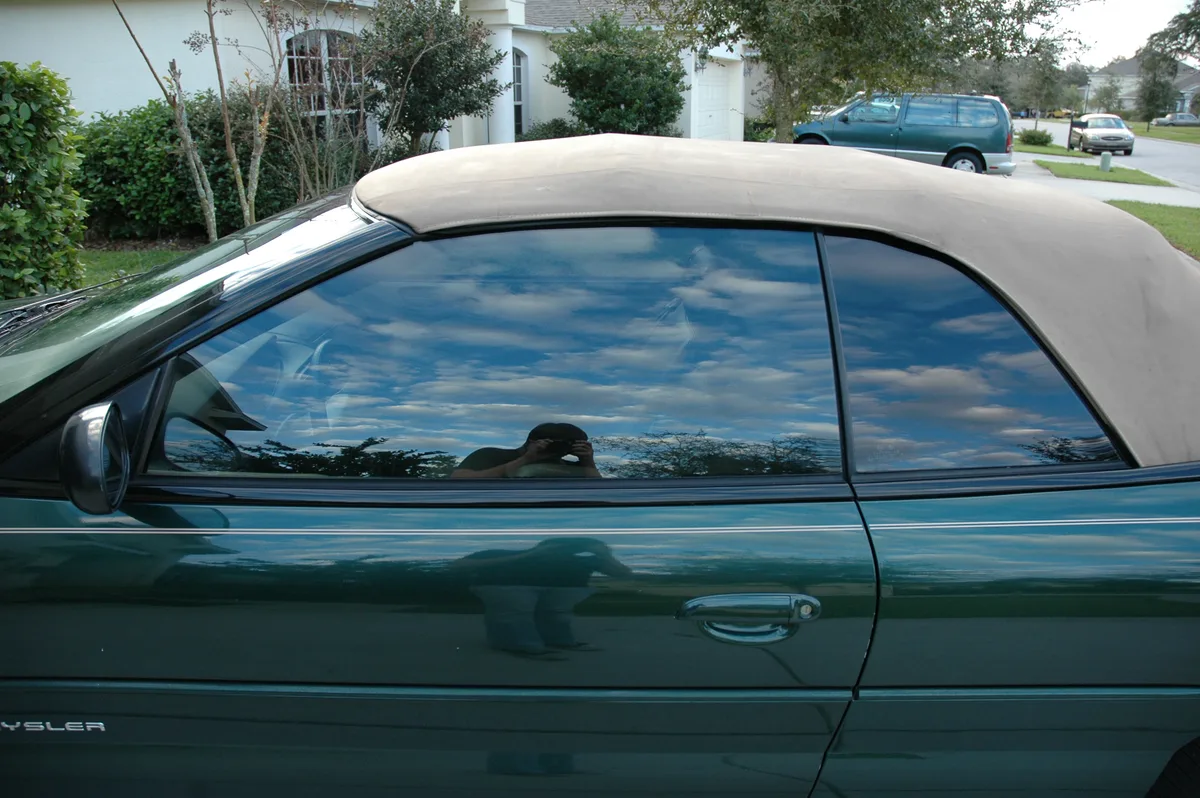
Tint is the cheapest change that makes a real difference to how a car looks, and it's the one most likely to get you a ticket. The number that governs both is VLT.
VLT stands for visible light transmission, and it's the percentage of light the window lets through. Lower number, darker tint. A 5 percent film blocks 95 percent of the light, which is where the term limo tint comes from.
What the percentages look like
Anything at 50 percent or above reads as essentially clear, so a 70 percent film is barely visible and is mostly there for heat and UV rejection rather than looks.
Around 30 to 35 percent is the popular middle ground for front side windows. It darkens the glass noticeably, gives you some privacy, and still lets you see out at night without trouble.
At 20 percent you get real privacy and meaningful heat rejection, but night visibility starts to suffer and this is where the legal problems usually begin. Five percent is the darkest commonly available, and on front windows it's illegal in most of the country and genuinely hard to see out of after dark.
The law varies enormously by state
California, New York, Pennsylvania, Delaware, Rhode Island, and Iowa require 70 percent VLT or lighter on front side windows, which effectively rules out any tint you'd notice. Florida allows 28 percent on front sides and 15 percent at the rear. Texas requires 25 percent across side and rear windows. New Mexico permits 20 percent up front.
Rear windows are usually treated separately and can often go far darker, in some states down to 5 percent. Rules also differ for SUVs and vans compared with sedans in many states, and windshield strips have their own limits.
Check your own state before buying, since the film is the cheap part and removing an illegal tint is not.
Dyed against ceramic
Two films at the same VLT can perform completely differently, because darkness and heat rejection are separate properties.
Dyed film darkens the glass with a dye layer. It's the affordable option, it blocks around 70 percent of UV, and it offers limited heat rejection. Lower-quality dyed films also fade over the years, usually toward purple, which is the tell on an old cheap tint job.
Ceramic film uses nano-ceramic particles that scatter infrared radiation before it enters the cabin, so it rejects far more heat at the same darkness, blocks more UV, and holds up rather than fading. It costs more up front and generally justifies it over the life of the car.
The practical result is that you can run a light, legal ceramic tint and get more heat rejection than a much darker dyed film. If you want the look and the function, that's the combination.
Sources:
VLT percentages and state limits: The Zebra
Dyed versus ceramic film construction and performance: Teckwrap
Frequently Asked Questions

Cam Walsh has been obsessing over cars since before he could drive one. Based out of Atlanta, Cam covers automotive design, car culture, and the eternal debate over which whips actually look the part.